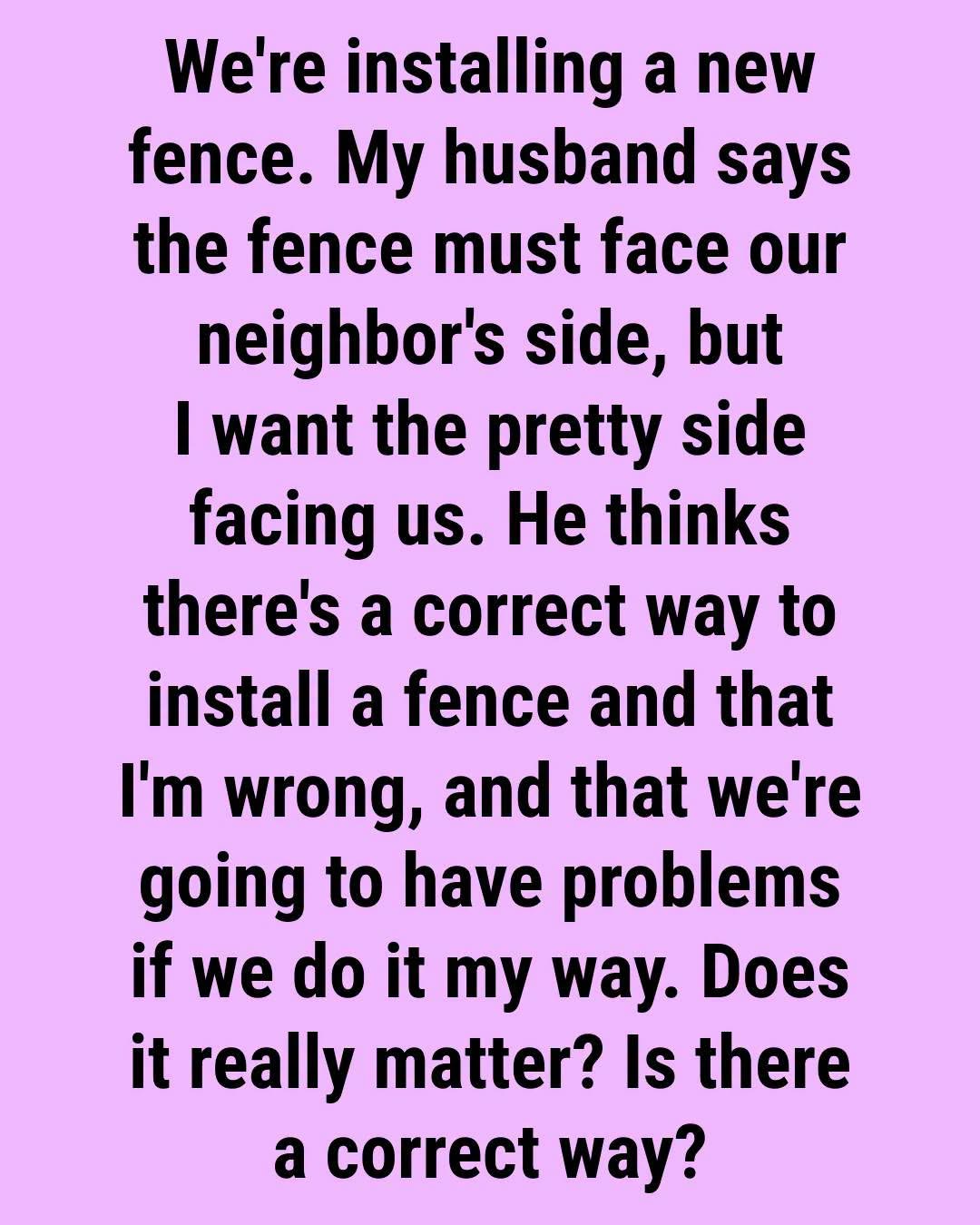
When I started planning a new fence for my backyard, nearly everyone offered the same piece of advice. “Whatever you do,” they warned, “don’t put the ugly side facing your neighbor.” People spoke about it as though it were an unwritten law—something that simply wasn’t open for debate. Some even suggested it would be rude, disrespectful, or possibly even illegal to do otherwise. The more often I heard the warning, the more I began to wonder whether this long-standing rule was actually based on law or simply on tradition that had been repeated so many times people accepted it as fact.
After researching the issue, I quickly discovered that the answer is far more complicated than many homeowners realize. The belief that the finished side of every fence must always face the neighboring property is, in many places, a matter of custom rather than a legal requirement. While the advice is certainly common and often encouraged for reasons of appearance and neighborly courtesy, there is no universal law across the country that dictates which direction a residential fence must face. The actual rules depend on local building regulations, municipal ordinances, neighborhood associations, and property ownership—not simply on popular opinion.
Many communities have no building code addressing fence orientation at all. Instead, their regulations focus on issues such as maximum fence height, required setbacks from property lines, acceptable construction materials, and visibility near intersections. In these locations, homeowners generally have flexibility when deciding which side of the fence faces outward. Other cities, counties, or homeowners’ associations may include more specific requirements, particularly in neighborhoods where maintaining a consistent appearance is considered important. Some developments require every fence to present the finished side toward public streets, sidewalks, parks, or common areas to preserve a uniform community appearance.
These requirements, however, should not be confused with the widespread belief that every neighbor automatically has the legal right to demand the finished side of your fence. In many situations, no such rule exists. Instead, the determining factors are whether the fence is entirely on your property, built directly on the property line, or jointly owned by neighboring homeowners. Those details often carry far more legal significance than which direction the fence boards happen to face.
Property ownership plays a major role in determining both responsibility and decision-making. If a fence is built completely within your own property boundaries, local laws often give you considerable freedom regarding its design, orientation, and maintenance, provided it complies with applicable building codes. On the other hand, if the fence is constructed directly on the shared property line, it may legally become a shared or boundary fence depending on local regulations. In those circumstances, questions involving construction costs, repairs, replacement, and even design choices may require cooperation between both property owners.
That is why communication is often more valuable than any unwritten rule about which side looks better. Many long-term neighborhood disputes begin not because of the fence itself, but because one homeowner made assumptions without discussing the project beforehand. A simple conversation before construction begins can clarify expectations, identify potential concerns, and prevent misunderstandings that might otherwise damage relationships for years. Even when the law clearly allows one homeowner to make the final decision, treating neighbors with courtesy usually leads to far better outcomes than relying solely on legal rights.
For homeowners considering a new fence, taking a few practical steps beforehand can save significant time, money, and frustration. Carefully review local zoning regulations, confirm the exact location of your property boundaries through a recent survey if necessary, determine whether your neighborhood is governed by a homeowners’ association, and familiarize yourself with any design standards that may apply. If the fence will affect a shared boundary, discussing plans with your neighbor—and documenting any agreements in writing—can provide valuable protection for everyone involved should questions arise in the future.
Although many people continue to believe there is one universally correct way to orient a fence, the reality is that no single answer applies everywhere. Every city, county, subdivision, and homeowners’ association may establish different requirements, and what is perfectly acceptable in one neighborhood may not be permitted in another. The only reliable source of guidance is the local rules that govern your specific property rather than assumptions based on tradition or advice passed from one homeowner to another.
Ultimately, a fence serves a practical purpose: providing privacy, defining property boundaries, improving security, and enhancing the appearance of a home. The direction the boards face is often far less important than the respect shown between neighbors throughout the process. By understanding the applicable regulations, confirming property lines, communicating openly, and approaching the project with consideration for everyone involved, homeowners can build a fence that not only protects their property but also preserves the goodwill that makes any neighborhood a better place to live.