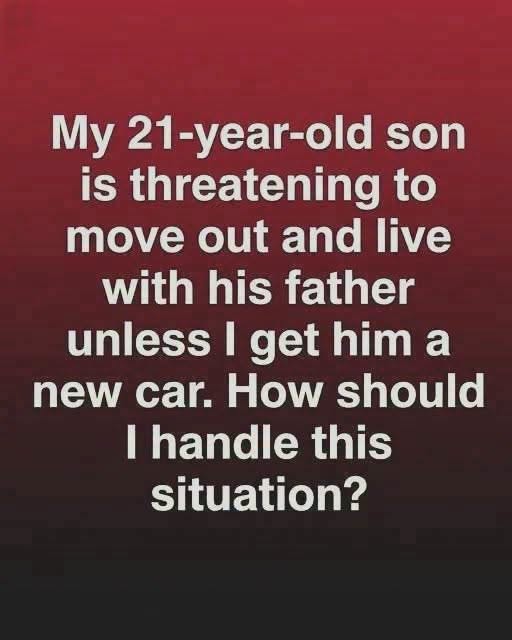
The silence filling my home today feels almost unbearable. Only a few hours ago, my son stood in our kitchen and delivered an ultimatum I never imagined I would hear from the child I raised. He demanded that I buy him the luxury car he wanted, and if I refused, he said he would pack his belongings, walk out the door, and never speak to me again. It wasn’t a heartfelt request from someone facing genuine hardship. It was an attempt to use my love as leverage, turning our relationship into a transaction where affection came with a price tag. In that painful moment, I realized something far more troubling than his demand—I had unknowingly allowed him to believe that emotional pressure was an acceptable way to get what he wanted.
For years, I convinced myself I was simply being a loving father. I worked long hours, sacrificed my own comforts, and did everything possible to ensure my son never experienced the financial hardships I had known growing up. Providing opportunities felt like the greatest expression of love I could offer. Looking back now, however, I can see that somewhere along the way generosity slowly transformed into expectation. Instead of appreciating what had been given to him, my son gradually began viewing those sacrifices as obligations rather than gifts. Today, when he looks at me, he no longer sees the father who spent years working to build a better life for our family. Instead, he sees someone who should automatically provide whatever he desires, regardless of cost or circumstance.
His frustration isn’t driven by genuine necessity. He isn’t asking for reliable transportation to get to work or school. What he wants is a luxury vehicle because many of his friends already have expensive cars, and he believes owning one will somehow validate his own worth. In his mind, my refusal to purchase something I cannot reasonably afford—and that he has made no effort to earn—feels like a personal betrayal. Rather than viewing my decision as a lesson in responsibility, he interprets it as evidence that I have somehow failed him.
What began as a simple conversation quickly escalated into an emotional confrontation unlike anything we had ever experienced. Instead of discussing practical solutions or exploring ways he could work toward buying the car himself, he responded with accusations, resentment, and eventually threats. His argument was never truly about transportation. It was about status, image, and immediate gratification. By threatening to remove himself from my life, he hoped fear would succeed where persuasion had failed. He believed the possibility of losing my son would be enough to convince me to abandon my own principles.
After he left the room, I sat alone for hours replaying every word in my mind. As difficult as it was to admit, I began recognizing my own role in creating this situation. If I surrendered to his demands simply to preserve peace, I would not be acting out of love. I would be paying an emotional ransom. Purchasing that car would teach him nothing about hard work, responsibility, financial discipline, or perseverance. Instead, it would reinforce the dangerous belief that relationships can be manipulated and that enough emotional pressure will eventually force people to give in. I realized that I had spent years trying to protect him from disappointment while unintentionally shielding him from the very experiences that help people mature.
The truth was painful but impossible to ignore. Somewhere along the journey from childhood to adulthood, my role as a supportive parent had gradually shifted into that of an enabler. I had mistaken removing obstacles for helping him grow. Every unnecessary rescue, every expense I absorbed, and every consequence I softened had quietly sent the message that someone else would always step in to solve his problems. The confrontation over the car wasn’t the beginning of the problem—it was simply the moment everything that had been building beneath the surface finally became impossible to ignore.
My son is now an adult capable of making his own decisions. If he genuinely believes his future will be brighter somewhere else, he has every right to pursue that path. If he chooses to leave because I refused to purchase an expensive vehicle, that decision belongs to him alone. What I can no longer do is sacrifice his long-term growth in exchange for temporary harmony. I must decide whether my responsibility is to prepare him for adulthood or continue financing an unrealistic version of it. True love sometimes requires saying no, even when that answer risks creating distance.
The road ahead will not be easy for either of us. Holding firm against someone you love requires a kind of strength that few parents ever expect to need. That does not mean I am abandoning him. I remain willing to help him in meaningful ways. I will gladly assist him with preparing a résumé, searching for employment, learning how to budget responsibly, exploring financing options he can realistically manage, and celebrating every genuine accomplishment he earns through his own effort. I will always offer advice, encouragement, and emotional support. What I will no longer provide is unlimited financial rescue whenever life becomes uncomfortable.
If he ultimately decides to leave, the door to this home will not be locked. It will remain open for a relationship built on honesty, mutual respect, and shared responsibility rather than material expectations. The expensive car has become far more than a vehicle. It now represents a choice between dependency and independence. Whatever path he takes, I hope he eventually discovers the satisfaction that comes from earning something through persistence rather than receiving it through pressure.
I also know that silence may become his next strategy. Days or weeks may pass without a phone call, and guilt will almost certainly try to convince me that standing firm was a mistake. But I can no longer ignore the unhealthy dynamic that has developed between us. The issue was never really about a luxury automobile. It was about the values that will shape the rest of his life. Refusing to give in is not an act of rejection; it is an act of faith that he is capable of becoming stronger than either of us currently believes. If enduring temporary pain is the price of helping him discover his own independence, then it is a price I am finally prepared to accept.