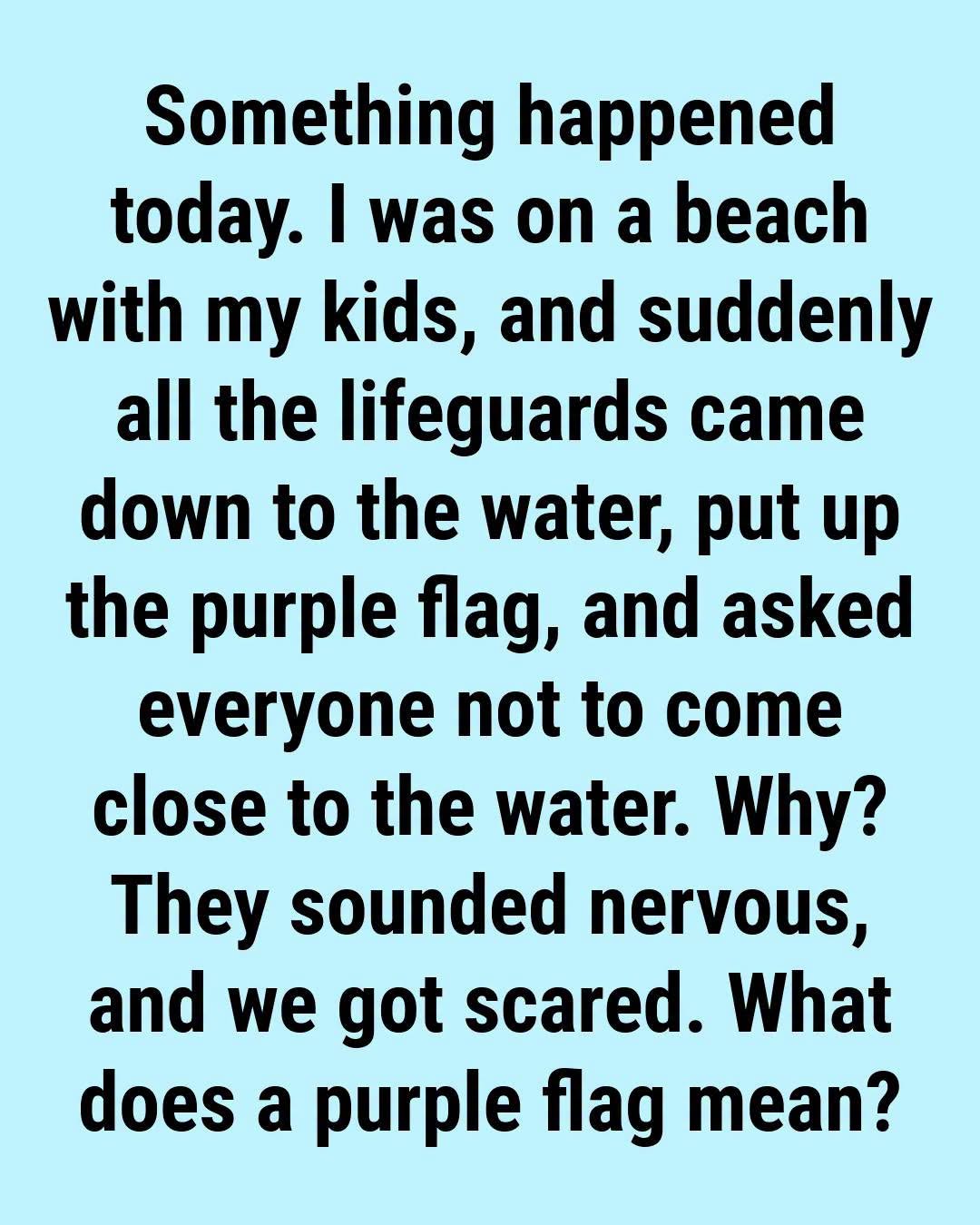
At first glance, it hardly seems important. A small purple flag flutters gently in the ocean breeze, easy to overlook among colorful umbrellas, beach towels, and the excitement of a sunny day by the water. Many visitors walk right past it without giving it a second thought, assuming it is simply another beach marker or decorative flag. Yet that small piece of fabric carries an important message that could spare you from an unpleasant—and sometimes painful—experience. It is not there to decorate the shoreline. It is there to warn you that beneath the calm, inviting waves, nature may be hiding hazards you cannot immediately see.
Most people are familiar with the standard beach warning system. A green flag signals relatively safe swimming conditions, yellow encourages extra caution, and a red flag warns swimmers to stay out of the water because conditions are considered dangerous. Some beaches even use double red flags to indicate that the water is completely closed to the public. The purple flag, however, is different. It does not signal dangerous surf or powerful currents. Instead, it alerts beachgoers to the presence of potentially harmful marine life lurking in the water.
When a purple flag is raised, lifeguards have identified an increased risk from sea creatures that may injure swimmers or anyone wading near the shoreline. Depending on the location, this could include jellyfish, stingrays, Portuguese man o’ war, sea lice, or other marine animals capable of causing painful stings, bites, or skin irritation. These creatures are often difficult—or impossible—to spot from the shore, especially when the water appears calm and crystal clear.
That is what makes the warning so deceptive. On days when a purple flag is flying, the ocean often looks beautiful. The waves may be gentle, the water sparkling under the sunlight, and the beach crowded with families eager to cool off. Children run toward the surf with inflatable toys, adults spread out beach chairs, and many visitors assume everything is perfectly safe because the sea appears peaceful. Yet beneath that tranquil surface, marine life may be drifting with the tides, completely unseen until someone accidentally steps on or brushes against it.
For those unfamiliar with the meaning of the purple flag, the consequences can be surprising. A jellyfish sting can cause immediate burning pain, red welts, swelling, and irritation that may last for hours or even days. Stepping on a stingray can result in an extremely painful puncture wound that often requires medical attention. While most encounters are not life-threatening, they can quickly transform a relaxing beach vacation into an emergency room visit. Individuals with allergies or heightened sensitivity may experience more serious reactions that require urgent medical care.
Marine creatures do not appear near shore because they are aggressive or seeking people. In most cases, they are simply following currents, tides, changing water temperatures, or seasonal migration patterns. Jellyfish drift wherever the ocean carries them, while stingrays often rest quietly beneath shallow sand, nearly invisible until disturbed. These animals are simply living within their natural habitat, and accidental encounters occur because humans have entered their environment—not the other way around.
Beach officials and lifeguards raise the purple flag to provide information, not to create unnecessary fear. The warning allows visitors to make informed decisions before entering the water. Some people may choose to swim elsewhere, while others decide to remain closer to shore or wear protective footwear to reduce the risk of injury. Awareness alone can significantly lower the chances of an unpleasant encounter with marine life.
Even when the purple flag is displayed, beaches are not necessarily closed. Unlike a red flag, which often indicates dangerous swimming conditions, a purple flag serves as an advisory rather than a prohibition. It reminds visitors to remain alert, supervise children closely, avoid touching unfamiliar sea creatures, and follow any guidance provided by lifeguards. In many situations, simple caution is enough to prevent injuries altogether.
The next time you visit the beach, take a moment to look at the flags before heading into the water. That small purple banner may not seem as dramatic as warnings about rough surf or dangerous currents, but its message is just as important. It represents the unseen side of the ocean—a living ecosystem filled with remarkable creatures that deserve both admiration and respect. The sea offers incredible beauty, but it also follows its own rules. The purple flag is the ocean’s quiet reminder that while everyone is welcome to enjoy its waters, no one should ever forget they are entering the home of countless forms of marine life. Respecting that simple warning can make the difference between ending your day with unforgettable memories—or painful ones.