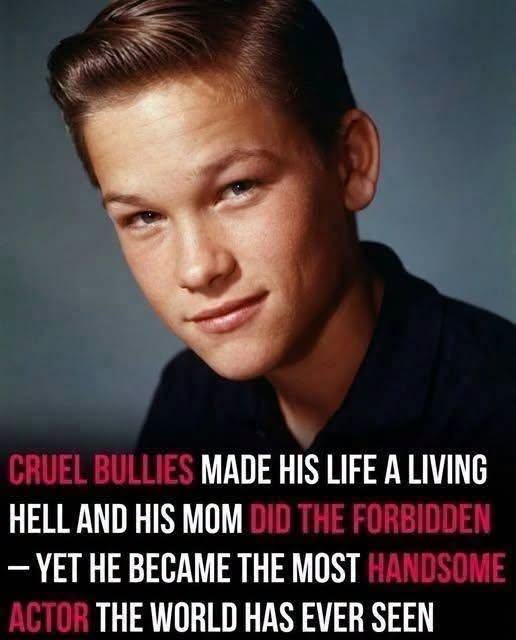
From Beaten and Bruised to One of the Brightest Stars in the World: The Extraordinary Life of Patrick Swayze
They mocked his ballet shoes before the world fell in love with every move he made. Before he became one of Hollywood’s most recognizable stars, Patrick Swayze was a young boy in Houston, Texas, who refused to let other people’s opinions destroy his passion for dance. His journey from childhood criticism to international fame became a remarkable story of determination, talent, and courage. Yet behind the handsome face, powerful performances, and unforgettable smile was a man who experienced profound grief, personal struggles, and a final battle that would test his strength in ways no movie role ever could.
For millions of fans, Swayze will forever be remembered as the charismatic dancer in Dirty Dancing, the romantic lead in Ghost, and the tough, determined hero in Road House. His performances made him a global star, but his life was far more complicated than the glamorous image audiences saw on screen. He faced painful family losses, struggled with alcohol, endured the heartbreak of losing a child during pregnancy, and continued working after receiving a devastating cancer diagnosis.
His story was not simply about becoming famous. It was about holding on to the things he loved, even when life became difficult, and refusing to allow other people’s expectations to determine who he could become.
A Childhood in Which Dance Became His Strength
Patrick Wayne Swayze was born on August 18, 1952, in Houston, Texas. His mother, Patsy Swayze, was a respected dance instructor and choreographer who introduced him to the world of movement at an early age. Growing up around dance studios, music, and rehearsals, he developed an appreciation for artistic expression that would eventually shape his entire career.
However, the environment in which Swayze discovered his passion was not always welcoming. During his school years, he faced teasing and criticism because dance was often viewed by his peers as an unusual pursuit for a boy. At a time when traditional ideas about masculinity could make artistic interests a target for ridicule, his dedication to dance required confidence and persistence.
Instead of abandoning his interests to satisfy others, he continued developing his skills. He also pursued athletics and other activities, hoping to balance his physical strength with his artistic ambitions.
For a time, football appeared to offer another possible future. But a knee injury disrupted his athletic plans and made him reconsider the direction of his life. Dance, which had always been part of his upbringing, became an increasingly important professional path.
That decision would eventually lead him away from Texas and toward New York, where he trained in dance and began pursuing opportunities in professional performance.
What some people had once mocked would become one of his greatest strengths. Swayze’s athleticism, discipline, and expressive movement allowed him to bring a rare combination of physical power and emotional sensitivity to his performances.
The Long Road From Dance Studios to Hollywood
Success did not arrive overnight. Before becoming a major film star, Swayze worked to establish himself in the performing arts, taking on dance and stage opportunities that helped him develop the skills necessary for a demanding career.
His early experience in musical theater provided valuable preparation for the camera. Dance required precision, physical endurance, timing, and the ability to communicate emotion without relying entirely on words. These qualities later helped distinguish him from actors whose appeal rested primarily on dialogue or appearance.
As his career developed, Swayze moved into television and film. He appeared in projects that gradually introduced him to wider audiences, including The Outsiders in 1983, where he performed alongside several actors who would also become major Hollywood names.
His role as Darrel Curtis demonstrated his ability to portray a character whose toughness concealed deep loyalty and emotional vulnerability. It was a combination that would become familiar throughout his career.
He subsequently appeared in films that expanded his reputation, including Red Dawn in 1984 and Youngblood in 1986. Each project helped establish his screen presence and prepared him for the role that would transform his life.
By the late 1980s, Swayze had developed the qualities that made him especially compelling to audiences: athletic confidence, natural charm, expressive movement, and the ability to portray characters whose strength was accompanied by tenderness.
Then came the film that changed everything.
Dirty Dancing: The Role That Made Him a Legend
In 1987, Patrick Swayze starred as Johnny Castle in Dirty Dancing, a romantic drama that became a worldwide cultural phenomenon. Opposite Jennifer Grey, he played a dance instructor whose confidence and skill challenged the expectations of a young woman discovering her independence.
The film’s success exceeded expectations, and Swayze’s performance helped turn him into an international star. His dancing, screen presence, and chemistry with Grey became central to the movie’s enduring appeal.
The role was particularly meaningful because it brought together the very qualities that had once made him a target of ridicule. His dance training was no longer something he needed to defend. It was the foundation of his success.
Swayze’s performance showed that physical strength and graceful movement were not opposing qualities. His character could be confident without being emotionally distant, strong without being cruel, and passionate without losing his sensitivity.
The film’s famous dance sequences became part of popular culture, while its soundtrack and romantic story continued attracting new generations of viewers. Swayze also contributed to the film’s music, co-writing and performing the song “She’s Like the Wind.”
The success of Dirty Dancing was more than a career breakthrough. It became a defining moment in his public identity, forever connecting his name with one of cinema’s most beloved romantic stories.
For a man who had once faced criticism for pursuing dance, the irony was remarkable: the skill that others had underestimated became one of the principal reasons the world celebrated him.
From Romantic Hero to Hollywood Powerhouse
Rather than allowing himself to be permanently associated with one character, Swayze continued exploring different genres.
In 1989, he starred in Road House, playing Dalton, a disciplined and formidable bouncer brought in to restore order at a troubled bar. The role emphasized his physical presence and helped establish his reputation as an action star.
The following year, he appeared in Ghost, opposite Demi Moore and Whoopi Goldberg. The film combined romance, supernatural drama, humor, and grief in a story about love that survives beyond death.
Swayze’s portrayal of Sam Wheat revealed another dimension of his abilities. Beneath the film’s suspenseful plot was a story about attachment, unfinished goodbyes, and the difficulty of accepting loss. His performance helped make Ghost one of the most memorable films of his career.
These roles demonstrated his versatility. He could be a romantic leading man, a physically commanding action hero, or a vulnerable character struggling with heartbreak. Audiences responded to the sense that his characters possessed emotional lives beyond what appeared on the surface.
His career continued through the following decades, with roles in films such as Point Break, To Wong Foo, Thanks for Everything! Julie Newmar, and Donnie Darko. Each project contributed to a body of work that resisted easy categorization.
Despite his fame, Swayze remained closely associated with dance, the discipline that had shaped him from childhood and continued to influence his approach to acting.
The Private Pain Behind the Famous Smile
While audiences celebrated his professional achievements, Swayze faced personal challenges that were largely separate from his public image.
He married Lisa Niemi in 1975, beginning a relationship that lasted until his death. Niemi was also a dancer, and their shared artistic background helped form an important part of their connection. Their marriage endured decades of career changes, family difficulties, and personal struggles.
One of the most painful experiences they faced was the loss of a pregnancy. The grief surrounding that experience was deeply personal, and it became part of the private history behind their relationship.
Swayze also spoke publicly about struggles with alcohol. Following the death of his father in 1982, he experienced a difficult period in which grief and drinking affected his life. The loss of his sister Vicky in 1994 was another devastating event.
These experiences challenged the image of the confident, seemingly invincible star. Like many people, Swayze could entertain millions while carrying pain that audiences could not see.
His life serves as a reminder that professional success does not shield someone from grief, addiction, or emotional hardship. Fame can create the impression that a person has everything, but it cannot guarantee peace or protect anyone from the painful realities of being human.
Swayze’s struggles also illustrate why it is important to look beyond the public image of a celebrity. The characters audiences admire may be fictional, but the people who portray them face real responsibilities, relationships, and difficulties.
A Devoted Marriage Through Difficult Years
Lisa Niemi remained an important presence throughout Swayze’s life and career. The couple shared a passion for dance and collaborated on creative projects, including work in film and theater.
Their relationship was not free from challenges, and Swayze’s struggles with alcohol placed strain on their lives. Nevertheless, their long marriage remained a significant part of his personal story.
When illness entered their lives, Niemi became a central source of support. She stood beside him through medical treatment and the uncertainty that followed his diagnosis.
The story of their relationship attracted public attention partly because it contrasted with the short-lived romances often associated with Hollywood. Their shared history stretched across decades, beginning long before Swayze became an international celebrity.
Behind the fame, the awards, and the movie premieres was a partnership shaped by ordinary experiences as well as extraordinary pressures.
Their story also reminds us that supporting someone through a serious illness is emotionally demanding. It involves uncertainty, difficult decisions, and the challenge of balancing hope with the realities of medical treatment.
The Devastating Diagnosis That Changed Everything
In early 2008, Swayze was diagnosed with pancreatic cancer, an illness that would ultimately end his life. The news shocked fans around the world, many of whom had come to associate him with physical strength, athletic ability, and seemingly limitless energy.
Pancreatic cancer is a serious disease that can be difficult to detect at an early stage. Treatment depends on several factors, including the stage of the disease and the patient’s overall condition. Swayze’s diagnosis brought intense public attention to a form of cancer that often receives less visibility than some other major illnesses.
Despite the severity of his condition, Swayze continued working. Rather than immediately stepping away from his profession, he remained involved in acting projects while undergoing treatment.
His determination attracted admiration, although his experience should not be mistaken for evidence that willpower alone can overcome cancer. Serious illness affects every person differently, and continuing to work during treatment can be physically and emotionally demanding.
What made his response notable was his effort to maintain a sense of purpose while facing uncertainty. Acting had been central to his identity for decades, and continuing to work allowed him to remain connected to something he loved.
In 2009, he starred in the television drama The Beast, portraying an experienced FBI agent. The production required considerable physical and emotional effort, and his commitment to the role demonstrated how important his craft remained to him.
His appearance during this period also made the realities of his illness more visible to the public. The actor once celebrated for his athletic physique was now confronting a disease that could not be defeated through physical training or determination alone.
His Final Battle and the Loss That Shook Hollywood
Patrick Swayze died on September 14, 2009, at the age of 57, after living with pancreatic cancer for approximately 20 months following his diagnosis.
His death prompted tributes from fans, fellow actors, and people who had been moved by his work. For many, it felt like the loss of a familiar presence whose performances had accompanied them through different stages of life.
His films had offered romance, excitement, humor, and emotional release. His characters had fallen in love, confronted danger, struggled with grief, and fought to protect the people they cared about. Now, audiences were mourning the man who had brought those stories to life.
The sadness surrounding his death was intensified by the knowledge that his career had remained active even as his health deteriorated. He had continued working, appearing publicly, and maintaining his connection to acting while facing an illness that ultimately proved fatal.
His passing also renewed conversations about pancreatic cancer and the importance of research, early recognition of symptoms, and access to appropriate medical care.
Yet his death did not erase his achievements. The characters he portrayed, the films he helped create, and the emotional connections he established with audiences continued to give his work a life beyond his own.
A Legacy That Continues to Inspire
More than a decade after his death, Patrick Swayze remains a recognizable figure in popular culture. Dirty Dancing continues to attract audiences, while Ghost and Road House remain significant entries in his filmography.
His lasting appeal comes partly from his versatility, but also from the qualities he brought to his roles. He combined physical confidence with emotional openness, demonstrating that strength need not require the suppression of tenderness.
His personal journey also challenges narrow ideas about masculinity. As a young man, he pursued dance despite criticism. As an actor, he built a career around both athletic roles and emotionally vulnerable characters. In his private life, he faced grief and personal struggles that could not be solved through fame or professional success.
His story does not suggest that suffering automatically makes someone stronger or that every hardship can be overcome. Instead, it reveals the complexity of a life in which achievement and pain existed side by side.
For aspiring performers, his career offers an example of the value of discipline and commitment to one’s craft. For audiences, his films remain reminders that vulnerability can be as powerful as physical courage.
And for those who remember the young dancer whose interests were once mocked, his journey carries a particularly meaningful lesson: the things that make us different do not have to become obstacles to our future.
From Ridicule to Immortality
Patrick Swayze’s life began far from the glamour of Hollywood. He grew up in a family shaped by dance, faced criticism for following his passion, and worked for years before achieving international recognition.
His rise was followed by extraordinary success, but fame did not protect him from the losses and struggles that affect people from every walk of life. He experienced family grief, personal difficulties, and a devastating illness that ended his life far too soon.
What remains is a story of artistic dedication, love, resilience, and the complicated reality behind celebrity.
The boy who was once mocked for dancing became a performer whose movements were celebrated around the world. The actor who portrayed unforgettable characters left behind a body of work that continues to touch audiences. And the man who faced serious illness while continuing to work became a lasting symbol of commitment to his craft.
Patrick Swayze could not control every challenge life placed before him, but he built a career that reflected the things he loved and the determination with which he pursued them.
His greatest legacy may be the reminder that courage comes in many forms. Sometimes it is found in standing up to ridicule. Sometimes it is found in acknowledging pain, seeking support, or continuing to pursue meaningful work through difficult circumstances.
And sometimes, it is found in the quiet truth that even the brightest stars are human.
Patrick Swayze may be gone, but the music, movement, and emotion he brought to the screen ensure that his story—and the unforgettable performances that defined it—will continue to live on.