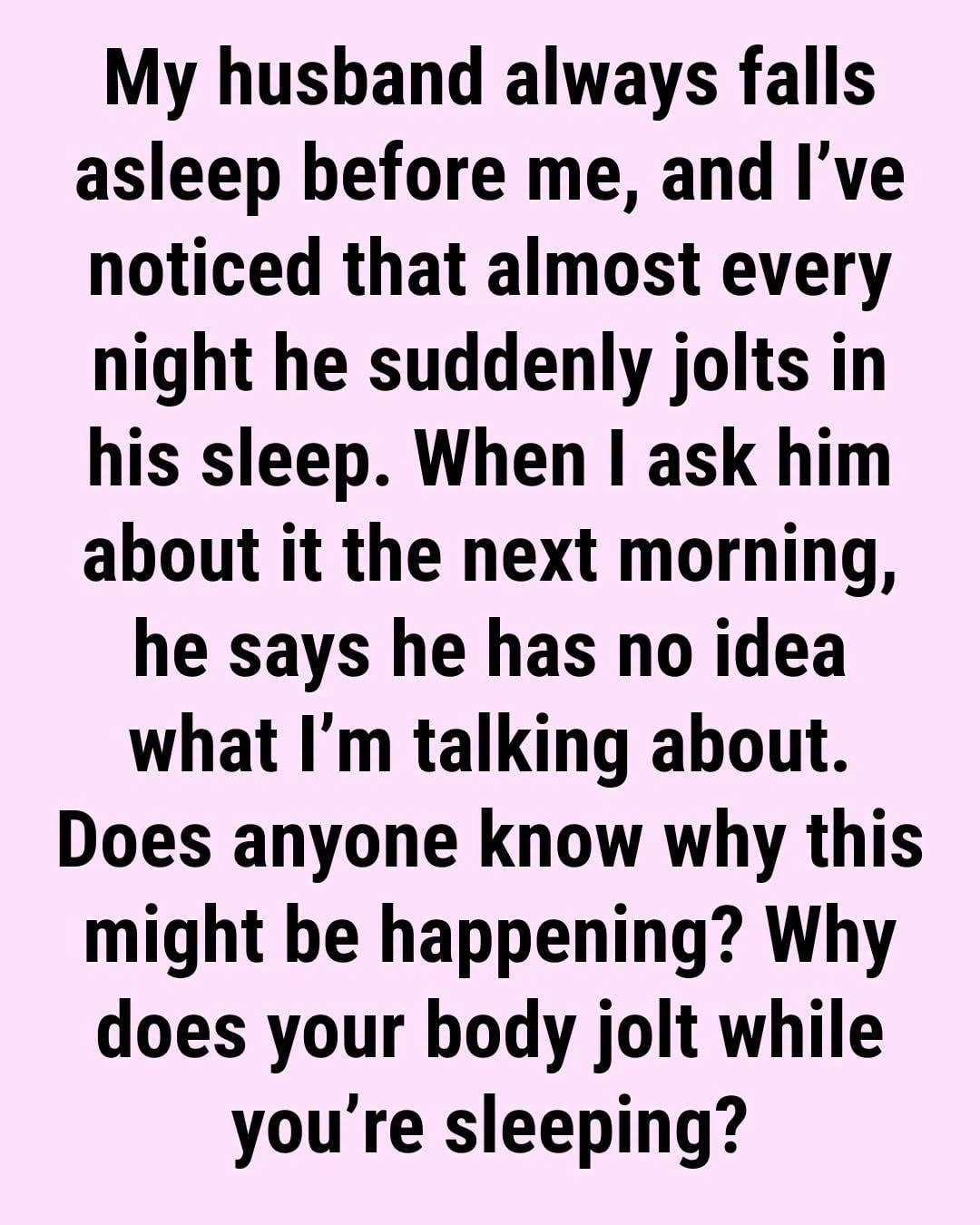
That sudden, violent jolt just as you’re drifting off to sleep can feel genuinely frightening. One moment you’re relaxing into unconsciousness, and the next your entire body jerks awake as though you’ve slipped off a cliff. Your heart pounds, your muscles tense, and for a brief instant you may wonder whether something is seriously wrong. The sensation often feels so vivid that many people remember dreaming they were falling before waking with a powerful start. Although it can be alarming, this strange experience is far more common than most people realize. Hidden behind that split-second shock is an ancient survival mechanism that has been part of the human brain for thousands of years. Scientists refer to this phenomenon as a **hypnic jerk**, also known as a **sleep start**, and while it may seem mysterious, researchers have uncovered several fascinating explanations for why it happens.
As your body prepares to fall asleep, your brain carefully transitions between wakefulness and the first stages of sleep. During this process, your breathing slows, your heart rate decreases, and your muscles naturally begin to relax. Under normal circumstances, these changes occur smoothly without you noticing them. However, when you are extremely tired or physically exhausted, your brain may rush through this transition. In doing so, it can mistakenly interpret the sudden relaxation of your muscles as a signal that your body is losing control or even falling. Acting on an instinct shaped over thousands of years of human evolution, your nervous system immediately launches a protective response before your conscious mind has any opportunity to process what is happening.
Within a fraction of a second, your brain sends a powerful burst of electrical signals through your nervous system, causing muscles throughout your body to contract simultaneously. The result is the familiar full-body jerk that instantly pulls you back into wakefulness. At the same time, stress hormones such as adrenaline briefly surge through your bloodstream, increasing your heart rate and creating the intense sensation that something unexpected has just occurred. Although the experience can feel dramatic, it typically lasts only an instant before your body settles down again.
For many people, the physical movement is accompanied by an equally vivid mental experience. Just before waking, the brain may rapidly construct a dream in which you stumble down a staircase, miss a step, trip over an obstacle, or fall from a great height. Researchers believe these dream images are not the cause of the muscle jerk but rather the brain’s attempt to explain the sudden burst of activity that has already occurred. In essence, your mind creates a story that matches the physical sensation, making the experience feel even more realistic.
Far from representing a malfunction, hypnic jerks are thought to be connected to survival instincts inherited from our distant ancestors. Long before humans slept in secure homes with comfortable beds, our ancestors often rested in trees, caves, or exposed environments where falling asleep too deeply could have carried serious risks. Some scientists believe the brain evolved a mechanism that briefly checks whether the body is safely supported before allowing complete muscle relaxation. While modern research has not identified a single definitive explanation, the evolutionary theory remains one of the most widely discussed possibilities.
Modern lifestyles, however, appear to make these nighttime jolts occur more frequently. High levels of stress, chronic sleep deprivation, demanding work schedules, and emotional anxiety all increase activity within the nervous system, making the transition into sleep less stable. Consuming caffeine late in the day, using nicotine, drinking excessive amounts of alcohol, or taking certain stimulant medications may also raise the likelihood of experiencing hypnic jerks. Intense exercise shortly before bedtime can have a similar effect by keeping the body in a heightened state of alertness even as the brain attempts to initiate sleep.
Although hypnic jerks are generally harmless, they can become frustrating when they happen repeatedly or interfere with falling asleep. People who experience frequent episodes sometimes develop anxiety about going to bed, creating a cycle in which worry itself increases the chances of another sleep start occurring. Fortunately, simple lifestyle adjustments often help reduce their frequency. Maintaining a consistent sleep schedule, avoiding stimulants several hours before bedtime, creating a calm nighttime routine, limiting screen exposure, and allowing the body sufficient time to recover from daily fatigue can all help the brain transition into sleep more smoothly.
Medical experts emphasize that occasional hypnic jerks are considered a normal part of human sleep and usually do not require treatment. However, if the movements become severe, occur many times throughout the night, are accompanied by unusual symptoms such as loss of consciousness, or significantly disrupt sleep quality, consulting a healthcare professional may be appropriate to rule out other sleep or neurological conditions. In the overwhelming majority of cases, though, these sudden nighttime jolts are simply evidence that your brain’s ancient protective systems are working a little harder than necessary.
The next time you experience that startling sensation of falling just before sleep, remember that your body is not failing you. Instead, it is carrying out a deeply rooted biological response that has helped humans survive for countless generations. What feels like a frightening interruption is actually your brain performing one final safety check before surrendering to sleep. By reducing stress, respecting your body’s need for rest, and practicing healthy sleep habits, you can often quiet these false alarms and allow yourself to drift peacefully into the deep, restorative sleep your mind and body have been preparing for all along.