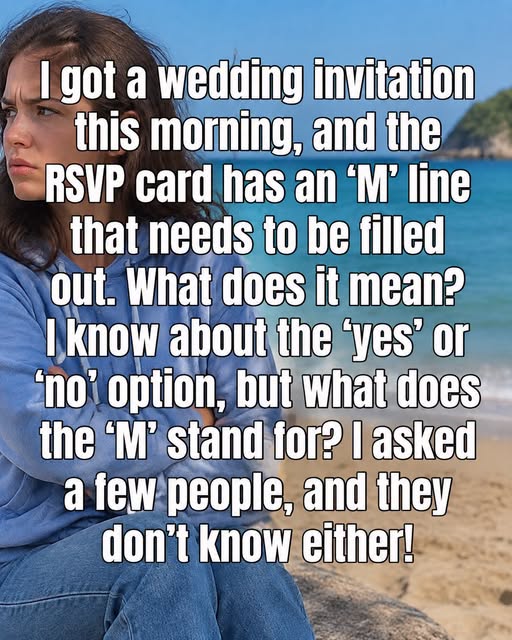
One tiny letter can turn a beautiful wedding invitation into a moment of panic. You’re ready to reply, but that lonely “M” beside a blank line suddenly makes you question everything you thought you knew about wedding etiquette. Before you guess, leave it empty, or accidentally add someone who wasn’t invited, discover the surprisingly simple truth behind this traditional detail. What looks like a confusing little instruction is actually there to make responding easier and help the couple keep track of exactly who will be attending.
The “M” on a traditional wedding RSVP card begins a courtesy title: Mr., Mrs., Ms., or Miss. Complete your preferred title, then write your name. For example, adding “r. Alex Smith” after the printed letter produces “Mr. Alex Smith.” Include the names of other invited guests responding with you, but never assume spare space means permission to bring someone extra. And don’t leave the name line blank; your hosts need to identify your response. The small detail may seem old-fashioned, but it serves a practical purpose by giving guests a clear place to provide their names.
If you use Dr., Mx., another title, or none at all, use the name and title appropriate for you rather than forcing yourself into an outdated format. Couples can skip the printed “M” entirely and choose a straightforward “Name:” field instead. RSVP comes from the French for “please respond,” so reply by the stated deadline whether you’re attending or declining. Ultimately, this isn’t an etiquette exam: it’s a practical way to help people you care about plan their celebration. A clear response allows hosts to organize seating, meals, invitations, and other arrangements without having to guess who is coming.
For guests who have never encountered the tradition before, there is no reason to feel embarrassed by the question. Wedding stationery has changed considerably over time, and modern invitations often use simpler wording that removes the need for guests to interpret an initial. If an RSVP card still contains the traditional “M,” simply treat it as the beginning of your courtesy title and complete the rest with the name you want the hosts to use. When something remains unclear, checking the invitation wording or contacting the couple is better than making an assumption. The goal of the card is ultimately straightforward: to give the hosts an accurate response and make sure everyone’s special day is planned around the guests who were actually invited.