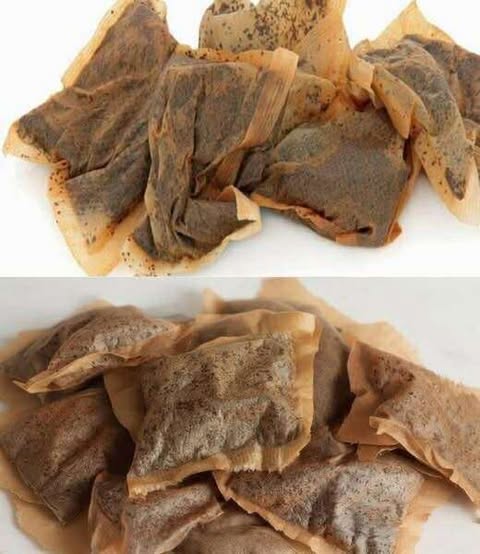
There’s a quiet secret hiding in your kitchen drawer, and you may have been throwing it away for years without realizing how useful it can be. It’s small, stained, lightweight, and easy to mistake for nothing more than kitchen waste. Yet that little used tea bag can still have several practical uses around the home and garden. It may help soothe irritated skin, freshen tired eyes, assist with certain cleaning jobs, and add organic material to your garden. This isn’t magic. It’s simply a reminder that some things we consider disposable may still have a useful second life.
What once seemed like a worthless scrap of paper, string, and leaves can become, with a small shift in perspective, a tiny tool for care and conservation. After brewing a cup of black tea, the cooled tea bag can be placed against skin for a short period to provide a cool, soothing sensation. For minor irritation or mild sunburn, the moisture and coolness may feel comforting, although serious burns should always receive appropriate medical attention rather than relying on household remedies.
Tea bags can also be used as a simple cooling compress. After allowing a used bag to cool completely, some people place it over closed eyes for several minutes when they look tired or feel puffy. The cool temperature can temporarily reduce the sensation of puffiness and provide a refreshing break after a long day. It is a remarkably simple ritual, but sometimes simple forms of self-care can make a noticeable difference in how refreshed you feel.
Green tea brings another interesting element to the conversation because it naturally contains antioxidant compounds. However, it is important not to treat a used tea bag as a proven treatment for conditions such as warts or other skin problems. While tea compounds have been studied for various potential biological effects, home applications are not a substitute for proper medical treatment. If a skin growth is persistent, painful, changing, or uncertain, a healthcare professional should evaluate it.
The usefulness of a used tea bag doesn’t have to stop with personal care. Once it has cooled and been squeezed out, it can also be repurposed for certain household cleaning tasks. A damp tea bag can help loosen residue or grease on dishes, particularly when allowed to sit with the item for a short time. The tea itself is not a miracle degreaser, but the moisture and mild compounds can sometimes help soften stubborn residue before normal washing.
For especially greasy cookware, the tea bag can be used as an additional step rather than a replacement for dish soap. Place the used bag in warm water with the dish and allow the residue to soften before washing. This can make cleanup easier while giving the tea bag one more practical purpose before it finally goes into the trash or compost.
There is also a garden connection. Used tea leaves contain organic material that can contribute to compost, and composting is generally a better approach than simply scattering large amounts of used tea around plants. If the tea bag itself is compostable and free from synthetic materials, the entire bag may sometimes be composted, but it’s important to check what the bag is actually made from.
Some modern tea bags contain plastic or synthetic fibers, which may not be appropriate for home composting. Removing the leaves from the bag and adding the tea material to a suitable compost system can be a safer option when you’re unsure about the bag’s construction.
Once incorporated into compost, tea leaves can become part of the organic matter that eventually returns nutrients and structure to soil. They can be used alongside other compostable materials to support a healthier garden environment. Roses, herbs, flowers, and other plants can benefit from good-quality soil, although used tea should not be treated as a complete fertilizer by itself.
The larger lesson is not that one tea bag can replace household cleaners, skincare products, or garden fertilizer. It is that small items often have more than one possible use before they become waste.
In a world where convenience encourages people to throw things away immediately, reusing something as ordinary as a tea bag can be a small exercise in changing that habit. Instead of asking, “Is this still useful?” and automatically answering no, you begin asking, “What else could this do?”
That shift in thinking can extend far beyond tea.
A used tea bag may become a cooling compress. It may help loosen residue from a dish. Its tea leaves may become part of a compost pile. None of these uses is revolutionary on its own, but together they represent a more mindful approach to everyday consumption.
There is also something satisfying about finding value in an object that would normally be discarded. The tea bag has already served its original purpose—it helped make your drink. But that doesn’t necessarily mean its usefulness has ended.
The practice encourages a quieter form of household wisdom: use what you already have, waste less when practical, and think twice before throwing something away simply because it looks finished.
Of course, not every used tea bag should be reused. If it has been sitting around wet for too long, developed mold, or smells unusual, it should be discarded. And when using anything on the skin, especially irritated or sensitive skin, stop if it causes discomfort or irritation.
The goal isn’t to turn every piece of household waste into a miracle cure. It’s to recognize realistic, simple ways an everyday object can sometimes have another purpose.
That little used tea bag may have started as something you were ready to throw away. But with a little imagination, it can become part of a cooling moment, a cleaning routine, or a compost pile.
And perhaps that is the real secret hiding in the kitchen drawer: not magic, but the realization that small choices can add up.
When you reuse what you already have, waste a little less, and pay closer attention to the objects moving through your home, you begin to see everyday life differently.
Sometimes conservation doesn’t require a dramatic change.
Sometimes it begins with something as small as asking what one used tea bag can do before you finally let it go.