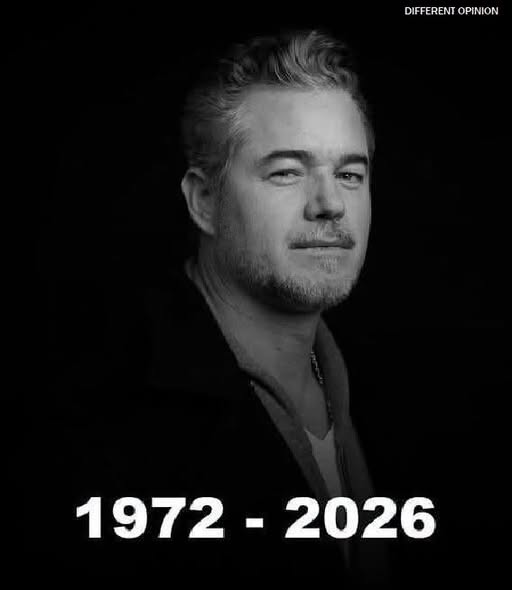
Eric Dane’s reported death at 53 has cast a shadow over a career that touched millions of viewers around the world. From his unforgettable arrival on *Grey’s Anatomy* to the ALS diagnosis he publicly disclosed in 2025, his story extended far beyond television. Through his performances, personal challenges, and willingness to share difficult moments with the public, Dane became a figure whose life resonated with audiences on multiple levels. Now, the account of his final chapter brings renewed attention to his remarkable body of work, his courage in facing a devastating illness, and the lasting connection he built with fans throughout his career.
According to the report, Eric Dane died at 53 after a battle with amyotrophic lateral sclerosis (ALS), a progressive neurological disease that affects the nerve cells responsible for controlling voluntary muscles. He publicly revealed his diagnosis in 2025, sharing news that deeply affected fans and colleagues who had followed his work for years. Born in California, Dane began his acting career in the 1990s, gradually building experience through smaller television appearances and supporting roles. Like many actors working to establish themselves in Hollywood, he spent years developing his craft before landing the breakthrough opportunity that would transform his career and introduce him to a much wider audience.
In 2006, Dane joined the cast of *Grey’s Anatomy* as Dr. Mark Sloan, a confident and charismatic plastic surgeon whose arrival quickly changed the dynamic of the popular medical drama. Affectionately nicknamed “McSteamy” by fans, the character became one of the show’s most recognizable personalities. Dane brought a distinctive combination of charm, humor, confidence, and emotional depth to the role, helping turn Mark Sloan into a fan favorite. Although the character initially appeared to embody the stereotypical handsome and self-assured doctor, the storylines gradually revealed more complicated layers to his personality, allowing viewers to connect with him beyond his appearance. His performance helped establish Dane as a household name and secured his place in the memories of millions of television viewers.
However, Dane’s career was never limited to the success he achieved on *Grey’s Anatomy*. He continued to pursue challenging roles across different genres, demonstrating his ability to move between television dramas, action series, and major film productions. In *The Last Ship*, he played Captain Tom Chandler, a naval officer facing extraordinary responsibilities in a world threatened by a global catastrophe. The role offered a different perspective on his acting abilities, placing him in a demanding leading position that required authority, determination, and emotional restraint. Later, in HBO’s *Euphoria*, Dane portrayed Cal Jacobs, a complex and troubled character whose personal conflicts became an important part of the series’ dramatic storyline. His performance showed another side of his range, allowing him to explore darker themes and complicated family relationships.
His film career also included appearances in several well-known productions. Dane appeared in *X-Men: The Last Stand*, expanding his presence in the superhero genre, and in *Marley & Me*, a film remembered by audiences for its emotional portrayal of family life and the bond between people and their pets. He also appeared in *Bad Boys: Ride or Die*, continuing to work in major Hollywood productions. These projects reflected the variety of opportunities he pursued throughout his career and demonstrated that his professional identity extended well beyond the character that first made him famous. Across television and film, he developed a body of work that reached audiences with different interests and generations.
The disclosure of his ALS diagnosis in 2025 brought a deeply personal dimension to his public life. For many fans, the news was difficult to reconcile with the confident and energetic characters they had watched him portray on screen. By speaking openly about his condition, Dane helped draw attention to a disease that remains challenging for patients, families, and medical researchers. His decision to share aspects of his experience also created opportunities for broader conversations about the realities of living with a serious neurological illness, the importance of support systems, and the need for continued research. Rather than allowing his diagnosis to become the only story associated with his name, he continued working and remained connected to the professional world that had shaped so much of his life.
His experience also highlighted the difference between the characters audiences see on screen and the private challenges actors may face away from the cameras. For years, viewers had associated Dane with strength, charisma, and memorable dramatic performances. Learning about his personal struggle offered a more vulnerable perspective on the person behind those roles. His willingness to discuss his diagnosis helped humanize a condition that many people may know little about until it affects someone they admire or love. For individuals and families facing similar circumstances, public conversations surrounding ALS can contribute to greater awareness, understanding, and compassion.
As news of his reported death brings renewed attention to his life, Dane’s legacy encompasses much more than a single television role or a difficult final chapter. He will be remembered for bringing Dr. Mark Sloan to life on *Grey’s Anatomy*, for his work in *The Last Ship* and *Euphoria*, and for the many other performances that demonstrated his versatility as an actor. At the same time, his openness about ALS became an important part of the story audiences followed in his later years. His career serves as a reminder that the impact of an actor is measured not only by the number of projects they complete, but also by the emotions their performances inspire and the connections they establish with viewers.
Ultimately, Eric Dane’s story brings together the achievements of a successful acting career and the deeply human experience of confronting a serious illness in public. His characters will continue to live through the shows and films that audiences revisit, while his personal journey has helped bring greater attention to ALS and the people affected by it. For longtime fans, his legacy is tied to years of memorable entertainment, unforgettable moments on screen, and a sense of familiarity built over time. Beyond the roles that made him famous, he leaves behind a story that encourages audiences to remember both the performer they admired and the person whose courage and openness gave his final years a significance beyond Hollywood.