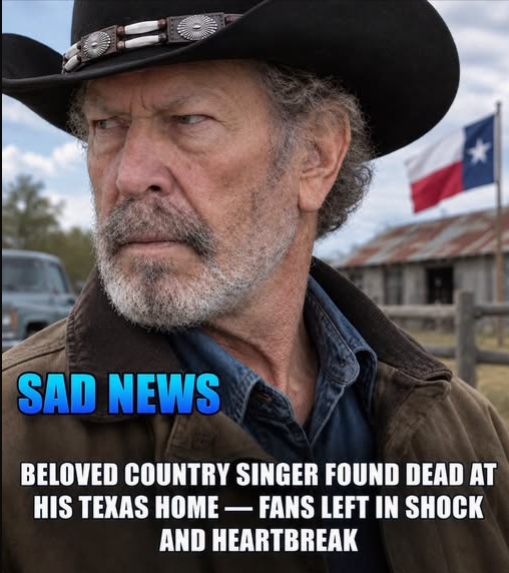
Texas has lost a voice that refused to behave. Kinky Friedman made music bite, turned fiction into mischief, and challenged politics with the same stubborn nerve that made him impossible to ignore. He was never particularly interested in fitting neatly into anyone else’s expectations. Instead, he built a career around contradiction, provocation, humor, and an unmistakable Texas identity. Now, behind the laughter and outrageous legend, his death leaves an unsettling question for everyone who cherished his defiance: who will dare to be that gloriously unfiltered again?
Kinky Friedman, who died in June 2024 at the age of 79, built a life around refusing the expected role. He was a musician who understood that a song could entertain while simultaneously poking at social conventions. With the Texas Jewboys, he created music that mixed country traditions with satire, irreverence, and humor that could amuse one listener, offend another, and leave someone else wondering whether they were supposed to laugh at all.
That uncertainty was part of the point. Friedman was never the kind of performer who seemed interested in making everyone comfortable. His work often pushed against the boundaries of what audiences expected from country music, particularly in an era when performers were frequently expected to fit recognizable molds. He found another path—one where jokes, cultural observations, music, and provocation could occupy the same space.
His irreverence did not stop when the music ended. As a mystery novelist, Friedman carried much of the same mischievous personality onto the printed page. His fiction allowed him to create characters and situations that reflected the same unconventional spirit audiences had encountered in his music. Writing became another way for him to challenge expectations, entertain readers, and construct a world where seriousness and absurdity could exist side by side.
Then came politics.
In 2006, Friedman launched an independent campaign for governor of Texas, bringing his unconventional public persona into a political environment that was usually dominated by traditional party structures. His campaign attracted attention precisely because he did not resemble the conventional political candidate. He was not attempting to erase the eccentricities that had made him famous; he brought them directly into the campaign.
He ultimately did not win the governor’s office, but the campaign became another chapter in a life defined by refusing to stay inside one category. Musician. Novelist. Political candidate. Satirist. Texan. None of those labels alone could completely contain him.
Respectability was hardly his defining ambition.
That does not mean everyone admired him or agreed with his methods. Friedman deliberately cultivated controversy, and some of his jokes and provocations could be divisive. His legacy does not need to be polished into universal approval to be meaningful. In fact, part of what made him memorable was his willingness to leave rough edges intact.
There was always something contradictory about Friedman. He could use humor to challenge people while simultaneously expressing deep affection for the culture he was challenging. He could mock conventions while remaining unmistakably connected to the place and traditions that shaped him. He could play the outsider while becoming one of the recognizable characters in the story of Texas itself.
That contradiction became central to his identity.
Friedman demonstrated that belonging does not necessarily require obedience. Loving a place does not mean refusing to criticize it. Being part of a culture does not mean accepting every rule associated with it. Sometimes, the person who challenges a community most aggressively can also be someone who cares deeply about that community.
For many admirers, that was the appeal. Friedman made room for people who felt uncomfortable with neat categories. He showed that someone could be deeply connected to Texas while refusing to behave like the version of a Texan that everyone expected. His independence became part of his identity, and eventually his refusal to conform became almost as recognizable as his music.
There was also a certain fearlessness in the way he approached public life. Friedman seemed willing to risk embarrassment, criticism, or misunderstanding rather than surrender the personality that had made him distinctive. In an entertainment culture increasingly concerned with carefully managed images, that kind of unpredictability can feel almost unusual.
His humor could be sharp. His politics could be unconventional. His performances could be provocative. His writing could be mischievous. But underneath all of it was an insistence that a person did not have to choose between seriousness and absurdity.
That may be one of the reasons his death feels larger than the loss of a musician or novelist. Friedman represented a particular kind of cultural freedom—the freedom to be strange, difficult, funny, contradictory, and impossible to package neatly.
For admirers, losing him means losing someone who demonstrated that originality does not always come from trying to be different. Sometimes it comes from simply refusing to become something you are not.
His career also serves as a reminder that influence is not always measured by conventional success. Friedman did not become governor. He did not build a career around mainstream respectability. He did not attempt to remove every controversial edge from his public image. Yet decades after his music first made people pay attention, his name still carried a distinctive cultural weight.
That is its own form of legacy.
Friedman’s Texas was not simply a geographical location. It was an attitude, a collection of contradictions, characters, stories, traditions, and personalities. He understood that a place could be celebrated without being placed on a pedestal. It could be loved honestly, which sometimes meant laughing at it, arguing with it, and challenging the people who claimed to represent it.
That willingness to challenge was part of what made him difficult to replace.
There will always be musicians. There will always be novelists. There will always be political candidates willing to promise something new. But there are fewer people willing to combine all those identities while remaining completely comfortable with being misunderstood.
Kinky Friedman did.
His life was not polished, predictable, or designed to satisfy everyone. It was colorful, complicated, funny, controversial, creative, and unmistakably his own. That may ultimately be the best way to remember him—not as a perfect cultural hero, but as an original who refused to become ordinary simply because ordinary was easier.
Texas has lost one of its more unconventional voices, but the questions he raised do not disappear with him. How much conformity are we willing to accept? How much humor can a culture tolerate when the joke points back at itself? Can someone love a place deeply while spending a lifetime challenging it?
Friedman’s life offered one possible answer: yes.
He showed that affection does not require silence, belonging does not require obedience, and identity does not have to come with a carefully approved set of boundaries. He proved that an outsider can become unmistakably part of the place he keeps challenging.
And perhaps that is why his absence feels so noticeable.
The laughter remains in the recordings. The books remain on shelves. The stories remain in the memories of those who heard him perform, read his work, followed his political campaign, or simply encountered his name and wondered what he would say next.
But the man himself is gone.
What remains is a legacy built not on perfection, but on personality. Not on universal approval, but on unmistakable individuality. Kinky Friedman spent his life refusing to behave exactly as expected, and in doing so, he created something that cannot easily be reproduced.
For those who admired him, that may be the greatest loss of all: not simply losing a musician, writer, or political provocateur, but losing someone who seemed almost constitutionally incapable of becoming predictable.
The challenge now belongs to everyone who follows.
Who will dare to be that gloriously unfiltered again?