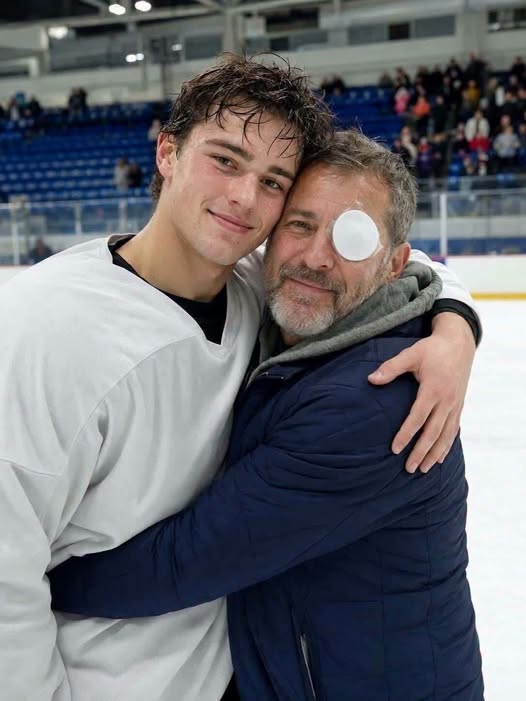
Hours after his mother died, four-year-old Mason was left alone by the only parent he had left. When I walked into that silent house, his frightened question shattered me more deeply than the terrible phone call ever could. I had spent the early morning believing I was going to comfort my best friend, a man whose world had just collapsed in the most unimaginable way. I thought I would bring him coffee, sit beside him, and remind him that he did not have to face his grief alone. I never imagined I would find his little boy sitting in pajamas, eating cereal in an empty house, waiting for a father who had already disappeared. At that moment, I made a decision that would change both our lives forever. I thought I was there to rescue my best friend’s son, but fourteen years later, I finally understood the heartbreaking and beautiful truth: sometimes, when you step forward to save someone else, they end up saving you, too.
The phone rang at 2:07 a.m. I remember the time because I had been sleeping deeply, and the sudden sound startled me awake. When I answered, I immediately knew something was wrong. David was crying so hard that I could barely understand his words. He tried to speak several times, but every sentence broke apart before he could finish it. Eventually, he managed to tell me that Sarah, his wife, had died from a brain aneurysm at just thirty-one years old. One moment, she had been a young mother with an entire future ahead of her. Now, David was telling me she was gone.
I had known David since we were teenagers. We had grown up together, shared our biggest dreams, survived our worst mistakes, and celebrated the kind of victories that seem enormous when you are young. When he met Sarah, I watched him become a different kind of man. He became gentler, more patient, and more aware of the future. When their son Mason was born, David cried while holding him for the first time. I still remembered the photograph he sent me that afternoon, showing him with the newborn tucked against his chest. He had written only four words beneath it: “This is everything now.”
That was the David I knew.
So when he finally managed to tell me that he could not raise Mason alone, I assumed grief was speaking for him. His wife had died unexpectedly, and he was terrified of a future he had never imagined having to face. I told him I was coming over. I promised him we would figure everything out together, that he did not need to make any decisions in the middle of the night, and that his son would never be alone while I was around.
He did not answer. I heard him crying again, and then the call ended.
I barely slept for the rest of the night. By seven o’clock that morning, I was driving to David’s house with two coffees and a bag of pastries from the bakery Sarah used to love. I thought the smell of fresh coffee might help him sit up, take a breath, and begin facing the terrible reality of what had happened. I rehearsed what I would say at every red light, trying to find words that might comfort a man who had just lost the person he loved most.
When I arrived, something felt wrong immediately.
David’s car was gone. The front door was unlocked, and the house was unnaturally quiet. I called his name as I stepped inside, but nobody answered. I walked through the living room and toward the kitchen, expecting to find him sitting at the table, exhausted and overwhelmed.
Instead, I found Mason.
He was sitting alone in his little pajamas, his feet dangling from a kitchen chair that was too big for him. A bowl of cereal sat in front of him, and a spoon rested in his small hand. He looked up when he heard me enter, and his face brightened with the kind of relief only a frightened child can express.
“Uncle, where did Daddy go?”
I put the coffees down so quickly that some spilled across the counter.
I had no answer.
Mason was four years old. He was too young to understand what a brain aneurysm was, too young to comprehend the permanence of death, and far too young to understand why his father had disappeared. He only knew that his mother was not coming downstairs, his father was nowhere to be found, and the house that had always made him feel safe suddenly felt unfamiliar.
I knelt beside his chair and asked whether he had eaten anything else.
He shook his head.
Then he asked me another question.
“Is Mommy still sleeping?”
Something inside me broke.
I pulled him gently into my arms and held him against my chest. He smelled of children’s shampoo and cereal milk. His small fingers gripped the back of my shirt as though he was afraid I might disappear, too. I wanted to tell him that everything would be fine, but I knew I could not promise that. His mother was gone. His father had left. And this little boy, who should have been surrounded by adults protecting him from the worst parts of the world, had been left to face a terrible morning alone.
So I told him the only thing I knew was true.
“I’m here, buddy. I’m not going anywhere right now.”
He rested his head against my shoulder, and for a few seconds, neither of us moved.
I searched the house for a note, a message, anything that might explain where David had gone. I called his phone repeatedly, but every call went unanswered. I contacted a few mutual friends, hoping someone had heard from him. Nobody knew where he was. Eventually, I had to accept that I could not make David come back simply because I needed him to.
What I could do was make sure Mason was safe.
I packed a small bag with clothes, his favorite stuffed dinosaur, and a few things he might need. Before leaving, I stood in the hallway and looked at the family photographs hanging on the wall. There was Sarah laughing in the garden. David was holding Mason on his shoulders at the beach. Another photograph showed all three of them on a summer afternoon, squinting into the sunlight.
I had taken that last picture myself.
I remembered Sarah teasing David because he had closed his eyes just as I pressed the shutter. We had laughed about it for weeks. Standing there, I felt the unbearable weight of the knowledge that one day, Mason might look at those photographs and realize how much of his childhood had changed in a single morning.
I took him home with me.
At first, I believed it would be temporary. I assumed David would return after a few hours, or perhaps a day, once the shock had passed. I thought he would call, explain what had happened, and ask to see his son. I kept my phone beside me, checking it every few minutes.
But the hours became days, and the days became something much harder to explain.
David did not come back.
There were calls to make, arrangements to organize, and difficult conversations with people who needed to understand what had happened. I did everything I could to ensure Mason had a stable place to stay while the adults around him tried to make sense of the situation. I sought appropriate legal guidance about caring for him, because loving a child was not the same as having the legal authority to make every decision on his behalf.
Meanwhile, Mason needed ordinary things.
He needed breakfast before preschool. He needed someone to find his missing shoes. He needed bedtime stories, clean pajamas, and a person who would come when he called in the middle of the night. He needed to know that if he woke from a nightmare, someone would be there to remind him that he was safe.
I learned how to make pancakes that were shaped more like clouds than circles. I learned that Mason hated the crusts on sandwiches but loved the corners of toasted cheese. I learned that he asked the same question repeatedly when he was anxious, and that sometimes he needed a hug more than an answer.
Most importantly, I learned that children do not need adults to have every answer. They need adults who are willing to stay when the answers are difficult.
The first few months were exhausting. I had a job, bills, responsibilities, and a life that had been built around the assumption that I would eventually have a family of my own, perhaps someday, when the timing felt right. Suddenly, I was responsible for a little boy who had lost his mother and been abandoned by his father. I was learning how to be the person he depended on while trying to understand what had happened to the friend I had known for most of my life.
There were nights when I sat on the edge of my bed after Mason had fallen asleep and wondered whether I was capable of giving him everything he needed. I worried about making mistakes, about saying the wrong thing when he asked about his parents, and about whether love alone would be enough to help him through what he had experienced.
But then morning would arrive.
Mason would appear in the kitchen with his dinosaur tucked under one arm, his hair sticking up in every direction, and ask whether we could have pancakes again. He would tell me a story about something that had happened at preschool, or ask whether we could visit the park after dinner. Slowly, I began to understand that caring for him was not about solving his entire life in one grand gesture. It was about showing up for the thousands of small moments that made a childhood.
Over time, the house changed.
There were toys beneath the sofa, drawings taped to the refrigerator, and tiny shoes beside the front door. My quiet evenings became bedtime negotiations, stories about dinosaurs, and discussions about whether monsters could climb stairs. I stopped buying groceries only for myself. I started keeping emergency snacks in the car. I learned the names of Mason’s teachers and the birthdays of his friends.
Somewhere in the middle of all that ordinary chaos, I stopped thinking of him as the child I was temporarily helping.
He was becoming my family.
There were difficult questions, of course. As Mason grew older, he began to understand that other children went home to their mothers and fathers, and that his story was different. Sometimes he asked why his mother had died. Sometimes he asked why his father had left. I never pretended to know things I did not know, and I never wanted him to believe that what had happened was somehow his fault.
I told him about Sarah whenever he wanted to hear about her. I described her laughter, her kindness, and the way she always made people feel welcome in her home. I showed him the photographs I had kept and shared the funny stories that might otherwise have disappeared with time. I wanted him to grow up knowing that his mother had loved him, that his life had begun in a home full of love, and that the tragedy that followed did not erase any of that.
I also told him that his father’s decision to leave was not a reflection of his worth.
That was one of the hardest things to explain.
Children often assume that adults leave because they have done something wrong. Mason was no exception. As he grew, I sometimes noticed him watching families at the park or looking at fathers carrying sleeping children from cars. I wondered whether he was imagining what his life might have been like if David had stayed.
Whenever those thoughts surfaced, I reminded him that he was not responsible for the choices adults made. He deserved love, stability, and the freedom to grow without carrying someone else’s decisions on his shoulders.
Years passed, and the little boy who had once sat alone at the kitchen table began to change before my eyes. His legs grew longer, his questions became more complicated, and his interests shifted from dinosaurs to football, music, and whatever his friends happened to be talking about that week. He became a teenager with strong opinions, a quick sense of humor, and an occasional talent for making me wonder whether I had ever been as difficult as he could be.
We argued about homework. We negotiated curfews. We disagreed about how much time he should spend on his phone. There were slammed doors and apologies, laughter at the dinner table, and conversations that lasted far longer than either of us had planned.
Those ordinary struggles meant more to me than I could ever explain. They were evidence that Mason was growing up with the freedom to be a normal teenager rather than a child defined entirely by tragedy.
I had wanted to protect him from pain, but I eventually understood that I could not give him a life without difficult moments. What I could give him was a safe place to return to when the world became too much.
And for fourteen years, that was what I tried to do.
I never thought of myself as a hero. I had not rescued Mason from some extraordinary danger or performed a single act that made everything right. I had simply answered the call, walked into a house, and refused to leave a frightened child alone.
Yet there was a part of the story I did not fully understand until Mason turned eighteen.
By then, we had built a life together that felt so natural I sometimes forgot how unexpectedly it had begun. He had grown into a thoughtful, independent young man who could make me laugh when I least expected it. He still called me when he needed advice, although he had developed the teenage habit of pretending he did not need advice at all. He still came into the kitchen looking for food, and he still knew exactly how to tell when something was bothering me.
One evening, he asked if we could talk.
We sat at the kitchen table, the same table where he had eaten cereal on the morning I found him alone. The chairs were different, and the house had changed, but I remembered that morning as clearly as if it had happened the day before.
Mason was quiet for a long time.
Then he asked whether I remembered the first question he had ever asked me after his mother died.
I told him I did.
He looked down at his hands and smiled faintly.
“I don’t remember everything about that morning,” he said. “I remember being scared. I remember the house was quiet. But I remember you telling me you weren’t going anywhere.”
I felt my throat tighten.
He continued, explaining that for years he had thought I was the person who had saved him. When he was little, he believed the story was simple: his mother died, his father left, and I came to take care of him. It was only as he grew older that he began to understand what that decision had meant. I had changed my plans, made room for him, and built my life around ensuring he would not have to face the world alone.
Then he said something I had never expected to hear.
“You always tell people that you were there for me. But you don’t know how much you needed me, too.”
I stared at him, unable to answer.
Mason explained that he had noticed things over the years that I had never talked about. He had seen me come home exhausted and still find the energy to help with his homework. He had watched me put aside my own worries when he was having a difficult day. He had seen the way I smiled when he succeeded at something, and the way I worried when he was hurting.
He said that growing up in our home had taught him that family was not always defined by biology or by the circumstances of someone’s birth. It was defined by the person who kept showing up, even when staying was difficult.
Then he thanked me.
Not for the money I had spent, the meals I had cooked, or the years of practical responsibilities I had carried. He thanked me for making sure he never had to wonder whether he belonged.
I had spent fourteen years believing that I was the person who had given Mason a home. Sitting across from him that evening, I finally understood that he had given me something I had never realized I was missing.
He had given me purpose.
He had taught me how love could become a daily practice rather than an abstract promise. He had turned an ordinary house into a place where someone was always expected home. He had given me a reason to celebrate school achievements, worry about scraped knees, stay awake during thunderstorms, and look forward to a future that included someone else’s dreams alongside my own.
I had entered his life thinking I was rescuing him from abandonment. In reality, we had spent fourteen years building a family neither of us had expected.
I reached across the table and took his hand.
“You were never a burden,” I told him. “Not for one day.”
He nodded, and for a moment, I saw the little boy from that silent kitchen again, the child who had asked where his daddy had gone and whether his mommy was still sleeping.
But he was no longer that frightened four-year-old.
He was a young man who understood that the worst moments of his life did not have to define everything that followed. He knew that losing his mother was a tragedy, and that his father’s disappearance had left questions he might never fully answer. But he also knew that his story contained more than loss.
It contained friendship, loyalty, forgiveness, and the quiet determination of two people who had found a way to belong to each other.
I still think about David sometimes. I wonder what happened to him, what he was feeling when he drove away, and whether he ever understood the consequences of leaving his son behind. I cannot rewrite that part of the story, and I will not pretend that the pain it caused simply disappeared. Mason deserved better than what happened to him that morning.
But I have learned that our lives do not have to remain defined by the people who leave us. Sometimes, healing begins when we recognize the people who stay.
Fourteen years ago, I walked into a silent house carrying coffee and pastries, believing I was going to help my best friend through the worst day of his life. Instead, I found a little