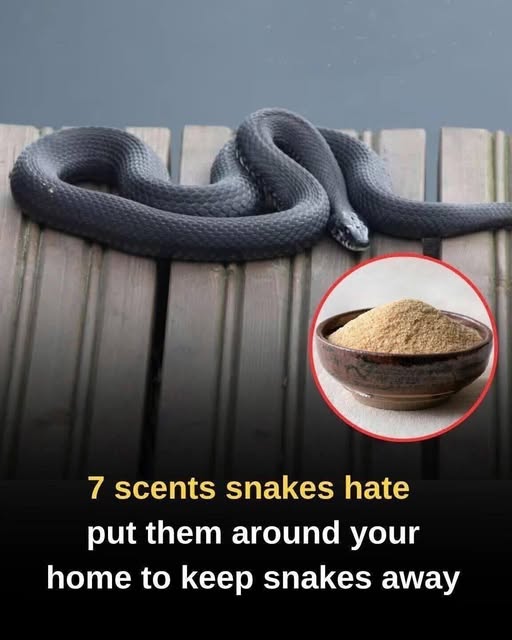
Snakes don’t announce themselves. They don’t make noise, don’t give warning, don’t signal their presence in a way that feels predictable. One moment everything seems normal, and the next, they are simply there—silent, still, and closer than you ever expected them to be. That sudden appearance is what triggers the strongest reaction. Not just fear, but urgency—the instinct to protect your space, your home, your sense of safety.
In that moment, most people don’t think about harming them—they just want them gone. As far away as possible. And quickly. That’s where the flood of advice begins. Suggestions passed from person to person, remedies shared online, ideas repeated so often they start to feel like facts. Ammonia. Garlic. Oils. Vinegar. Each one presented as a solution, each one backed by someone who swears it works—or someone else who insists it doesn’t.
The truth, as it often is, sits somewhere in between.
Snakes experience their environment very differently from humans. They don’t rely heavily on sight or sound the way we do. Instead, they depend on chemical signals—subtle traces in the air and on surfaces that help them understand where they are, what has passed through, and whether something nearby is safe or not. This sensitivity is what makes strong odors relevant in the first place.
Substances like ammonia, for example, produce sharp fumes that can overwhelm those chemical senses. When used outdoors, in specific areas where snakes might pass, it can make the environment feel uncomfortable enough that they choose to avoid it. But this effect is temporary. Ammonia evaporates quickly, losing its strength over time. It also comes with its own risks, especially if used improperly, as it can be harmful to pets and irritating to people. Because of that, it requires careful handling and should never be treated as a long-term solution on its own.
Essential oils—such as cinnamon or clove—are often mentioned as alternatives. These oils have strong, concentrated scents that can overstimulate a snake’s sensory system when applied in areas like pathways, garden edges, or around the foundation of a home. For a short period, this can create a kind of barrier—not a physical one, but an environmental signal that discourages movement through that space. However, just like ammonia, their effect fades. Rain, humidity, and time reduce their intensity, meaning they need to be reapplied regularly to maintain any impact.
Other commonly suggested options—garlic, onions, vinegar, lemongrass, marigolds, citronella—work in slightly different ways. Some introduce strong scents that interfere with a snake’s ability to track chemical cues. Others may help indirectly by affecting the environment, such as reducing the presence of insects or rodents, which are common food sources. By changing what attracts snakes to an area in the first place, these methods can contribute to making that space less appealing.
But none of these methods create a guaranteed barrier. They don’t form a wall that snakes cannot cross. At best, they act as signals—temporary influences that may encourage a snake to move elsewhere if given the choice.
That’s why the most effective approach goes beyond scent. It involves changing the environment itself in ways that reduce the reasons snakes come near in the first place. Sealing gaps in walls, doors, and foundations removes entry points. Clearing clutter—such as piles of wood, debris, or dense vegetation—reduces places where snakes can hide. Managing moisture helps eliminate conditions that attract prey. And limiting access to food sources removes the main incentive for snakes to stay.
When these steps are combined, the result is not a single solution, but a system. One that makes your space less inviting, not through force, but through absence—absence of shelter, absence of food, absence of easy access.
In that context, scents can still play a role. They can reinforce those changes, adding another layer that gently pushes snakes to choose a different path. But they are most effective when used alongside practical measures, not as replacements for them.
What all of this comes down to is balance.
The goal is not to eliminate snakes entirely, but to guide them away from areas where they create concern. They are part of a larger ecosystem, contributing to the control of pests and maintaining natural balance. Encouraging them to pass by, rather than settle in, allows that balance to remain intact while also protecting your immediate environment.
In the end, the most reliable solution is not a single substance or trick, but a combination of awareness and maintenance.
Because when the environment changes, their behavior changes with it.
And that’s what keeps them at a distance—quietly, effectively, and without harm.