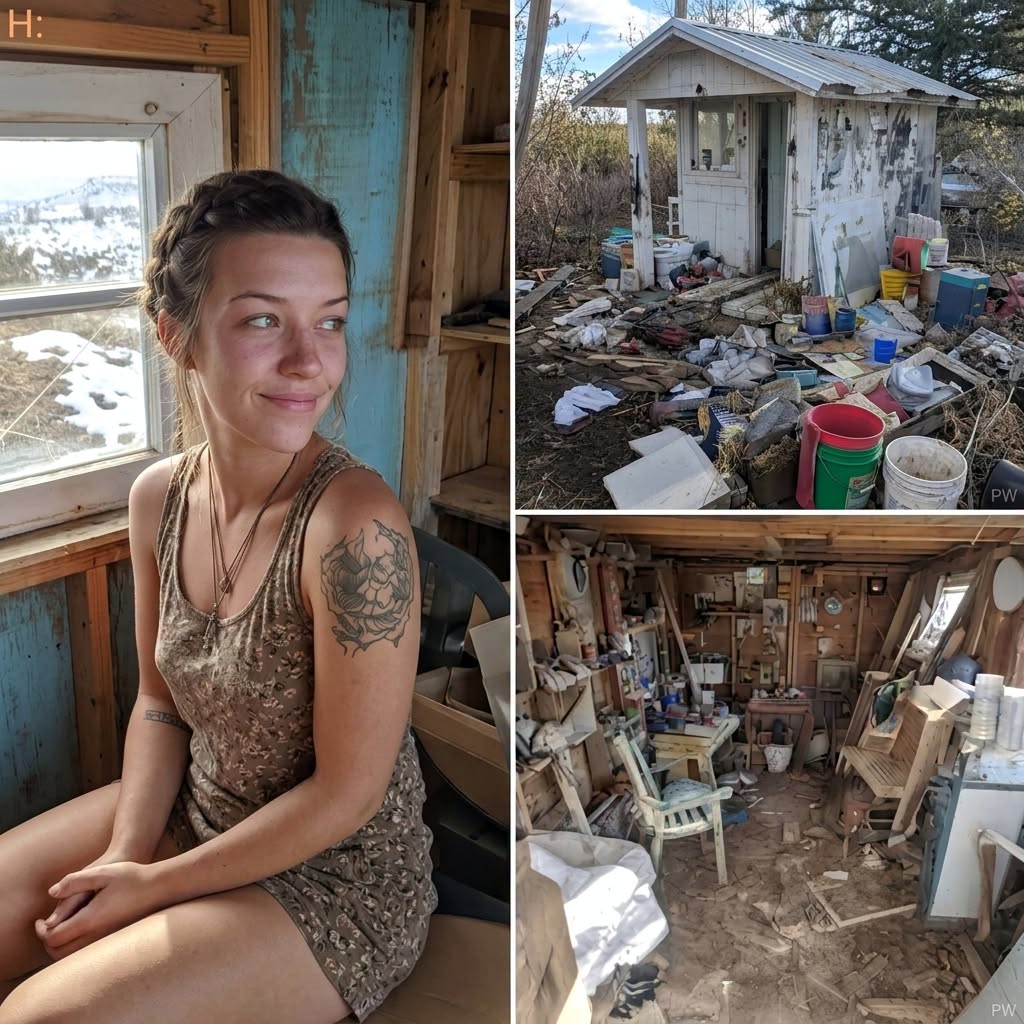
After a painful divorce, Heather found herself rebuilding her life with far less than she had once imagined. Much of the future she had planned suddenly disappeared, leaving her with the difficult task of figuring out what came next. Yet one possession she still had would eventually become the beginning of something completely unexpected: a small, worn shed sitting on a modest piece of land. At just 10 by 11 feet, it hardly looked like a place anyone could realistically call home. But Heather had already spent years learning to live simply through traveling and life in a van, so instead of seeing the structure as useless, she saw possibility.
The shed was small, rough around the edges, and far from the kind of home most people would choose voluntarily. There was limited floor space, little room for traditional furniture, and no obvious way to make it comfortable. But Heather had learned an important lesson from living on the road: having less does not necessarily mean having less happiness. Sometimes, fewer possessions create more freedom. Rather than trying to replace everything she had lost after the divorce, she decided to build a life around what she actually needed.
Inside, every inch was carefully planned. Nothing could be placed randomly because even a few inches mattered in a space this small. Natural light became one of the most important features, helping the interior feel brighter and more open than its measurements suggested. A comfortable couch created a simple living area where Heather could sit, relax, read, or simply enjoy having a place that belonged entirely to her.
One of the cleverest additions was a swinging desk. Instead of taking up permanent floor space, the desk could be moved when Heather needed more room. It functioned as a workspace when she needed to focus and could be shifted out of the way when she wanted the room to feel more open. It was exactly the kind of flexible solution that made tiny-home living possible.
Heather deliberately avoided unnecessary furniture. Every item needed to serve a purpose while also contributing something personal to the atmosphere. She did not want the shed to feel like a storage box filled with belongings. She wanted it to feel like a home. Soft textures, practical objects, and carefully chosen decorations helped turn the limited space into somewhere warm and welcoming.
A small wood-burning stove provided heat during colder weather, giving the room both warmth and a cozy atmosphere. For cooking, Heather relied on a compact camping stove rather than installing a large kitchen. The setup was simple, but it worked. She learned to prepare meals without needing a conventional kitchen filled with appliances and cabinets.
Storage required even more creativity. Open shelves allowed her to keep dishes, food, and everyday items within reach without sacrificing valuable floor space. Instead of hiding everything behind bulky cabinets, she used the walls vertically. Every surface became an opportunity to store something while keeping the main living area as uncluttered as possible.
Among the most meaningful possessions inside the tiny home was an old refrigerator that had belonged to Heather’s mother. In a space where almost everything had been chosen for practicality, the refrigerator carried something different: memory. It connected Heather’s new life to her past and reminded her that rebuilding did not mean erasing everything that came before.
Even the bathroom required creative thinking. Space was too valuable for conventional arrangements, so Heather installed a composting toilet beneath the sink. The solution allowed her to maintain the basic comforts she needed without sacrificing a large portion of the already limited floor area. It was another example of how tiny living required her to rethink ordinary assumptions about what a home was supposed to look like.
Above the main room, a small loft became Heather’s bedroom. Reaching it meant climbing into a compact private area, but the space gave her something important: separation. Downstairs could remain the place for cooking, working, relaxing, and everyday activities, while the loft offered a quiet retreat at the end of the day.
The bedroom did not need to be large to feel meaningful. After the upheaval of her divorce, having a private place where she could close her eyes and know that the space belonged entirely to her carried a significance far greater than its size. The loft became a reminder that comfort is not always measured in square footage.
Throughout the transformation, Heather focused on a different question than most people might ask. Instead of wondering how much she could possibly fit into the shed, she asked herself what she truly needed. That shift allowed her to let go of possessions that no longer served a purpose and concentrate on the things that made her feel comfortable, independent, and at peace.
The finished space was not luxurious in the traditional sense. It did not have enormous rooms, expensive appliances, or endless storage. But it had something that Heather valued even more: control over her own life. Every corner reflected a decision she had made, and every solution represented another step toward creating a future that was hers rather than one dictated by circumstances.
The transformation became much more than a clever tiny-home project. It became a physical representation of Heather’s ability to rebuild after losing the future she thought she was going to have. The old shed had once looked like something forgotten and practically useless. She turned it into a place where she could feel safe, comfortable, and independent.
There was something deeply symbolic about that transformation. The structure was small, but the freedom it represented was enormous. Heather no longer needed to measure her life against the size of the house she lived in or the possessions she had accumulated. She had learned that a home could be created through intention, memory, creativity, and the feeling of belonging.
The shed that once represented what she had lost ultimately became the foundation for what she could still build. It gave her a fresh beginning after a painful ending and showed her that starting over did not have to mean recreating the life she had before.
For Heather, home did not need to be large or luxurious. It simply needed to feel like her own. And in a world that often equates happiness with having more, her tiny home became a quiet reminder that sometimes having less can create room for something much more valuable: freedom, resilience, independence, and the chance to begin again.