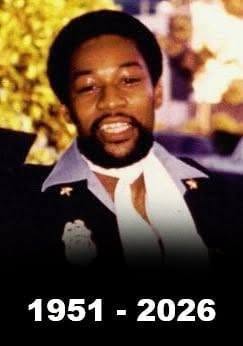
The music world just lost a true icon, and your next celebration might feel a little different without him. He was the voice behind the songs that have kept people of all generations moving for decades. Whether you’ve danced at a wedding, a prom, a birthday party, or a sporting event, there is a good chance you have heard his voice and sung along to his words at the top of your lungs. His music became so deeply woven into everyday life that many people grew up hearing it without ever realizing just how much the man behind those songs had shaped popular culture.
For generations, his work became part of the soundtrack of celebration. The songs were played at parties, echoed through stadiums, filled dance floors, and became instantly recognizable within the first few seconds. They were the kind of songs that could bring strangers together, turning an ordinary gathering into a room full of people singing the same words. Even people who could not name the singer often knew the songs by heart. That rare ability to create music that crossed generations became one of the defining parts of his extraordinary legacy.
For years, he was the driving creative force behind some of the most infectious hooks in pop culture history. Dressed in an unforgettable, hyper-masculine costume that became permanently etched into music history, his distinct, booming voice helped shape the sound and image of the disco era and beyond. The character he portrayed became almost as recognizable as the music itself, but behind the costume was a songwriter and performer whose creative contributions helped turn the group into a worldwide phenomenon.
Yet, many people never knew the actual face or the name of the man steering the ship. They knew the songs. They knew the voice. They knew the unforgettable performances. They knew the imagery that became synonymous with the disco era. But behind all of that was Victor Willis, a talented artist whose work helped create songs that would continue to be played long after the original era had passed.
That legendary voice belonged to **Victor Willis**, the original lead singer, co-founder, and main songwriter of the world-famous disco group, **The Village People**. His contribution to the group went far beyond simply standing behind a microphone. He helped create the words and musical identity behind songs that became cultural landmarks, giving generations of listeners something they could instantly recognize and celebrate.
Tragically, his family announced that he passed away on June 30, 2026, at the age of 74 following a short but incredibly aggressive illness. News of his death marked the end of a remarkable chapter in music history. For fans around the world, it was a painful reminder that even the voices that seem timeless belong to people whose lives eventually come to an end.
As the brilliant mind who co-wrote timeless, massive hits like “Macho Man,” “In the Navy,” and the unforgettable “Y.M.C.A.,” his legacy will live on through every party, stadium, wedding, sporting event, and dance floor where those songs continue to play. Few artists can say that their work became so recognizable that an entire room can begin singing together almost instantly. Willis helped create that kind of music.
“Y.M.C.A.” in particular became much more than a successful song. It became a cultural ritual, complete with a dance that generations learned and passed along. People who had never lived through the disco era still knew exactly what to do when the song began playing. That is the kind of cultural impact that cannot easily be measured by charts or awards. It becomes part of people’s memories.
His music also demonstrated how powerful a simple, memorable chorus could be. The songs invited participation rather than simply asking listeners to sit back and listen. They encouraged people to sing, dance, laugh, and celebrate together. That sense of shared joy is one reason his work continued to appear at major events and personal celebrations decades after the songs were first released.
And perhaps that is why his passing feels especially significant. His music was rarely associated with sadness. It was associated with movement, energy, laughter, celebration, and people coming together. His songs became the soundtrack to countless memories, from childhood parties to weddings and from packed stadiums to quiet moments when someone simply wanted to turn up the music and dance.
Victor Willis leaves behind a musical legacy that will be difficult to erase because it was never confined to one generation. Parents introduced the songs to their children. Those children eventually introduced them to another generation. The music continued to travel forward, finding new audiences even as decades passed.
So the next time “Y.M.C.A.,” “Macho Man,” or “In the Navy” comes through the speakers, people may hear more than just a familiar disco song. They may hear the voice of an artist who helped define an era and created music that refused to disappear. They may remember the unmistakable energy, the costumes, the powerful vocals, and the countless celebrations those songs helped create.
Rest in peace, Victor Willis — a true architect of musical joy. Thank you for the songs, the memories, and the moments that brought millions of people together. The voice may be gone, but the music will continue to play, and every time people stand up, sing along, and dance together, a small part of his legacy will live on.