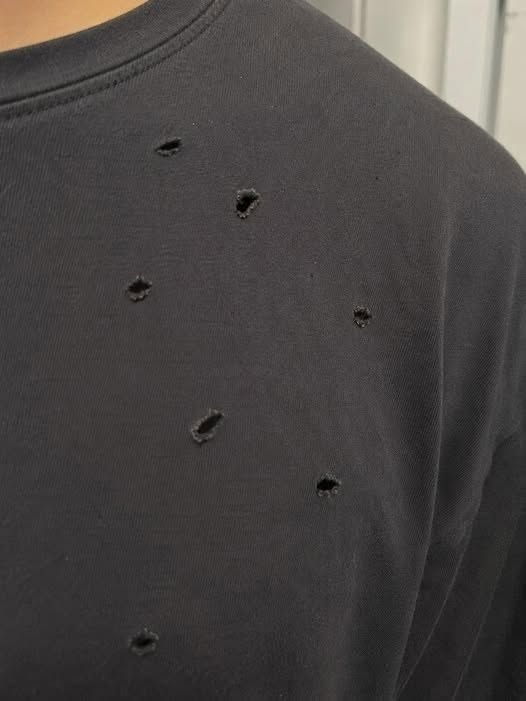
Tiny holes don’t just appear in your clothes overnight. One day your favorite T-shirt looks perfectly fine, and the next, you notice a cluster of tiny tears near the waistline, around the hem, or scattered across the fabric. Most people immediately blame moths, poor-quality materials, or bad luck. But the truth is often much less mysterious and far more preventable. In many cases, those frustrating little holes are being created by habits that happen during ordinary laundry routines every single week.
The damage usually begins long before the holes become visible. Every wash cycle subjects clothing to stress, friction, and movement. Fabrics rub against one another, twist around agitators, and collide with buttons, zippers, hooks, and metal fasteners. While these actions may seem harmless individually, repeated exposure gradually weakens delicate fibers. Over time, the material becomes thinner until small tears finally appear. By then, the real cause may have been occurring for months without anyone noticing.
Top-loading washing machines can be especially tough on lightweight garments. Traditional agitators in the center of the drum pull and twist clothes aggressively during the wash cycle. While effective at cleaning, this motion can stretch and strain fabric repeatedly. Even front-loading machines, which are often considered gentler, can still create wear when garments rub against rough materials or become tangled together during tumbling cycles. The problem becomes even worse when delicate items share space with heavy jeans, jackets, or towels.
One of the most common culprits is hardware hidden inside the laundry load. Open zippers, metal buttons, bra hooks, buckles, and decorative fasteners can act like tiny blades against softer fabrics. As the machine spins, these hard surfaces repeatedly scrape and snag cotton shirts, knitwear, and lightweight materials. What starts as microscopic damage eventually grows into visible holes. Many people never connect the dots because the damage accumulates gradually over dozens of wash cycles rather than appearing immediately.
Overloading the washing machine can accelerate the problem dramatically. When the drum is packed too tightly, clothing loses the space needed to move freely through the water. Instead of gently circulating, garments become compressed and forced against one another. This creates intense friction that weakens fibers much faster than a properly balanced load. The extra strain also reduces cleaning efficiency, meaning clothes endure more stress while receiving less effective washing.
The dryer often delivers the final blow. High heat can weaken already stressed fibers, making them brittle and prone to tearing. Fabrics that survive the wash cycle with minor damage may emerge from the dryer with visible holes after repeated exposure to excessive temperatures. Delicate materials, synthetic blends, and lightweight cottons are particularly vulnerable. While high heat may seem convenient for faster drying, it often shortens the lifespan of clothing significantly.
Fortunately, preventing these mystery holes is usually simple. Turning garments inside out before washing reduces direct friction on the outer surface. Closing zippers, fastening hooks, and securing buttons prevents metal components from scraping neighboring fabrics. Separating heavy items from delicate clothing creates a gentler washing environment, while mesh laundry bags provide additional protection for vulnerable garments. These small habits require only seconds but can dramatically reduce wear and tear over time.
Another important step is avoiding overcrowded loads. Giving clothing enough room to circulate properly minimizes unnecessary friction and helps detergent work more effectively. Choosing gentler wash cycles for delicate fabrics and using appropriate water temperatures can further reduce stress on fibers. Likewise, lowering dryer temperatures or air-drying sensitive items can preserve fabric strength and prevent premature breakdown.
The next time you discover a tiny hole in a favorite shirt, don’t assume insects or poor manufacturing are automatically responsible. In many cases, the real cause is hiding in plain sight inside your laundry routine. Small adjustments in how you wash, sort, and dry your clothes can significantly extend their lifespan, protect your wardrobe investment, and keep your favorite pieces looking new for years longer than expected. Sometimes the difference between a shirt that lasts one year and a shirt that lasts five is nothing more than a zipper, a crowded washer, or a dryer set a little too hot.