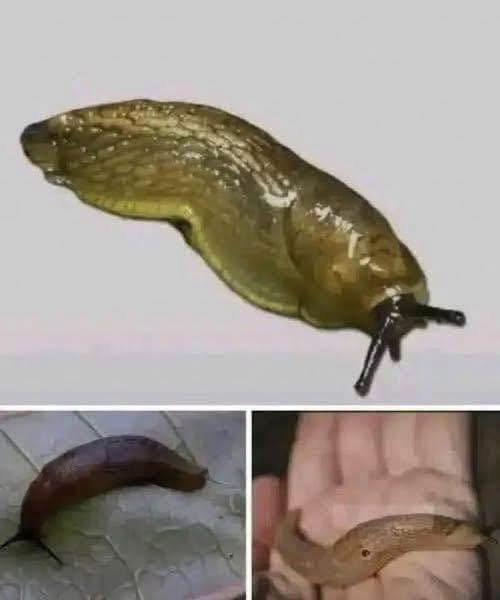
They look like something you would scrape off the bottom of your shoe without a second thought. Slimy, slow-moving, and often considered disgusting, slugs are among the most misunderstood creatures in the natural world. Yet beneath their unappealing appearance lies a remarkable biological system that scientists are beginning to appreciate. These humble animals may be quietly helping ecosystems thrive while offering inspiration for the future of skincare. What if the trail of mucus that makes people recoil is actually a sophisticated biochemical shield? What if one of the creatures we are most likely to dismiss could help researchers develop new ways to protect, hydrate, and repair human skin?
Beyond their unusual appearance, slugs play an important role in maintaining healthy soil. As they move through forests, gardens, and fields, they feed on fallen leaves, fungi, decaying vegetation, and other organic material. By breaking down this matter, they help accelerate decomposition and return valuable nutrients to the soil. These nutrients support plants, nourish microorganisms, and contribute to the natural cycles that sustain entire ecosystems. Although slugs sometimes damage young crops and garden plants, their ecological role is much more complex than their reputation suggests.
Their importance extends beyond the soil itself. Slugs are a source of food for birds, frogs, toads, hedgehogs, beetles, and other animals, making them an essential link in many food webs. Without creatures that process decaying organic material and provide nourishment for predators, the balance of a habitat could change significantly. In this way, slugs connect the hidden world of decomposition beneath our feet with the larger network of life above it. Even the smallest and least attractive organisms can contribute to the stability of the natural world.
But the most fascinating feature of a slug may be the substance it leaves behind: its mucus. This slippery secretion is not simply waste or an accidental byproduct of movement. It is a specialized material that helps the animal survive in a challenging environment. Slugs have soft, delicate bodies that are vulnerable to dehydration, friction, and physical damage. Their mucus helps maintain moisture, allows them to glide across rough surfaces, and provides a protective barrier against some environmental hazards.
What makes this substance especially interesting is its complex chemistry. Depending on the species and type of mucus, it can contain water, proteins, glycoproteins, and other biological compounds that contribute to its unusual texture and function. Some of these properties have attracted the attention of researchers interested in natural materials, bioadhesives, and skin-related applications. The mucus can be both slippery and adhesive under different conditions, an unusual combination that has inspired scientific investigations into how biological substances interact with surfaces.
This is where the story takes an unexpected turn. In the beauty industry, interest in snail secretion has already helped popularize products marketed for hydration, skin texture, and the appearance of fine lines. Slug mucus is related in a broad biological sense, but it is not identical to snail secretion, and the two should not automatically be treated as interchangeable ingredients. Scientists would need to study particular slug species, identify their secretions, establish safe extraction methods, and evaluate the biological activity of individual compounds before making reliable claims about their usefulness in skincare.
Nevertheless, the underlying idea is compelling. Human skin is constantly exposed to environmental stress, dryness, friction, and microscopic damage. Researchers are interested in materials that can retain moisture, form protective films, and support the skin’s natural barrier. Certain biological secretions possess properties that may provide useful clues for designing new cosmetic ingredients or advanced wound-care materials. Studying how a slug protects its own delicate body could therefore help scientists understand new ways to create skin-compatible materials.
Imagine a future in which researchers identify a specific compound inspired by slug mucus and use it to develop a lightweight moisturizing formula. Such a product might help reduce water loss from the skin or improve the feel of dry, rough areas. Other research could investigate whether selected components have useful properties for specialized medical materials. These are possibilities for scientific investigation, not guarantees that slug mucus itself will become a proven anti-aging treatment or a cure for damaged skin.
Safety would also be essential. Natural does not automatically mean safe, and secretions from different species may vary considerably in composition. Before any ingredient could be recommended for human use, scientists would need to assess contamination risks, irritation, allergic reactions, stability, and the appropriate concentration. Cosmetic products would also need to be manufactured under suitable quality controls. Responsible research must distinguish promising laboratory findings from benefits that have actually been demonstrated in people.
Still, the broader lesson is remarkable. Nature has spent millions of years developing materials that help living organisms survive under conditions very different from our own. A slug’s mucus evolved to protect a small animal, not to improve human skin, yet the chemical and physical properties of that secretion may inspire solutions that researchers would not have discovered by looking only at conventional cosmetic ingredients.
The next time you see a slug moving slowly across a garden path after the rain, you might think twice before dismissing it as nothing more than a slimy pest. It is participating in the recycling of nutrients, supporting other animals, and carrying a biological material with properties that continue to interest scientists. Its contribution to the natural world is already real, even as its possible contribution to skincare remains an area of investigation.
Sometimes, the most extraordinary discoveries begin with the organisms we overlook. The slug may never become a miracle ingredient, and its mucus may not transform beauty products overnight. But its biology offers a valuable reminder that nature’s most useful innovations do not always come from the creatures we admire. Sometimes, they come from the small, slippery animals we would ordinarily step around without a second glance.