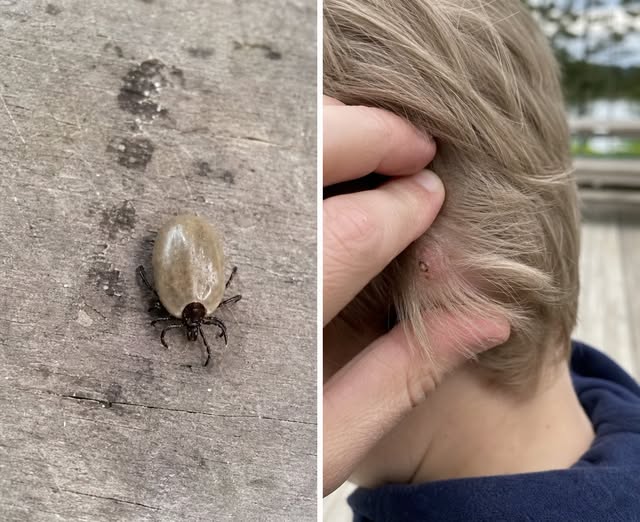
One tiny movement in your child’s hair can turn an ordinary morning into a moment of panic. You may notice a small speck near the scalp, something that appears to move between strands of hair, and suddenly your mind jumps to the worst possibility. Before you reach for lice shampoo or begin searching for answers online, take a breath. An unfamiliar object in a child’s hair is not automatically head lice. It could be an egg, dandruff, a piece of debris, an outdoor insect, or something else entirely. Knowing what to look for first can help you avoid unnecessary treatment and respond calmly.
Finding something unfamiliar on a child’s scalp calls for careful observation rather than an automatic diagnosis. Start by moving the child into bright, natural light or using a strong lamp so you can see the scalp and individual strands clearly. Look closely at the size, shape, color, and position of the object. Notice whether it moves on its own or simply shifts because the hair is moving. Also pay attention to whether it appears attached to the hair shaft, sitting on the scalp, or resting loosely among the strands.
A clear photograph can also be extremely useful. If you are uncertain about what you are seeing, take several close-up pictures before disturbing the object. A pharmacist, pediatrician, or other qualified healthcare professional may be able to help identify it from a clear image or recommend what to do next. Avoid assuming that every unusual-looking speck requires medication or chemical treatment.
Head lice are small insects that live close to the scalp and feed on blood. Adult head lice are roughly sesame-seed-sized, although their appearance can vary depending on their stage of development. Their eggs, commonly called nits, are much smaller and are typically attached firmly to individual strands of hair close to the scalp. This attachment is an important clue because nits tend to remain stuck to the hair, while ordinary dandruff or loose debris can often be moved or brushed away much more easily.
That difference can be easy to miss when you are looking quickly. A small white or pale object may look alarming at first, especially when it is close to the scalp. But appearance alone is not always enough to determine what it is. Lighting, hair color, product buildup, dry skin, and other factors can make ordinary particles appear more unusual than they really are.
Children can also pick up things from their surroundings that later become trapped in their hair. Small pieces of leaves, grass, dust, fibers, or outdoor insects can become tangled in hair after playing outside. A child may not even notice that something has become caught. What looks frightening at first glance may turn out to be nothing more than an ordinary piece of debris.
This is why observation should come before treatment whenever possible. If something appears to be moving, watch it carefully rather than immediately reaching for a product. If it is firmly attached to a strand of hair, examine the surrounding area for additional similar objects. If there are several suspicious particles close to the scalp, professional advice can help determine whether further inspection or treatment is appropriate.
If identification remains uncertain, contacting a pharmacist or pediatrician is often a better next step than experimenting with different treatments. Some products used for lice contain active ingredients that should be used according to their directions and are not appropriate for every situation. Treating a child for lice when lice are not actually present can expose the child to unnecessary products while failing to address the real cause of what you are seeing.
There is another possibility that deserves particular attention: a tick. Unlike lice or loose debris, a tick can become attached directly to the skin. If you recognize an attached tick, prompt removal is important. Using fine-tipped tweezers, grasp the tick as close to the skin as possible and pull steadily upward. Avoid twisting or crushing it while removing it, then clean the bite area and your hands.
After removing a tick, keep an eye on the area and on the child’s overall condition. If removal is difficult, if part of the tick appears to remain attached, or if symptoms such as fever, increasing swelling, or a spreading rash develop, seek medical advice. A healthcare professional can help determine whether additional evaluation is necessary.
What you should avoid is just as important as what you should do. Household pesticides, harsh chemicals, and unproven home remedies should not be applied to a child’s scalp. Children’s skin can be sensitive, and using a strong substance without knowing what you are treating can create a new problem while doing nothing to solve the original one.
If the object turns out to be head lice, there is no reason for a child to feel ashamed. Head lice are common and are not a sign that a child or family is unclean. They can affect children from many different backgrounds and can spread through close contact. The important thing is identifying the problem accurately and following appropriate treatment instructions.
Parents may understandably feel embarrassed or frightened when they discover something unusual in their child’s hair, especially when the discovery happens unexpectedly. But children often take their emotional cues from adults. Remaining calm can help prevent a frightening discovery from becoming a source of unnecessary fear or embarrassment for the child.
The best response begins with a careful look. Check the scalp in good lighting. Examine whether the object moves, whether it is attached to the hair, and whether there are other similar findings. Take a photograph if you are uncertain. If the answer is still unclear, ask a qualified professional before applying treatment.
A tiny object in a child’s hair can trigger a surprisingly large reaction, but the first few minutes do not need to become a panic. Not everything that looks like lice is lice, and not every unusual speck requires medication. Careful observation can provide valuable clues and help you choose the safest next step.
Most importantly, remember that your child needs reassurance, not embarrassment. Whether the discovery turns out to be dandruff, debris, an insect, lice, or something requiring medical attention, responding calmly helps your child feel safe. The goal is not simply to remove something from the hair—it is to understand what you have actually found and respond appropriately.
When something unfamiliar appears on a child’s scalp, slow down, look carefully, and avoid guessing. A few moments of careful observation can prevent unnecessary treatment and help ensure that a genuine problem receives the right attention. Sometimes the most important step is simply knowing what you are looking at before deciding what to do next.