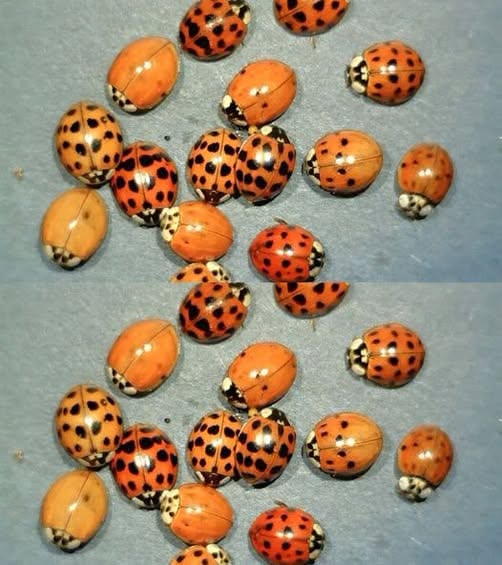
Most people expect ladybugs to be bright red with black spots, so spotting a yellow one often comes as a surprise. Its unusual appearance naturally sparks curiosity, leading many people to wonder whether it carries a special meaning or if it’s simply a rare variation of a familiar insect. Throughout history, different cultures have attached symbolic meanings to ladybugs, while science offers its own fascinating explanation for why these colorful insects appear in so many different forms.
For many people, a yellow ladybug represents happiness, fresh beginnings, hope, and positive change. In various traditions, seeing one is considered a gentle reminder to remain optimistic, welcome new opportunities, and appreciate the small moments that brighten everyday life. Because yellow is commonly associated with sunshine, warmth, and joy, the insect’s unexpected color often feels like a meaningful sign, encouraging people to pause and reflect.
Psychologists suggest there is another reason these encounters can feel memorable. When we unexpectedly notice something unusual—such as a yellow ladybug instead of the familiar red one—our brains naturally pay closer attention. That moment of surprise can make the experience feel more significant, even when the explanation is entirely natural. Sometimes the simple act of noticing something different is enough to create a lasting memory.
From a scientific perspective, yellow ladybugs are completely normal members of the ladybug family, known as Coccinellidae. Their color depends on their species and genetics, and there are many ladybug species around the world that range from yellow and orange to red, pink, and even black. Their bright colors serve an important biological purpose by warning predators that they may taste unpleasant or produce defensive chemicals, a survival strategy known as warning coloration.
Many yellow ladybug species are actually beneficial insects. Some feed on aphids and other garden pests, while others consume fungi such as powdery mildew that can damage plants. Because of their helpful role in controlling pests naturally, gardeners often welcome them as valuable allies that reduce the need for chemical pesticides.
Despite common misconceptions, yellow ladybugs are generally harmless to people. They do not spread disease, they do not sting, and although a few species may occasionally give a mild defensive pinch if handled roughly, they pose no significant danger. In most cases, they simply continue searching for food before quietly flying away.
If you happen to find a yellow ladybug resting on your clothing, a flower, or a nearby leaf, the best approach is simply to observe it for a moment before allowing it to continue on its way. Whether you see it as a symbol of hope, a reminder to appreciate nature, or simply an interesting example of biodiversity, the encounter offers a small opportunity to reconnect with the remarkable diversity that exists all around us. Sometimes even the tiniest creatures can inspire curiosity, encourage mindfulness, and remind us that nature is often more varied and beautiful than we expect.