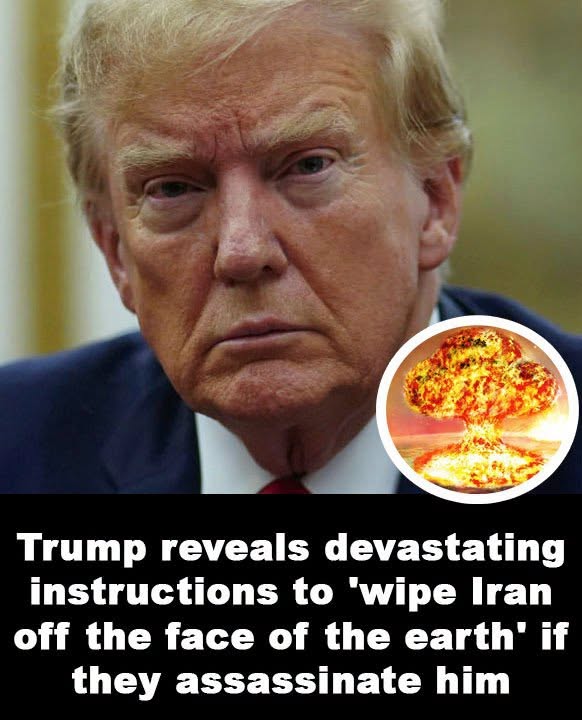
The warning has sent shockwaves far beyond Washington and Tehran. Donald Trump has publicly declared that he has left explicit instructions for an overwhelming U.S. military response if Iran were ever to successfully assassinate him. His remarks have reignited fears about just how quickly tensions between the two nations could spiral into a far broader conflict. With military operations already heightening regional instability, every new statement is being scrutinized by governments, analysts, and citizens who fear that a single miscalculation could trigger consequences far beyond the battlefield.
Trump’s message frames any attack against him as something that would demand an extraordinary response, transforming a personal security threat into a matter of national strategy. Supporters argue that such language is meant to deter future assassination attempts by making the potential consequences unmistakably severe. Critics, however, warn that rhetoric of this magnitude raises the stakes even higher in an already volatile region, where misunderstandings, miscommunication, or isolated incidents could rapidly escalate into a much larger confrontation. As military tensions continue to dominate headlines, millions of civilians remain caught between political decisions they have no control over and the growing uncertainty surrounding the future.
At the same time, diplomatic relations between Washington and Tehran appear increasingly strained. Harsh public exchanges, mutual accusations, and continued military activity have left little room for meaningful dialogue. Observers fear that when trust disappears and negotiations break down, every statement carries greater weight and every military move risks provoking another response. Defense experts continue warning that prolonged crises rarely escalate because of a single event alone, but rather through a series of increasingly hostile decisions that leave both sides feeling they cannot step back without appearing weak. In moments like these, careful diplomacy becomes more important than ever, even as the path toward de-escalation grows increasingly difficult.