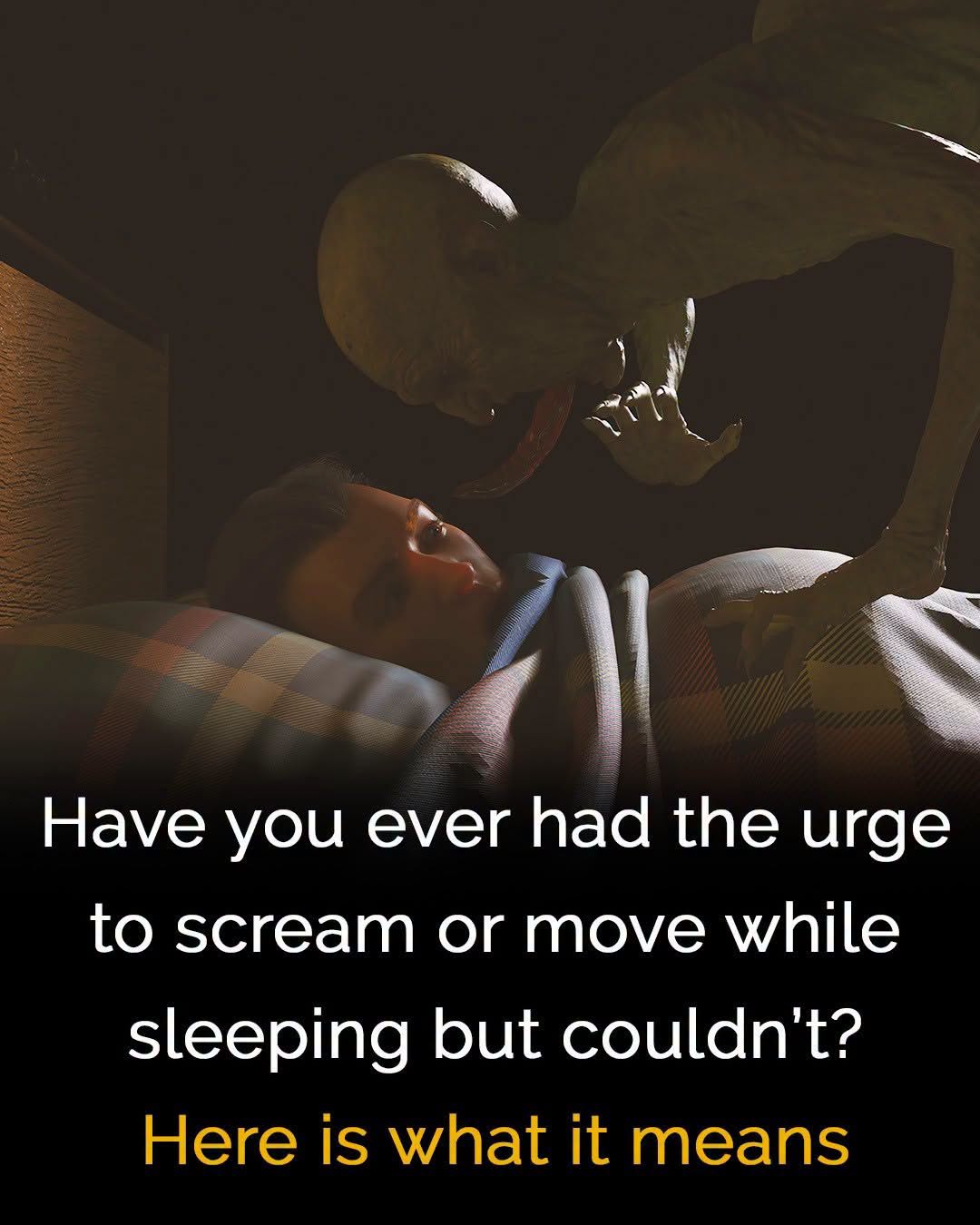
Imagine waking up in the middle of the night, fully aware of your surroundings, only to discover that you cannot move a single muscle or utter a single word. Your mind is awake, but your body refuses to respond. For many people, this terrifying experience feels supernatural, impossible to explain, and deeply unsettling. Yet what they are experiencing is something surprisingly common: a phenomenon known as sleep paralysis.
Despite affecting millions of people around the world, sleep paralysis remains one of the least understood sleep experiences among the general public. Because the episodes often feel frightening, bizarre, or even embarrassing, many people avoid talking about them. As a result, countless individuals experience sleep paralysis without realizing that what happened to them has a well-established medical explanation.
Experts estimate that nearly 30 percent of people will experience sleep paralysis at least once during their lifetime. Some may only encounter it a single time, while others may experience repeated episodes throughout their lives. Whether it happens once or becomes a recurring issue, the sensation is often unforgettable.
Sleep paralysis typically occurs during the transition between sleeping and waking. It can happen as a person is falling asleep or, more commonly, while waking up. During these moments, the brain becomes conscious before the body fully exits its sleep state. The individual is mentally awake and aware of the environment around them, yet remains temporarily unable to move, speak, or react physically.
This unusual disconnect between mind and body often creates intense fear. Many people report feeling trapped inside their own bodies, desperately trying to move a hand, open their eyes wider, or call for help, only to find themselves completely unable to respond. Although episodes usually last only a few seconds or minutes, they can feel significantly longer to the person experiencing them.
According to medical experts, including specialists cited by the Cleveland Clinic, sleep paralysis occurs when the body remains caught between the stages of sleep and wakefulness. It is classified as a parasomnia, a category of sleep-related events that occur during transitions between sleep stages. While the experience can be alarming, doctors emphasize that sleep paralysis itself is harmless and does not cause physical injury.
Understanding what happens biologically can help reduce some of the fear surrounding these episodes. During REM sleep, the stage associated with vivid dreaming, the brain temporarily suppresses most voluntary muscle activity. This natural mechanism prevents people from physically acting out their dreams and potentially harming themselves. Sleep paralysis occurs when awareness returns before this protective muscle paralysis has fully ended.
In simple terms, your brain wakes up before your body does.
Several factors can increase the likelihood of experiencing sleep paralysis. Sleep specialists consistently identify stress, anxiety, sleep deprivation, exhaustion, and irregular sleep schedules as major contributors. When the body is physically or mentally overwhelmed, the normal sleep cycle can become disrupted, increasing the chances of these unusual transitions between sleep and wakefulness.
Research has repeatedly shown that individuals who experience chronic stress, inconsistent sleeping habits, or significant fatigue are more vulnerable to sleep paralysis episodes. Sleep expert and cognitive behavioral therapist Charlott Ulfsparre notes that exhaustion and disrupted sleep patterns are among the most common triggers observed in affected individuals.
Although modern medicine provides a clear explanation, sleep paralysis has fascinated and frightened people for centuries. Historical records show that ancient civilizations struggled to understand the phenomenon long before scientific research existed. Persian medical writings described similar experiences as early as the 10th century, and one of the earliest documented European medical accounts appeared in 1664 through the observations of a Dutch physician.
Because the experience feels so vivid and unusual, many cultures developed supernatural explanations. In Japan, sleep paralysis has traditionally been associated with the sensation of being restrained by an unseen force. Chinese folklore often describes it as “ghost pressure,” while certain African traditions interpret the experience as a malevolent spirit sitting on the sleeper’s chest. These cultural interpretations reflect the powerful emotional impact sleep paralysis can have on those who experience it.
One of the most disturbing aspects of sleep paralysis involves hallucinations. Many people report seeing figures standing in the room, sensing an unseen presence nearby, hearing voices, or feeling pressure on their chest. Others describe sensations of floating, falling, or leaving their bodies entirely. These experiences can feel incredibly real because parts of the brain associated with dreaming remain active even after awareness has returned.
Swedish artist Jonna Jinton has publicly described her first sleep paralysis experience at age sixteen, recalling intense vibrations and a sensation of being pulled into an unknown force. Singer Zara Larsson has also spoken openly about experiencing frightening episodes. Their stories mirror countless accounts shared by people around the world who have encountered similar sensations.
Fortunately, there are practical steps that may help reduce the likelihood of future episodes. Maintaining a consistent sleep schedule is one of the most effective preventive measures. Going to bed and waking up at roughly the same time each day helps regulate the body’s internal clock. Managing stress, limiting screen exposure before bedtime, and creating a calm, comfortable sleeping environment may also significantly improve sleep quality.
If sleep paralysis does occur, experts recommend remaining as calm as possible. Focusing on slow, controlled breathing can help reduce panic. Rather than attempting to move your entire body, try concentrating on a single finger, toe, or small muscle group. In many cases, regaining even a tiny amount of movement helps the rest of the body quickly return to normal function.
Perhaps the most important thing to remember is that sleep paralysis is temporary, explainable, and not dangerous. While it may feel terrifying in the moment, it does not indicate possession, supernatural activity, or a serious medical emergency. Understanding the science behind the experience can transform fear into reassurance.
By talking openly about sleep paralysis and sharing accurate information, more people can recognize what is happening when an episode occurs. Knowledge removes much of the mystery and helps individuals understand that they are far from alone. What feels like a terrifying encounter in the middle of the night is actually a natural, well-documented phenomenon that millions of people have experienced throughout history.
If someone you know has ever described waking up unable to move, hearing strange sounds, or sensing a presence in the room, sharing this information may provide exactly the reassurance they need. Sometimes understanding is the most powerful remedy for fear.