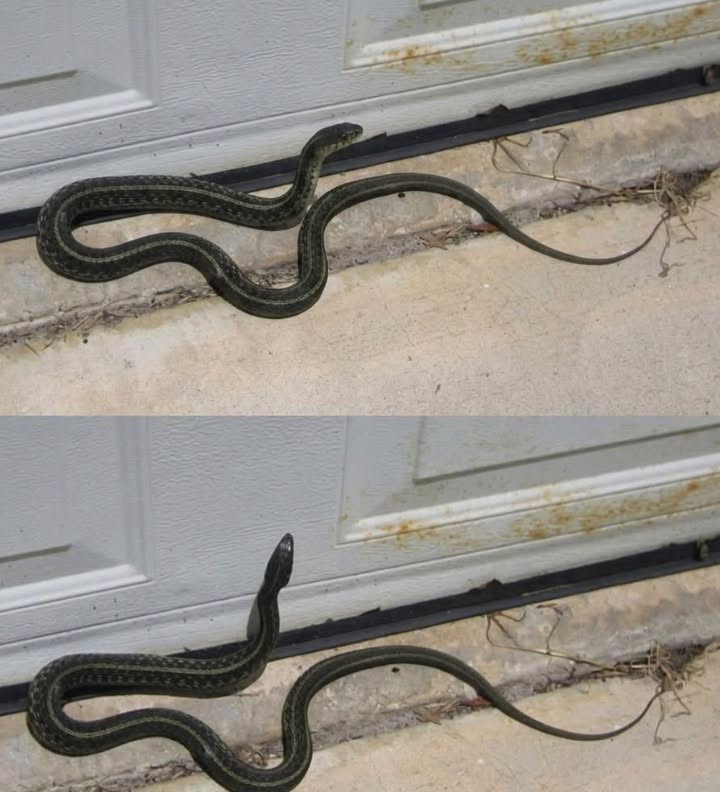
The sudden appearance of a snake—whether gliding silently through your dreams or unexpectedly crossing the floor of your home—has captivated human imagination for thousands of years. Few creatures evoke such immediate emotion. For some, a snake represents danger, betrayal, or hidden threats. For others, it symbolizes healing, renewal, wisdom, and profound personal transformation. Across cultures, religions, and psychological traditions, the serpent has carried meanings that are both mysterious and deeply personal. While folklore often portrays snakes as omens or supernatural warnings, modern understanding suggests that their appearance usually has practical explanations or reflects the way our minds process fear, change, and uncertainty. Whether encountered in the subconscious world of dreams or in the very real environment of your home, a snake invites attention—but not panic. Understanding both the symbolic traditions and the practical realities can help separate myth from fact while offering valuable insight into ourselves and the world around us.
Throughout history, snakes have occupied a unique place in human storytelling.
Ancient civilizations feared them.
Worshipped them.
Respected them.
Sometimes all at once.
In ancient Egypt, the cobra symbolized royal protection.
In Greek mythology, snakes became associated with healing through the staff of Asclepius.
Many Indigenous cultures view snakes as symbols of renewal and balance.
In other traditions, serpents represent temptation, deception, or spiritual testing.
These contrasting meanings explain why snake encounters often feel emotionally powerful.
The symbolism has been woven into human culture for thousands of years.
Dreams involving snakes are among the most commonly reported dreams worldwide.
Psychologists generally view dreams as reflections of our thoughts, emotions, memories, and experiences rather than literal predictions of future events.
Because snakes naturally trigger strong emotional responses, they frequently appear when people are experiencing stress, uncertainty, conflict, or significant life changes.
A snake in a dream may symbolize fear.
Hidden anxiety.
A difficult relationship.
An unresolved problem.
Or simply a powerful emotional experience your mind is trying to process.
The exact meaning often depends on the dreamer’s personal experiences.
Someone who studies reptiles may interpret a snake very differently from someone who has feared them since childhood.
Context matters.
So do emotions.
A threatening snake chasing you through a dream creates a very different emotional experience than peacefully observing one resting in nature.
For many people, the dream reflects an issue they have been avoiding.
Something uncomfortable.
A difficult conversation.
A lingering fear.
An important decision.
The snake becomes a symbol of whatever demands attention.
Yet not every snake dream carries negative meaning.
One of the snake’s most remarkable biological traits is its ability to shed its skin.
That process has made the serpent one of history’s strongest symbols of transformation.
Personal growth.
Renewal.
Healing.
Fresh beginnings.
Leaving old habits behind.
When people experience major life transitions—new careers, relationships, recovery from illness, or emotional healing—dreams involving snakes sometimes reflect those periods of change.
The shedding of old skin becomes a metaphor for leaving behind outdated beliefs, unhealthy patterns, or previous versions of ourselves.
In this interpretation, the snake represents opportunity rather than danger.
Finding a snake inside your home creates an entirely different situation.
Unlike dreams, a real snake requires practical attention.
Fortunately, snakes do not enter houses because of mystical reasons.
They enter for survival.
Homes provide warmth.
Shelter.
Water.
And sometimes food.
If rodents, insects, or other small animals are present, they may attract snakes searching for prey.
Small openings around doors.
Cracks in foundations.
Gaps beneath siding.
Unsealed vents.
Damaged screens.
These provide entry points.
Many homeowners are surprised by just how little space some snakes need to enter a building.
If you discover a snake indoors, personal safety should always come first.
Avoid attempting to handle or capture it unless you are absolutely certain it is harmless and you have appropriate experience.
Many snake species are completely nonvenomous and play valuable ecological roles by controlling rodent populations.
However, correctly identifying snakes can be difficult, particularly under stressful circumstances.
Maintaining a safe distance is usually the best approach.
Professional wildlife removal services or local animal control agencies can safely relocate the animal if necessary.
After the snake has been removed, inspecting your home becomes important.
Look for possible entry points.
Seal cracks.
Repair damaged weather stripping.
Trim vegetation close to the house.
Reduce rodent activity if present.
Simple maintenance often prevents future visits.
The appearance of a snake may therefore serve as a useful reminder—not of supernatural danger—but of practical home maintenance.
Our emotional reactions to snakes are deeply rooted in biology.
Research suggests that humans evolved to recognize snake-like shapes quickly because early recognition improved survival.
Even infants appear unusually attentive to snake images compared to many other animals.
This natural sensitivity helps explain why snake encounters often feel unusually intense.
Our brains respond rapidly.
Sometimes before conscious thought even begins.
Folklore has built upon that instinct for centuries.
Many traditional beliefs describe snakes as signs of betrayal, hidden enemies, or approaching change.
While these stories remain culturally meaningful, there is no scientific evidence that encountering a snake predicts future events.
People often remember occasions when symbolic interpretations appear accurate while overlooking countless ordinary encounters that carry no larger meaning.
This tendency, known as confirmation bias, is a normal part of human psychology.
That does not diminish the personal value many individuals find in symbolic reflection.
Symbols can still encourage meaningful self-examination.
A snake may inspire someone to evaluate their relationships.
Their health.
Their environment.
Their personal growth.
Their emotional well-being.
Even if the snake itself carries no supernatural message, the reflection it encourages can still prove valuable.
Ultimately, both dream snakes and real snakes invite awareness.
Dreams encourage us to pay attention to our emotional landscape.
Real snakes encourage us to pay attention to our physical surroundings.
Both remind us that careful observation often prevents larger problems later.
Sometimes the issue needing attention exists within ourselves.
Sometimes it exists beneath the porch, inside the garage, or behind an unsealed foundation crack.
Either way, awareness remains the common thread.
Perhaps that explains why snakes have remained such enduring symbols throughout human history.
They move quietly.
Appear unexpectedly.
Demand immediate attention.
And rarely leave us emotionally unchanged.
Whether viewed through the lens of mythology, psychology, biology, or everyday experience, the serpent continues to remind us of an important truth: fear is often best answered not with panic, but with curiosity, careful observation, and thoughtful action. By looking honestly at both our inner lives and our physical surroundings, we can respond wisely rather than react impulsively. In the end, the greatest message the snake may offer is not that disaster is coming, but that paying attention—to ourselves, our homes, and our choices—is one of the most powerful forms of protection we possess.