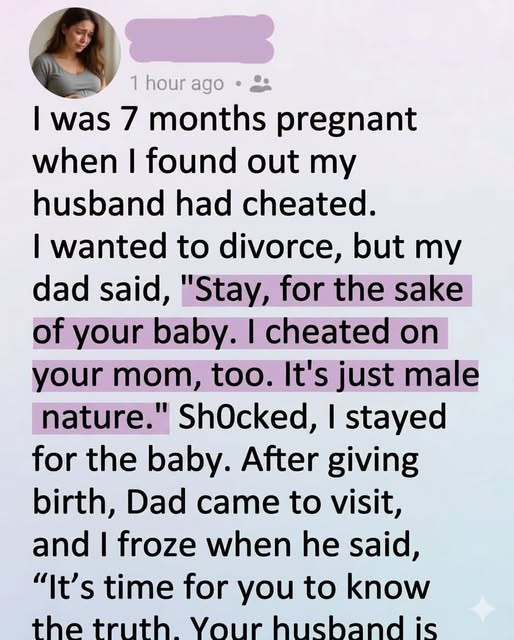
The betrayal felt like a punch to the chest. Seven months pregnant, with my hands shaking and my heart racing, I stared at a series of messages that destroyed the life I thought I had built. In a single evening, my marriage, my future, and every dream I had for my unborn son seemed to crumble before my eyes. The man I trusted most had betrayed me, leaving me questioning everything we had promised each other. Just when I thought the pain couldn’t get any worse, my father said something so shocking that I nearly convinced myself to stay with a husband who had already broken my trust beyond repair.
I returned to my childhood home carrying two overwhelming burdens: the baby growing inside me and a heart shattered by betrayal. Every room was filled with memories of a happier time, yet I felt like a stranger in my own life. I couldn’t stop wondering how everything had fallen apart so quickly. Through those darkest days, my father stayed close, offering quiet support without forcing conversations I wasn’t ready to have. His calm presence became one of the few things holding me together while I struggled to imagine raising my child alone.
Then came the conversation that changed everything—but not in the way I expected. Instead of encouraging me to leave immediately, my father urged me to remain calm and avoid making any major decisions while I was still heavily pregnant. His advice felt like another betrayal. In my pain, I interpreted his words as choosing my husband’s side over mine. The hurt became even deeper when he confessed that he had once been unfaithful to my mother. Hearing those words shattered the image I had always carried of him. Suddenly, it seemed as though the two men I trusted most had become proof that loyalty was only an illusion and that heartbreak was simply something women were expected to accept.
For days, I carried that conversation with me, believing my father had revealed a painful truth about the world. I wondered if faithfulness was impossible, if every relationship was destined to end in disappointment, and whether staying with my husband was simply what women eventually learned to do. I felt trapped between protecting my own dignity and protecting the peaceful environment my unborn child desperately needed during the final weeks of pregnancy.
Only later did my father finally reveal what had really happened. His confession had never been true. He had invented the story, fully aware that I might resent him for it, because he believed my emotional state posed a greater risk to my pregnancy than my anger toward him ever could. He feared that overwhelming stress, panic, and impulsive decisions could endanger both me and my baby. Rather than watching me spiral into despair, he willingly allowed me to think less of him if it meant keeping me calm long enough to safely bring my son into the world.
His explanation changed everything. The lie had never been intended to excuse my husband’s betrayal or convince me that cheating was acceptable. Instead, it had been a desperate attempt by a father trying to protect his daughter during the most vulnerable moment of her life. He chose to carry the weight of my disappointment so I wouldn’t carry the full weight of my heartbreak alone. Looking back, I realized that every difficult conversation, every moment of patience, and every quiet act of support had been motivated by love rather than judgment.
Once my son was safely born and I had regained the emotional strength to move forward, I saw my situation with complete clarity. My parents stood beside me as I signed the divorce papers, reminding me that choosing to leave wasn’t a failure—it was an act of self-respect. They helped me understand that protecting my child also meant protecting myself, because the kind of home I wanted to build could never be founded on broken trust and repeated betrayal.
Today, when I look back on that painful chapter, I no longer remember only the heartbreak that ended my marriage. I remember the father who was willing to become the villain in my eyes if it meant safeguarding my health and the life of his grandson. I remember the family that refused to let me face my darkest days alone. Most importantly, I remember the decision to choose a different future—one built on honesty, respect, and love that protects instead of wounds. Sometimes the deepest acts of love don’t look heroic in the moment. Sometimes they arrive disguised as painful choices, difficult sacrifices, and burdens someone else quietly carries so you don’t have to.