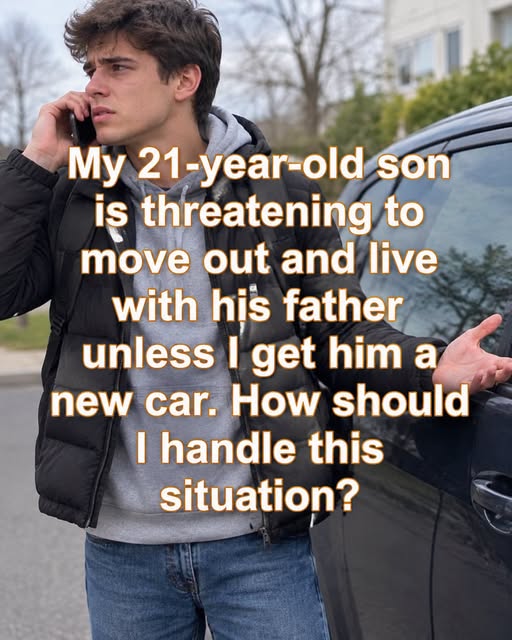
My son threatened to leave unless I bought him a car. In one painful conversation, a demand for freedom became a test of my love, and I nearly paid the price just to keep the peace. But when he questioned whether I really cared about him, I was forced to confront a choice no parent wants to make. I could give in, spend the money, and temporarily make the conflict disappear, or I could hold my ground and risk hearing words that would stay with me for a long time. As difficult as it was, I knew that buying a car simply because I was afraid of losing him would not solve what was really happening between us.
I understood what a car meant to him. To my son, it represented freedom, confidence, independence, and another step toward adulthood. He wanted the ability to go where he wanted without asking for rides or depending on someone else. I could understand that desire because growing up means wanting to make your own decisions and feel responsible for your own life. Part of me even wanted to give him that opportunity immediately. But I also knew that purchasing the vehicle would only be the beginning. Insurance, fuel, registration, repairs, tires, and regular maintenance would all become ongoing expenses that someone would have to cover.
I explained that I wanted to help him become independent, not simply remove every responsibility from his shoulders. There was a difference between supporting him and allowing him to expect me to solve every financial problem. I told him that if he wanted a car, we could sit down together and look at what he could realistically afford. We could create a budget, calculate the monthly costs, compare affordable vehicles, and work out how much he could contribute himself. I was willing to help him save, search for reasonable options, and understand the responsibilities that came with owning a vehicle. What I could not accept was making such a major financial commitment because I had been given an ultimatum.
When he told me that if I would not buy the car, he might leave, the conversation became much more painful. Those words made me question everything. As a parent, the thought of your child walking away can make even a reasonable boundary feel cruel. For a moment, I wondered whether I was being too strict and whether giving him what he wanted would keep our relationship peaceful. I imagined him leaving angry and wondered if I would regret not helping when I had the opportunity. But underneath all that fear was another realization: love should not have to be proven by giving someone exactly what they demand.
He walked away angry, and the silence afterward was difficult. I replayed the conversation in my mind, wondering whether I had said the right things and whether I had handled the situation badly. The house felt different without our usual conversations, and I found myself wishing I could somehow make everything normal again. But after some time passed, we were able to speak again without the same anger. This time, instead of arguing about whether I loved him enough to buy a car, we talked about what he actually needed, what he could afford, and what independence would realistically look like.
Nothing was magically resolved during that conversation. He still wanted a car, and I still had the same financial boundaries. But something important had changed. The argument slowly became a practical discussion about budgeting, saving, responsibility, and planning for the future. We started talking about possible options instead of accusations. He began to see that my refusal was not about wanting to hold him back or control his life. It was about making sure that a decision with long-term consequences was made carefully rather than under emotional pressure.
That experience reminded me that being a parent sometimes means accepting that your child may be disappointed with you. There are moments when keeping the peace feels easier than maintaining a boundary, especially when emotions are high and you are afraid of damaging the relationship. But giving in simply because you are afraid of losing someone can create another problem later. A temporary solution can become an expectation, and an expectation can eventually become resentment on both sides. I wanted my son to know that I was willing to stand beside him, even when I could not give him everything he wanted.
Supporting my son did not require surrendering to pressure. It meant helping him understand how to make responsible choices while allowing him to experience the consequences of those choices. I could offer guidance without taking control of his future, and I could love him without agreeing to every demand. In the end, the most important thing was not whether he got a car immediately. It was whether we could learn to communicate without turning love into a negotiation. Sometimes being there for your child means giving them exactly what they ask for. Other times, it means saying no, staying calm, and reminding them that your love is still there even when the answer is not the one they wanted.