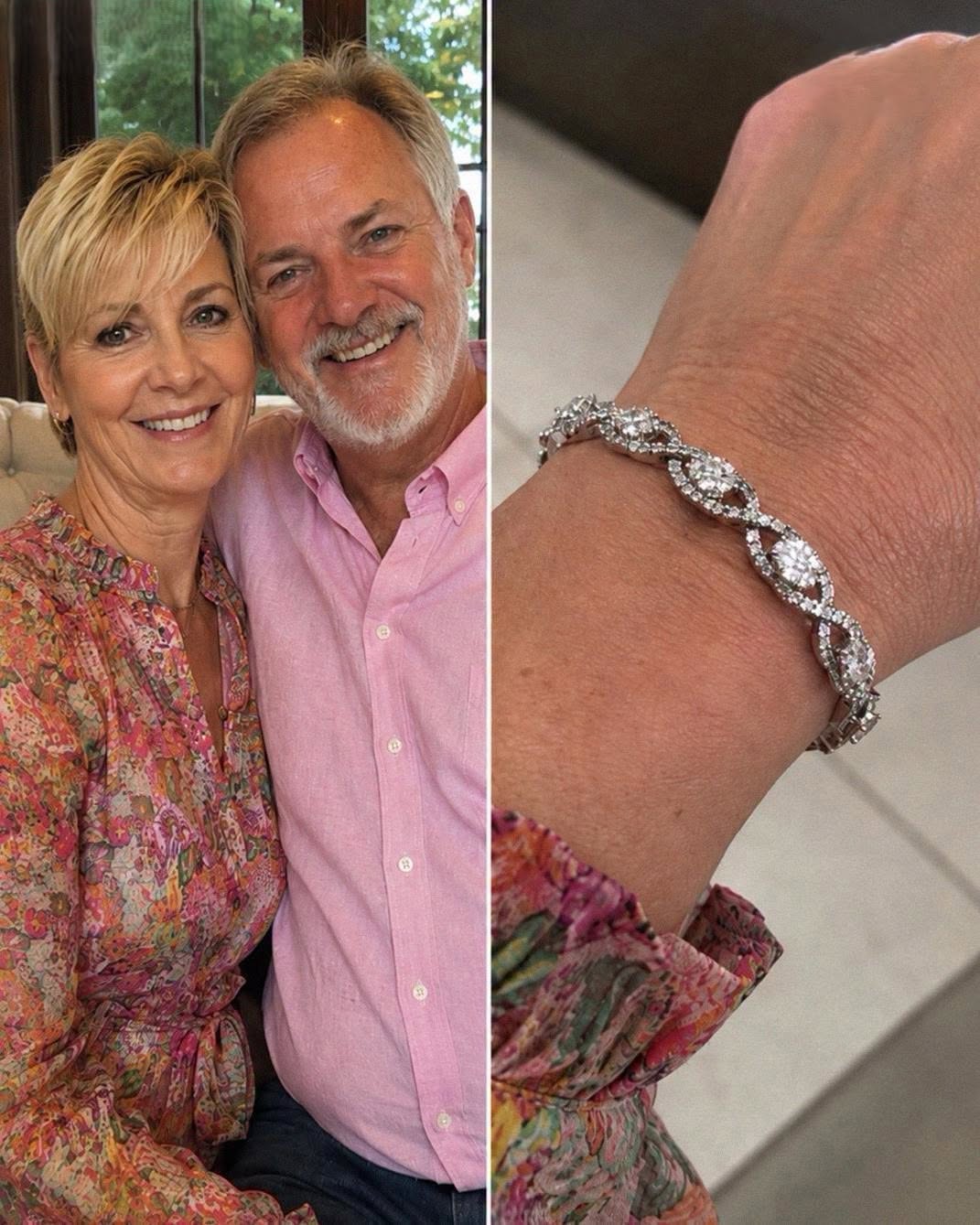
The bracelet sparkled under the jewelry store lights, catching colors I hadn’t noticed before.
For a brief moment, I allowed myself to believe something impossible.
Maybe my husband had finally changed.
After twenty-six years of marriage, countless disappointments, and more silent nights than I cared to remember, perhaps this gift meant something had shifted.
Perhaps he finally saw me.
The bracelet wasn’t extravagant, but it was thoughtful.
Or at least that was what I believed until the saleswoman smiled and casually asked a question that changed everything.
“How did the other recipient like hers?”
I froze.
“The other recipient?” I asked.
The woman’s smile vanished immediately.
She realized her mistake too late.
My stomach tightened as she attempted to backtrack, but the damage was already done.
There was another bracelet.
An identical one.
Another woman.
Another secret.
By the time I reached the parking lot, years of suppressed doubts had begun resurfacing.
Every unexplained absence.
Every late-night phone call.
Every moment when my husband seemed emotionally somewhere else.
Suddenly, they formed a picture I could no longer ignore.
The next morning, armed with little more than an address and a growing sense of dread, I drove across town.
I expected anger.
I expected betrayal.
Most of all, I expected to meet the woman who had destroyed my marriage.
Instead, I met Marta.
She welcomed me into a modest kitchen and offered me coffee with trembling hands.
She looked nervous.
Not guilty.
Not triumphant.
Just frightened.
When I finally confronted her about the bracelet, tears immediately filled her eyes.
Then she told me something I never expected to hear.
There had never been an affair.
No secret romance.
No hidden life.
Only grief.
Years earlier, my husband had started visiting a support group after the death of our daughter, Emily.
Marta had lost a child too.
They became friends through their shared pain.
While I buried my grief beneath responsibilities and silence, they talked openly about the children they missed every day.
They remembered birthdays.
Shared photographs.
Spoke names that had become too painful inside our own home.
For years, I had assumed my husband had moved on from the loss.
The truth was far more heartbreaking.
He had never moved on.
He had simply found somewhere else to grieve.
Marta admitted that the bracelet was meant as a gesture of friendship and remembrance.
Nothing more.
A thank-you for helping carry a burden neither of them could bear alone.
As she spoke, my anger slowly dissolved into something unexpected.
Understanding.
For the first time, I realized how isolated my husband had become.
We had both been drowning in the same sorrow while standing on opposite shores.
Before leaving, I removed the bracelet from my wrist and placed it gently on the kitchen table.
Not as a rejection.
As a bridge.
That evening, when I returned home, I found my husband sitting quietly in the living room.
For the first time in years, we spoke openly about Emily.
We said her name.
We shared memories.
We cried without apologizing for it.
The silence that had ruled our marriage for so long finally began to crack.
Healing didn’t happen overnight.
Neither did forgiveness.
But something important changed that night.
We stopped pretending.
Sometimes marriages don’t break because love disappears.
Sometimes they break because grief is allowed to grow in darkness.
And sometimes the greatest act of love isn’t finding a way to move on.
It’s finding the courage to walk through the pain together, one memory at a time.