That Saturday morning felt completely ordinary.
The aroma of fresh coffee mixed with warm cinnamon toast drifted through the house, filling the kitchen with a sense of comfort that made the weekend feel peaceful and predictable.
I stood by the counter in my robe, cradling a steaming mug while listening to my daughter Nicole sing one of her made-up songs somewhere down the hallway.
It was the kind of morning when nothing dramatic was supposed to happen.
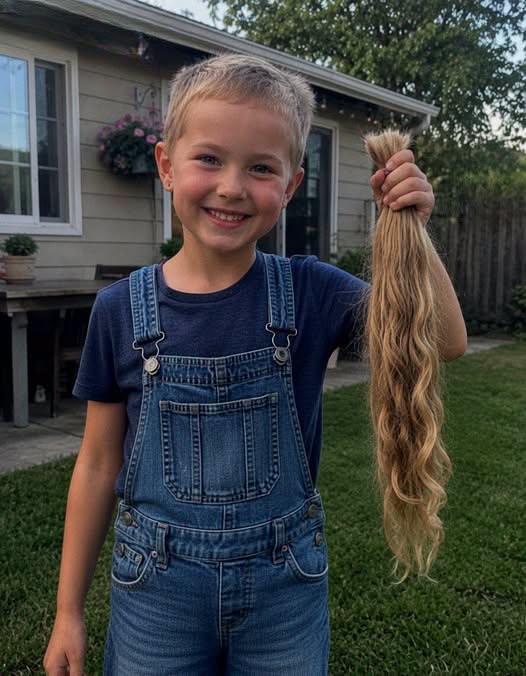
Nicole was six years old, and if there was one thing she loved more than anything, it was her hair.
Her thick dark curls reached almost to her waist, and she treated them like a treasure.
Strangers constantly noticed them.
At grocery stores, parks, and school events, people often stopped to admire them.
“Is that all her natural hair?” they would ask.
I always smiled proudly.
“Every bit of it.”
Each morning began with the same ritual.
Nicole would climb onto a stool in the bathroom while I carefully brushed out the tangles.
Sometimes she squirmed.
Sometimes she complained.
“Mama, that hurts.”
“I know, sweetheart. I’m trying to be gentle.”
Even on difficult mornings, when every curl seemed determined to fight back, she never once suggested cutting it shorter.
Her hair was part of who she was.
That morning she wandered into the kitchen wearing bright unicorn pajamas and carrying her favorite stuffed rabbit.
“Mama, can I work on an art project in my room?”
“What kind of project?”
“Paper and stickers. Maybe glitter too.”
I laughed.
“Fine. But keep the glitter on the desk and use only the kid scissors.”
“Okay!”
She skipped away happily.
I watched her disappear down the hall before turning toward the window.
Outside, autumn had begun transforming the neighborhood.
Golden leaves drifted from the maple tree in the yard, and the sight stirred that strange seasonal sadness I always felt this time of year.
Lately, other things had been bothering me too.
My husband hadn’t been acting like himself.
Nothing dramatic.
Nothing obvious.
Just small changes.
He stayed up later than usual.
He spent more time alone.
Sometimes he stepped into the garage to answer phone calls and closed the door almost completely behind him.
A few nights earlier, I finally asked about it.
“Everything okay?”
“Yeah,” he replied quickly. “Work’s just been stressful lately.”
Something about his answer felt incomplete.
But marriage teaches you that constantly pushing for answers can sometimes create even more distance.
So I let it go.
Then there was his mother.
For reasons I couldn’t quite explain, she had suddenly become much more involved in our lives.
She showed up carrying casseroles.
Folded laundry without being asked.
Offered to babysit.
Organized cabinets.
Volunteered to help with tasks that nobody had requested help with.
“You look exhausted,” she told me one afternoon.
“Honestly, I’m okay.”
She simply smiled and hummed softly, clearly unconvinced.
I also noticed something else.
Whenever she received phone calls, she often stepped into the hallway and lowered her voice.
If I approached, the conversation usually ended.
It struck me as odd.
But life was busy.
Work.
Bills.
School schedules.
Homework.
Appointments.
There was always something demanding attention.
A week earlier, Nicole had asked a question that briefly caught me off guard.
“Mama, is Daddy sad?”
I looked up from loading the dishwasher.
“Why would you ask that?”
She shrugged.
“He just seems different.”
I kissed her forehead.
“He’s fine, sweetheart. He’s just tired.”
At the time, I thought nothing more about it.
That memory returned to me as I sat down with a second cup of coffee and unfolded the newspaper.
From her bedroom, I could hear Nicole humming again while she worked on her project.
Then I heard a faint sound.
Snip.
A few seconds later.
Snip.
I smiled to myself.
“She must be cutting construction paper,” I thought.
Then came another snip.
And another.
This time, something about the sound made the hairs on the back of my neck stand up.