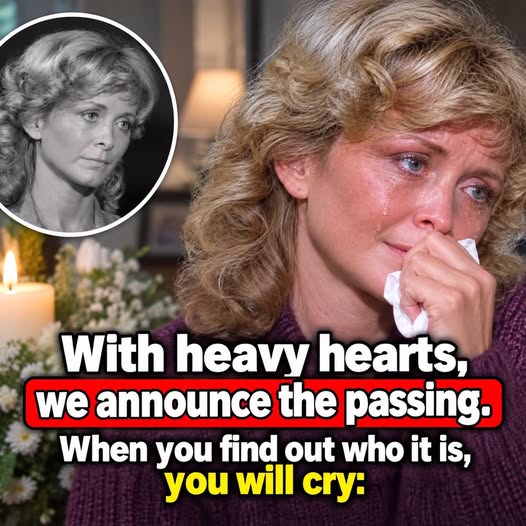
Another beloved face from *M\*A\*S\*H* is gone, leaving behind a television family that had already shared years of laughter, friendship, and unforgettable memories. Judy Farrell, remembered by millions of viewers for bringing Nurse Able to life, was more than a familiar face in a hospital uniform. Her character may have appeared only in a handful of episodes, but the relationships she built away from the cameras lasted far longer. When news of her death spread, the grief was not simply about losing an actress from a beloved television series. For those who had known her personally, it was the loss of a friend, a colleague, and someone they considered family.
Judy Farrell died at the age of 84, her son Michael confirmed. During her time on *M\*A\*S\*H*, she appeared as Nurse Able in eight episodes, becoming part of the ensemble that helped make the series so memorable. Her appearances included the celebrated 1983 finale, “Goodbye, Farewell, and Amen,” an episode that became an emotional farewell for the characters audiences had followed for years. For viewers looking back at the series today, seeing Farrell among the familiar faces carries an additional poignancy because so much time has passed since those episodes first aired.
Her role as Nurse Able was only one part of a much larger life. Behind the character was a woman who had built a career and family of her own, developing interests and relationships that extended well beyond the television set. Before becoming known to audiences through acting, Farrell worked as a teacher, teaching English and drama. That experience reflected another important part of her personality: a love of storytelling, performance, and helping others discover their own voices.
Her connection to acting eventually led her to the Laguna Playhouse, where she nurtured her passion for the stage. That early work helped shape the performer audiences would later see on television. Acting was not simply something that happened to her after she became known through *M\*A\*S\*H*; it was a passion she had developed through years of teaching, performing, and working within the theater community.
Farrell’s personal life was also closely connected to the world of *M\*A\*S\*H*. She shared two children, Erin and Michael, with her first husband, actor Mike Farrell, who was also her fellow cast member on the series. The two were married from 1963 until 1983. Their connection meant that the world of *M\*A\*S\*H* was not simply a professional environment for Judy Farrell. It overlapped with important chapters of her personal life and became part of a much broader network of friendships and family relationships.
She later married actor Joe Bratcher, who remained her husband until her death. Through the different chapters of her life, Farrell continued to build relationships that went far beyond the characters she played. Those who knew her personally remembered the woman behind the performances—the mother, wife, teacher, actress, and friend.
For Loretta Swit, who portrayed Major Margaret “Hot Lips” Houlihan on *M\*A\*S\*H*, Farrell’s death carried an especially personal weight. Swit remembered not simply a fellow actress, but someone with whom she had shared years of friendship and personal connection. “Judy was a most beautiful woman—inside and out. We grew up together,” Swit told Fox News Digital. “She was family.”
Those words captured something that television audiences can sometimes forget. When a cast works together for years, the relationships formed behind the scenes can become just as meaningful as the scenes that appear on screen. The audience sees characters. The people involved experience birthdays, difficult days, celebrations, conversations, rehearsals, long working hours, and countless ordinary moments that never make it into an episode.
That is why a farewell can feel so different for those who were actually there. To viewers, Nurse Able was a character from a beloved series. To Swit and others who knew Judy Farrell personally, she was a real person whose presence had become intertwined with their own lives. The uniform, the hospital set, and the scripted scenes were only a small part of the memories they carried.
Farrell’s connection to *M\*A\*S\*H* also demonstrates how even supporting performers can leave an enduring mark on a television show’s history. She did not need hundreds of episodes to become part of the show’s story. Her appearances placed her among an ensemble that helped create one of television’s most recognizable worlds, and her presence in the final episode gave her connection to the series an especially memorable place in its history.
But perhaps the most meaningful part of Farrell’s legacy is that her life cannot be reduced to those eight episodes. She was a teacher before and alongside her acting career. She was a performer who continued to pursue her love of the stage. She was a mother and wife. She was a colleague and friend. And, according to those who knew her, she was someone whose warmth and character mattered deeply to the people around her.
The sadness surrounding her death is therefore about more than losing another familiar face from an old television show. It is about losing someone whose life touched people in different ways. Some knew her through *M\*A\*S\*H*. Others knew her through theater. Her children knew her as their mother. Her husband knew her as his partner. Friends such as Loretta Swit remembered her as family.
Television has a way of preserving people in time. A performance recorded decades ago can still appear exactly as it did when it was first broadcast. Actors remain young on the screen even as the years pass in the real world. For viewers returning to *M\*A\*S\*H*, Judy Farrell will continue to appear as Nurse Able, forever part of that particular era of television.
But behind those preserved images is the much larger life she lived after and beyond the camera. Her story was never only about a nurse on a television series. It was about the woman who taught, acted, raised a family, loved, built friendships, and became part of a television family that would remember her long after the cameras stopped rolling.
Now, as former castmates and loved ones mourn her passing, those memories take on new meaning. Every familiar episode can become a reminder of someone who was there, someone whose presence helped shape the world audiences came to know and love.
Judy Farrell’s legacy will therefore live in more than archived television footage. It will live in the people who knew her, the students she taught, the performances she gave, the family she raised, and the friendships she maintained throughout her life.
For fans, she will always be one of the familiar faces from *M\*A\*S\*H*. For those closest to her, she was something much more personal. She was Judy—a mother, teacher, actress, wife, friend, and cherished member of a family that will now have to carry her memory forward.
And perhaps that is what makes Loretta Swit’s simple description so powerful. “She was family.” Behind the familiar uniform, behind the television character, and behind the memories preserved on screen was a woman who became deeply loved by the people fortunate enough to know her. That is the part of her story that will remain long after the final credits have faded.