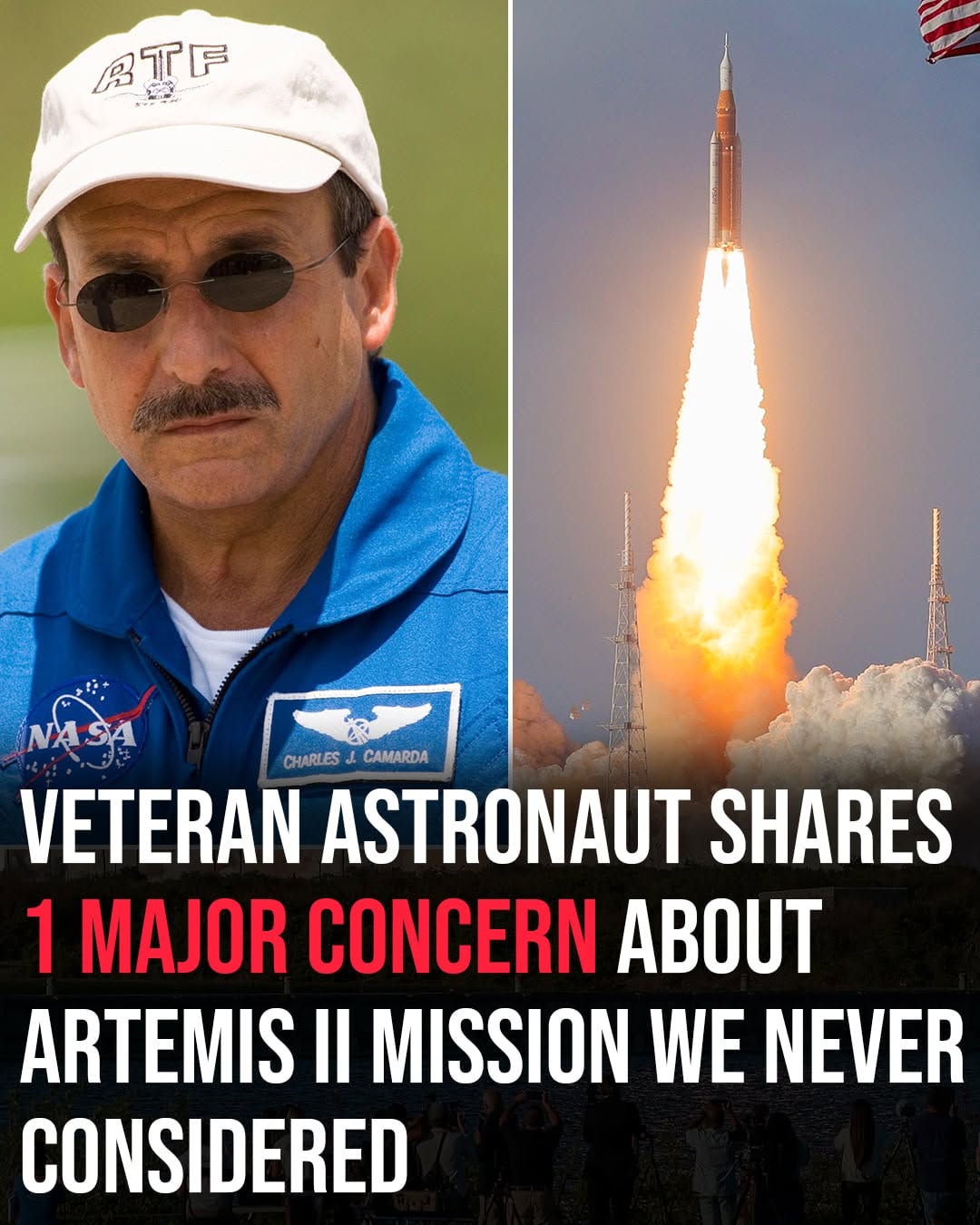
As NASA prepares to send astronauts back into deep space through the Artemis II mission, excitement is building across the world. The mission represents a historic step toward returning humans to the Moon and establishing a long-term presence beyond Earth. Yet amid the celebration, one former astronaut is urging caution, warning that technical capability alone is not enough to guarantee success.
Charles Camarda, a veteran NASA astronaut and engineer, has raised concerns about what he believes may be the agency’s greatest vulnerability: its internal culture. Having participated in NASA’s first Space Shuttle mission after the Columbia disaster, Camarda witnessed firsthand how organizational decisions can have life-or-death consequences. His concerns are rooted not only in engineering challenges but also in the human tendency to underestimate risks after repeated success.
According to Camarda, one of the most dangerous patterns in aerospace history is the gradual acceptance of abnormalities as routine. Problems that fail to cause immediate disaster can slowly become viewed as normal, creating a false sense of security. This mindset played a significant role in both the Challenger and Columbia tragedies, where warning signs were repeatedly overlooked until catastrophe struck.
Artemis II is designed to carry four astronauts on a journey around the Moon and safely return them to Earth. The mission will serve as a crucial test of the Orion spacecraft and the Space Launch System (SLS), laying the groundwork for future lunar landings. While NASA remains confident in the program, Camarda believes confidence should never replace relentless scrutiny.
His concerns extend beyond hardware. In his view, schedule pressures, political expectations, and bureaucratic decision-making can sometimes overshadow engineering judgment. He argues that organizations become vulnerable when meeting deadlines becomes more important than thoroughly questioning potential weaknesses.
Although the Space Launch System is one of the most powerful rockets ever developed, it incorporates technologies derived from the Space Shuttle era. Camarda stresses that every technical issue—regardless of how small it appears—deserves serious attention. Even seemingly minor malfunctions, such as reported issues with onboard systems during testing, should be treated as opportunities to identify deeper vulnerabilities before astronauts are placed at risk.
Despite his criticism, Camarda remains a passionate supporter of NASA’s mission. His warnings stem from a desire to protect both the agency and the crews who place their lives in its hands. He advocates for a return to a culture where engineers are encouraged to challenge assumptions, raise concerns openly, and prioritize safety above public image or program momentum.
The Artemis II crew—Reid Wiseman, Victor Glover, Christina Koch, and Jeremy Hansen—represents a new generation of explorers willing to venture farther from Earth than any astronauts have traveled in decades. Camarda praises their dedication and courage, but he insists that bravery alone cannot compensate for preventable mistakes.
History has repeatedly shown that major disasters rarely result from a single failure. More often, they emerge from a series of overlooked warnings, small compromises, and assumptions that risks are manageable because nothing bad happened before. Camarda believes NASA must remain vigilant against this mindset as Artemis II approaches.
As humanity prepares for its next chapter of exploration, his message serves as an important reminder: successful spaceflight depends not only on advanced technology, but also on an organizational culture willing to question itself continuously. Progress is achieved not through confidence alone, but through discipline, transparency, and an unwavering commitment to learning from the past.
Whether or not one agrees with Camarda’s concerns, his warning highlights a truth that remains timeless in space exploration: the smallest overlooked detail can determine the difference between triumph and tragedy.