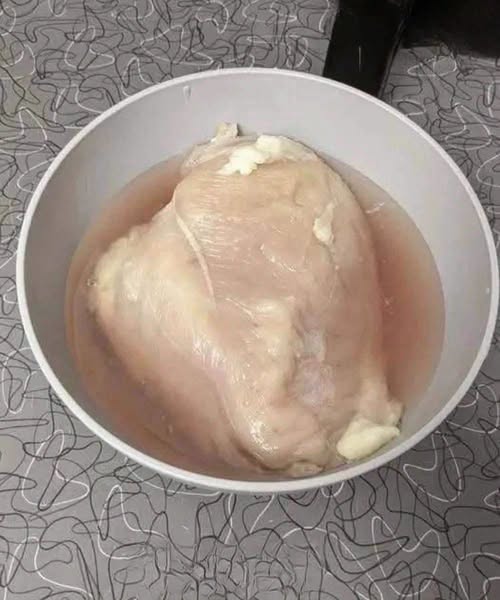
The chicken looks perfectly fine. The color hasn’t changed. There’s no strange smell, no obvious mold, no visible warning that anything is wrong. It’s late, you’re tired, and the last thing you want is to cook another meal. So you tell yourself the leftovers should still be good. After all, they were fully cooked just a few hours ago. Unfortunately, this ordinary decision is exactly how thousands of cases of foodborne illness begin every year. What many people never realize is that dangerous bacteria can multiply long before food shows any visible signs of spoilage, and by the time your senses notice something is wrong, the damage may already be done.
Cooked chicken is one of the most common foods involved in food poisoning because it provides an ideal environment for bacterial growth when left at unsafe temperatures. Once the chicken leaves the refrigerator and begins warming, or after it has been sitting on the kitchen counter, microorganisms can begin multiplying at remarkable speed. Under the right conditions, bacteria don’t simply increase—they reproduce exponentially, doubling in number over and over again within a relatively short period of time.
Food safety experts refer to the temperature range between 40°F and 140°F (4°C to 60°C) as the “danger zone.” Within this range, harmful bacteria such as Salmonella, Campylobacter, and Clostridium perfringens can grow rapidly if food is left unrefrigerated. A pan of cooked chicken sitting on the stove, a takeout container forgotten on the dining table, or leftovers left in the car during errands can all quickly enter this temperature zone where bacteria thrive.
Many people mistakenly believe that reheating food will always make it safe again.
While reheating chicken thoroughly can kill many bacteria, it cannot always eliminate every danger. Some bacteria are capable of producing toxins while they multiply. Those toxins may remain in the food even after the bacteria themselves have been destroyed by high heat. In other words, reheating may kill the germs, but it cannot always remove the harmful substances they have already produced.
That is why appearance alone is an unreliable guide.
Contaminated chicken often looks completely normal. It may smell fresh, retain its original color, and taste perfectly ordinary. Unlike spoiled food that develops obvious odors or visible mold, food containing dangerous levels of bacteria frequently provides no warning whatsoever. Your eyes, nose, and taste buds simply cannot detect many of the microorganisms responsible for foodborne illness.
The symptoms of food poisoning can appear surprisingly quickly—or several days later.
Some people experience nausea, vomiting, stomach cramps, diarrhea, fever, and dehydration within hours. Others may not become sick until a day or two after eating contaminated food. While many recover within a few days, certain infections can become severe enough to require hospitalization, especially among young children, older adults, pregnant women, and individuals with weakened immune systems.
Fortunately, preventing these illnesses usually requires only a few simple habits.
Food safety guidelines recommend refrigerating cooked chicken within two hours after cooking. If the surrounding temperature is especially hot—such as during outdoor gatherings or summer weather above 90°F (32°C)—that window shrinks to just one hour. Every additional minute spent in the danger zone allows bacteria more time to multiply.
Proper storage matters just as much as timing.
Instead of leaving large portions in deep pots, transfer leftovers into shallow, airtight containers before refrigerating them. Smaller portions cool more quickly, reducing the amount of time food remains in temperatures where bacterial growth accelerates. Sealing containers also helps protect the food from contamination while preserving quality and freshness.
Once refrigerated, leftovers should not remain there indefinitely.
Most food safety authorities recommend eating cooked chicken within three to four days. If you know you will not use it during that period, freezing it is usually the safer option. Properly frozen chicken can remain safe for much longer while maintaining much of its quality when thawed correctly.
When it is time to reheat leftovers, temperature once again becomes important.
Chicken should be heated until it is steaming hot all the way through. Cold spots or lukewarm centers may allow surviving bacteria to remain. Stirring food during reheating, especially when using a microwave, helps ensure more even temperatures throughout the meal.
Even with careful storage, there is one rule that remains the safest of all.
If you genuinely cannot remember how long the chicken sat on the counter, when it was cooked, or whether it remained refrigerated properly, uncertainty itself should be treated as a warning sign. Food safety professionals often repeat a simple principle: “When in doubt, throw it out.” The cost of replacing a meal is insignificant compared with the potential consequences of serious food poisoning.
Many cases of foodborne illness begin not with dramatic mistakes but with small moments of convenience. A forgotten pan after dinner. Leftovers left out while watching television. A container accidentally left in the car after grocery shopping. These everyday situations rarely feel dangerous in the moment, yet they create ideal conditions for harmful bacteria to multiply unnoticed.
Ultimately, protecting yourself and your family depends less on complicated cooking techniques than on consistent food-handling habits. Refrigerate leftovers promptly, store them properly, consume them within recommended time frames, and reheat them thoroughly. Most importantly, never rely solely on smell or appearance to judge whether food is safe.
That seemingly harmless plate of leftover chicken may look exactly as it did when dinner ended, but microscopic changes invisible to the eye can completely transform its safety. A single forgotten meal is never worth risking days of illness—or something far more serious. When uncertainty enters the equation, caution is always the healthiest ingredient you can choose.