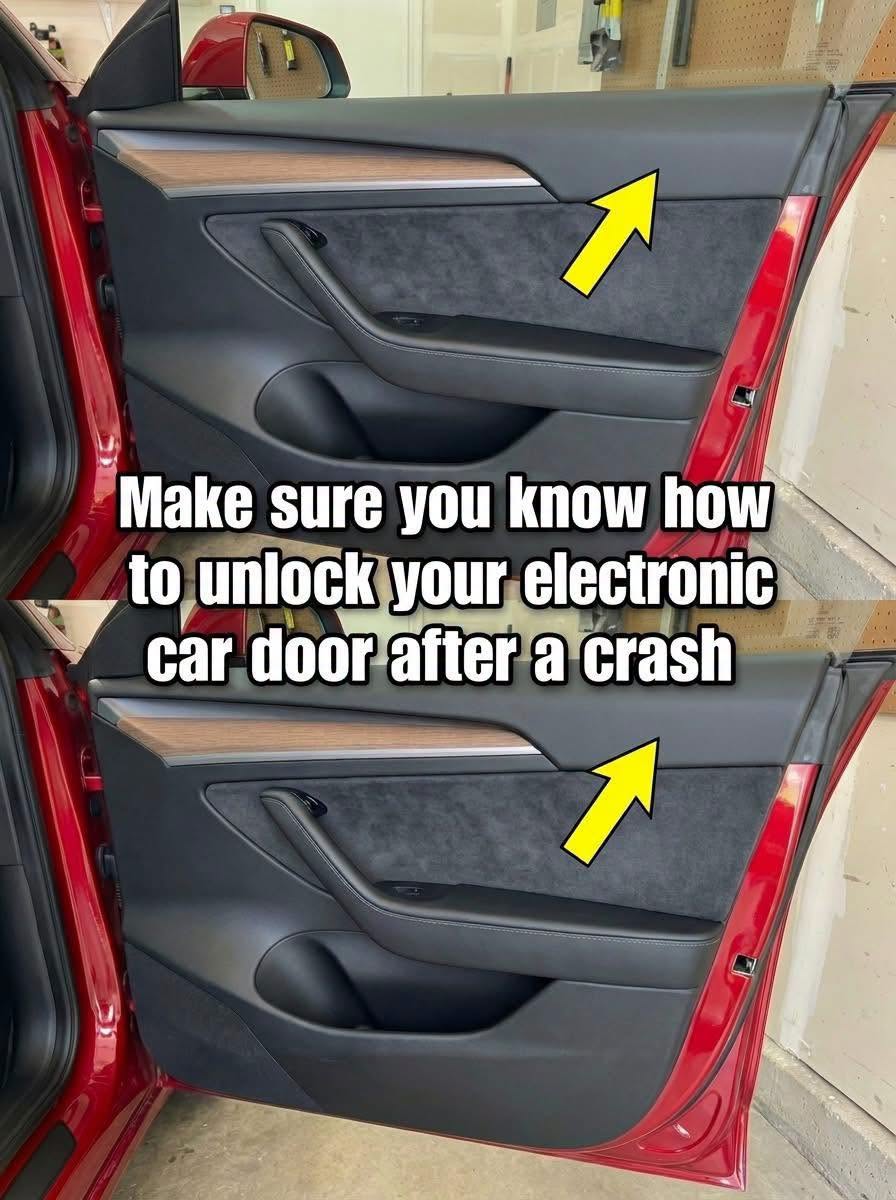
Your vehicle is designed to protect you during a crash—but what happens if you survive the impact and suddenly can’t get out? It’s a frightening scenario that safety experts say every driver should think about before it ever happens. Modern cars are packed with advanced technology, from electronic door handles to automatic locking systems, making everyday driving more convenient than ever. But if the electrical system fails after a serious collision, those same features can quickly become obstacles. In a matter of seconds, confusion, smoke, water, or fire can turn a damaged vehicle into a dangerous trap. The question isn’t whether your car is safe—it’s whether you know how to escape if its electronics stop working.
Over the last decade, automakers have increasingly replaced traditional mechanical door handles with electronic latches and push-button systems. These designs offer sleek styling and improved convenience, but many drivers never realize that they depend on electrical power to function normally. During routine driving, everything works seamlessly. Press a button, pull the handle, and the door opens. Yet after a severe accident, a dead battery, damaged wiring, or an electrical malfunction may prevent those electronic systems from responding at all.
Fortunately, nearly every modern vehicle still includes a mechanical emergency release, even if it isn’t immediately obvious. The problem is that many owners have no idea where it’s located. In some vehicles, it’s hidden beneath a small plastic cover near the door handle. In others, it’s built into the handle itself or tucked inside the armrest. Manufacturers include these manual releases because they understand that electronic systems can fail, but they often receive little attention during the excitement of buying a new car.
Imagine being involved in a collision. Airbags deploy, dust fills the cabin, alarms begin sounding, and your heart is racing. You reach for the familiar electronic door button, but nothing happens. You try again, harder this time. Still nothing. Those few seconds of confusion can feel like an eternity, especially if smoke begins entering the cabin or the vehicle comes to rest in water. Under stress, even simple actions become difficult, which is why learning your vehicle’s emergency features before an accident is so important.
One of the greatest dangers after a crash isn’t always the collision itself—it’s disorientation. Head injuries, shock, darkness, or damaged vehicle structures can make it difficult to think clearly. That’s why emergency responders consistently encourage drivers to become familiar with their vehicle while everything is calm. Finding the manual door release during a quiet afternoon is far easier than searching for it while injured and frightened.
The trunk can also play an important role in emergency escape. Nearly all modern passenger vehicles sold in many countries include an internal emergency trunk release designed to prevent entrapment. If passenger doors become jammed after an accident, reaching the trunk may provide another way out. Knowing where that release is located—and ensuring older children understand it as well—can make a significant difference during an emergency.
Another inexpensive but valuable safety tool is a combination window breaker and seatbelt cutter. These compact devices are specifically designed for situations where doors cannot be opened. A hardened steel tip can shatter tempered side windows with minimal force, while the protected blade quickly slices through jammed seatbelts. Experts recommend storing these tools somewhere easily accessible, such as the driver’s door pocket or center console, rather than inside the glove compartment, which may become unreachable after a crash.
If you choose to keep one of these emergency tools in your vehicle, remember that location matters just as much as ownership. A tool stored in the trunk won’t help if you’re trapped inside the passenger compartment. Ideally, every regular driver should know exactly where it is and be able to reach it with either hand, since one arm could be injured or pinned during an accident.
Families should also take a few minutes to discuss emergency procedures together. Children who are old enough to understand basic instructions can be shown how to identify manual door releases and recognize emergency exits without frightening them. Older parents or grandparents who borrow your vehicle may also benefit from a quick explanation, particularly if they are unfamiliar with modern electronic door systems. A brief conversation today could eliminate dangerous confusion years from now.
It’s equally important to remember that not every accident requires immediate escape. If the vehicle is stable, there is no fire, and emergency responders are already arriving, remaining inside with your seatbelt fastened may sometimes be the safest option until help arrives. Every situation is different, which is why understanding your vehicle’s features gives you more choices rather than forcing you into panic.
Many drivers spend hours learning how to operate navigation systems, entertainment screens, and smartphone connections, yet never take five minutes to read the section of the owner’s manual covering emergency exits. That information may never become necessary—but if it does, it could become one of the most valuable pages in the entire book.
Modern vehicles continue becoming smarter every year, adding remarkable safety technologies that save countless lives. Airbags, collision avoidance systems, automatic emergency braking, and reinforced passenger compartments have dramatically improved survival rates in serious crashes. But technology cannot replace preparation. Electronic systems can malfunction, batteries can fail, and unexpected situations can occur despite the best engineering.
The good news is that preparing yourself requires very little time. Locate your manual door release. Find the emergency trunk release. Learn how your vehicle behaves if the battery loses power. Consider carrying an emergency window breaker and seatbelt cutter within easy reach. Most importantly, share that knowledge with everyone who regularly rides in your vehicle.
You may never need any of these emergency procedures. In fact, hopefully you never will. But safety isn’t measured by what happens during an ordinary commute—it’s measured by how prepared you are when the unexpected happens. In those critical moments after a serious collision, knowledge weighs nothing, costs almost nothing, and may ultimately become the difference between being trapped inside a damaged vehicle and safely walking away.