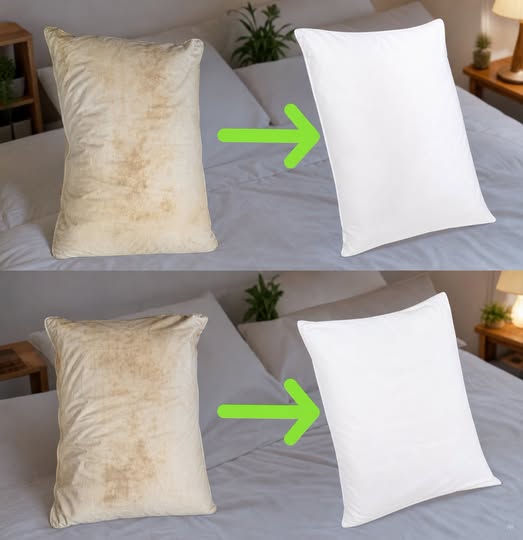
Your pillow is probably dirtier than you realize. Those yellow stains, lingering odors, sweat marks, dust, and microscopic debris can build up night after night, directly beneath your face while you sleep. You breathe near it for hours, rest your skin against it, and depend on it for comfort, often without thinking about everything that accumulates inside the fabric. What feels soft and clean on the outside may have been quietly collecting months of sweat, oils, dead skin, and dust underneath the pillowcase.
That tired, yellowed pillow isn’t simply unattractive; it can become a silent record of everything that happens during countless nights of sleep. Sweat and body oils gradually seep through the pillowcase, while dead skin cells and household dust can accumulate over time. Microscopic organisms such as dust mites may also find the warm, enclosed environment appealing. Even if you wash your bedding regularly, the pillow itself can still need attention because a pillowcase cannot completely prevent moisture and oils from passing through.
That is why pillow care deserves more attention than many people give it. Depending on the type of pillow and the manufacturer’s instructions, washing or cleaning it periodically can help keep it fresher and more pleasant to sleep on. A common recommendation is to clean washable pillows about every six months, while pillowcases and sheets should generally be washed much more frequently. Regular maintenance can help reduce accumulated grime and odors while extending the useful life of the pillow.
Before throwing a pillow into the washing machine, however, always check its care label. Different materials require different cleaning methods. Some pillows are machine washable, while others, such as certain memory-foam or specialty pillows, should not be submerged or placed in a conventional washer. A quick look at the manufacturer’s instructions can prevent accidental damage and tell you exactly how the pillow should be cleaned.
For pillows that are approved for machine washing, cleaning them is often simpler than people expect. Washing two pillows together can help keep the machine balanced during the cycle, although the machine’s capacity and the pillow’s care instructions should always come first. Add the recommended amount of your normal laundry detergent and choose the cycle specified on the label rather than assuming every pillow can handle the same treatment.
Baking soda is sometimes used as an additional deodorizing ingredient because it can help absorb odors. However, it is not necessary for every pillow, and more is not always better. If you decide to use it, a modest amount can be added alongside the detergent when the care instructions allow it. Essential oils are also sometimes suggested for creating a pleasant scent, but they can irritate sensitive skin or damage certain materials, so they should be used cautiously or skipped altogether.
Drying is just as important as washing. A pillow that remains damp inside can develop unpleasant odors and potentially encourage mold growth. After washing, make sure the pillow is completely dry according to the manufacturer’s instructions before putting it back on the bed. Some pillows can be tumble-dried on a low setting, while others need to air-dry. Never assume the outside is dry simply because the surface feels warm or dry; moisture can remain trapped deep inside.
On a dry, suitable day, allowing washable pillows to air out in a clean, well-ventilated area can also help freshen them. Sunlight and fresh air may reduce odors and humidity, but direct sunlight can damage or discolor certain fabrics and materials, so the care label should guide the process. The goal is to make sure the pillow is thoroughly dry and well ventilated, not simply to expose it to the sun for as long as possible.
Over time, however, cleaning may not be enough. Pillows eventually lose their shape and support as the filling compresses. When a pillow becomes permanently flat, lumpy, or uncomfortable, it may be reaching the end of its useful life. No amount of washing can completely restore a pillow whose internal material has broken down.
For pillows that can safely tolerate steam, a garment or upholstery steamer may sometimes help freshen the outer surface, but steam should never be used indiscriminately. Memory foam and other materials can be damaged by excessive heat or moisture. Always follow the manufacturer’s instructions before using a steam cleaner, especially if the device will be applied directly to the pillow.
There are also simple habits that can help keep pillows cleaner between deeper cleanings. Using a washable pillow protector beneath the normal pillowcase creates another barrier against sweat, oils, and dust. Washing pillowcases regularly and keeping the bedroom reasonably clean can also reduce the amount of debris that reaches the pillow itself.
The bigger lesson is that the pillow beneath your head deserves the same attention as the sheets surrounding it. People often wash their bedding while forgetting that the pillow is absorbing many of the same substances every night. A clean pillowcase can make the surface feel fresh, but it cannot completely protect what is underneath.
So the next time you notice yellowing, an unusual smell, or a pillow that simply feels less fresh than it used to, don’t automatically assume it needs to be thrown away. Check the label first. If it is washable, giving it the appropriate cleaning treatment may make a noticeable difference.
And when the pillow has become too old, permanently flattened, damaged, or impossible to clean properly, replacing it may be the better option. After all, you spend hours every night with your face close to it. Keeping that sleeping environment clean, dry, and comfortable is a small household task that can make your bed feel noticeably fresher.
What you once considered an ordinary piece of bedding can become surprisingly important to your nightly comfort. With regular washing when appropriate, proper drying, clean pillowcases, and occasional replacement when necessary, that tired-looking pillow can go from something you barely notice to a cleaner, fresher place to rest your head.