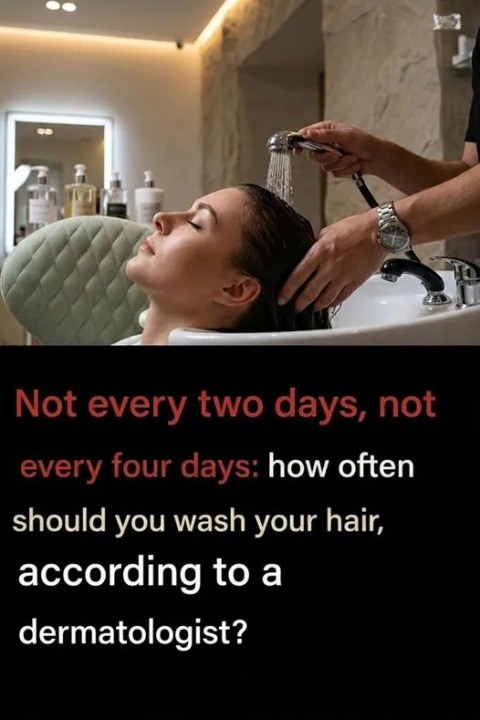
Because hair care advice sometimes comes in the form of rigid guidelines—wash every day, never wash every day, use this product, avoid that ingredient—it can be daunting. However, hair care is actually much more personalized than any one-size-fits-all rule can adequately describe. In actuality, maintaining healthy hair doesn’t require adhering to a set schedule; rather, it requires learning how your hair and scalp function in your unique environment and gradually modifying your regimen accordingly.
One fundamental principle forms the basis of every regimen: your scalp, not fads or generic recommendations, dictates how frequently you should wash your hair. The natural oils (sebum) produced by the scalp vary greatly from person to person in terms of how quickly they accumulate. For some people, oil production happens quickly—within a day—while for others, it could take many days for hair to start feeling or looking greasy. This distinction alone explains why people’s hair-washing habits varies so greatly from one another.
Many people find that washing their hair two to four times a week strikes a pleasant balance between natural moisture retention and cleanliness. However, this is not a law; rather, it is merely a baseline. Within 24 to 48 hours, someone with extremely fine, straight hair may notice that oil moves swiftly down the strand, making the hair appear flat or oily. In certain situations, it could seem necessary to wash more frequently in order to preserve freshness and volume. On the other hand, because natural oils travel more slowly along the bends and structure of the hair shaft, people with thick, curly, or coily hair frequently find that their hair stays hydrated longer. For them, washing too frequently might actually cause dryness or frizz by removing helpful moisture.
Hair that has been chemically or color-treated adds still another level of complexity. The structure of the hair cuticle is altered by procedures including bleaching, coloring, keratin treatments, and relaxing, which frequently make hair strands more porous and vulnerable to moisture loss. Frequent washing in these situations can hasten drying and fading, particularly when using harsh cleansing products. Because they prioritize hydration and protection above regular scrubbing, many people with treated hair prefer sulfate-free shampoos, softer cleansers, and longer intervals between washes.
Scalp health is as significant but frequently disregarded. While an unbalanced scalp can result in problems like dandruff, itching, excessive oiliness, or irritation, a healthy scalp environment promotes healthier hair development. In order to control accumulation, people with oily scalps may feel the need to wash more frequently, particularly if they feel uncomfortable or noticeably greasy right after washing. Overwashing, however, can occasionally backfire by removing too much oil, which causes the scalp to create even more sebum. However, utilizing moisturizing, calming products that lessen irritation and preserve barrier health, as well as spacing washes farther apart, may be beneficial for those with dry or sensitive scalps.
Surprisingly, lifestyle has a significant impact on hair-washing requirements. A person who works out frequently and perspires a lot would need to cleanse their scalp more frequently just to get rid of product buildup, salt, and perspiration. In a similar vein, persons who live in humid areas frequently produce more oil and may feel the urge to wash more frequently. On the other hand, people who live in cooler, drier climates could discover that their hair lasts longer and benefits from less regular shampooing. Wearing hats, using dry shampoo, or regularly treating hair with gels and sprays are just a few examples of tiny habits that can affect how rapidly buildup happens and how frequently cleaning becomes necessary.
How you actually wash your hair—rather than just how frequently—is another crucial consideration. The method can have a big impact on hair health. Instead of vigorously cleaning the ends, several experts advise concentrating shampoo mostly on the scalp, where oil, perspiration, and grime build up. Without using severe friction, the shampoo naturally cleans the lengths as you rinse. Since hair is older, drier, and more likely to break at the ends, conditioner should often be applied from the mid-lengths to the ends. This keeps the scalp supple and silky without making it heavier.
Additionally, water temperature is more important than most people realize. While lukewarm water is often softer and helps maintain the balance between cleanliness and moisture retention, very hot water can deplete natural oils and contribute to dryness. Similarly, brushing wet hair vigorously or towel-drying it harshly can cause breaking, particularly in hair types that are delicate or textured. Over time, minor handling modifications can have a discernible impact.
The frequency of washing is also influenced by styling practices. Waxes, gels, mousses, and hairsprays are examples of heavier styling materials that might accumulate and need to be cleaned more frequently. Longer intervals between washes, however, might be possible with minimal styling regimens. For textured hair types that benefit from less treatment, even protective styles like braids, buns, or twists can lengthen the interval between wash days.
In the end, the best hair care regimen is one that works with your hair rather than against it. Seasons, hormones, stress levels, food, and aging all affect hair. Something that functions flawlessly at one point in life might not function as well at another. Because of this, listening to signals from your scalp and hair is more important than adhering to strict guidelines. Hair that feels oily, limp, or heavy may indicate that it needs to be cleaned more frequently. hair can be requesting more hydration and fewer washes if hair feels dry, brittle, scratchy, or excessively fluffy.
Most people eventually find a rhythm that suits their lifestyle, comfort level, and hair type. Maintaining balance is more important than strictly adhering to a schedule. Hair should be clean enough to feel new, but not so much that it loses its inherent tenderness and resilience. In this way, proper hair care is more about listening, making adjustments, and figuring out what keeps your hair consistently healthy in practice rather than simply in theory.