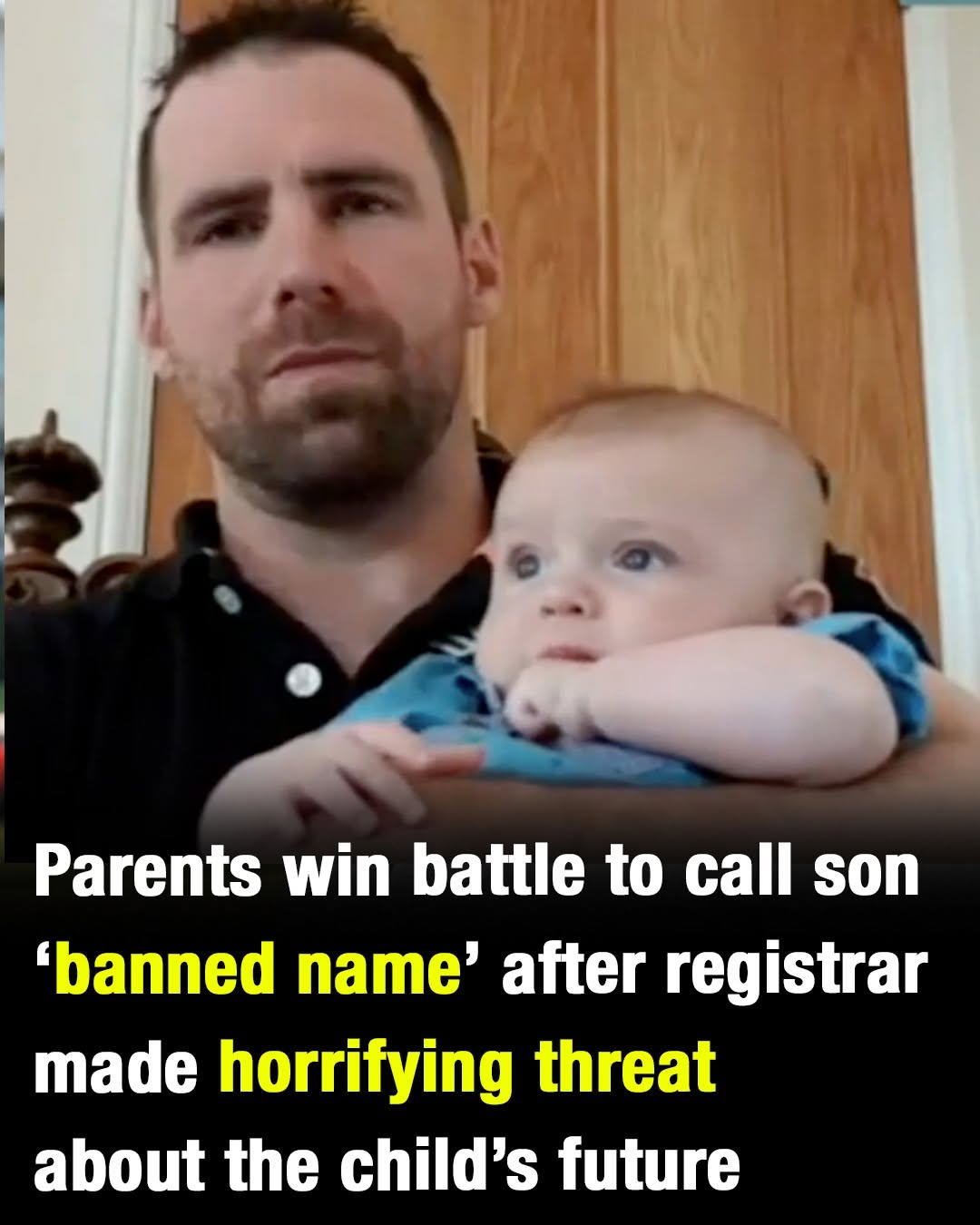
The smile disappeared from the registrar’s face almost instantly.
One moment, Dan and Mandy Sheldon were standing in the registry office experiencing one of the happiest days of their lives. They had recently welcomed their newborn son into the world and were excited to complete one of the final steps of becoming parents officially: registering his name.
The atmosphere was supposed to be joyful.
Instead, it became something neither of them had expected.
Within seconds of hearing the name they had chosen, the registrar’s expression changed dramatically. What should have been a routine administrative process suddenly transformed into an uncomfortable confrontation that left the couple shocked, embarrassed, and questioning how a simple name could provoke such a powerful reaction.
For Dan and Mandy, the choice had never been controversial.
They had spent months discussing possible names, searching for something unique, meaningful, and memorable. Eventually, they settled on a name they felt carried beauty, symbolism, and strength.
Lucifer.
To them, the name represented its original meaning: “light-bringer” or “bearer of light.”
They appreciated its historical roots and poetic significance. When they imagined their newborn son, the name felt powerful, distinctive, and full of character. Every time they said it aloud, it felt right.
But the registrar saw something entirely different.
The moment she heard the name, her pleasant demeanor faded.
According to the couple, she immediately began questioning their decision, suggesting that they reconsider before finalizing the paperwork.
At first, Dan and Mandy thought she was joking.
Surely a government employee wasn’t seriously attempting to interfere with their personal choice.
But as the conversation continued, it became clear that she was completely serious.
She reportedly warned them that the name could cause problems throughout their son’s life.
She suggested that teachers might judge him.
Future employers might reject him.
Classmates might mock him.
People could form negative opinions before even getting to know him.
The warnings came one after another.
What had begun as a celebration slowly transformed into what felt like a criticism of both their parenting and their judgment.
Dan and Mandy sat there stunned.
They hadn’t come to defend their morality.
They hadn’t come to debate religion, history, or social expectations.
They had simply come to register their son’s name.
Yet suddenly they found themselves being treated as though they were making a harmful decision on behalf of their child.
The registrar reportedly expressed concern that the name carried associations that could burden the boy throughout his life.
From her perspective, she believed she was protecting a child from unnecessary hardship.
From the parents’ perspective, however, she was overstepping her role entirely.
The disagreement wasn’t really about a name anymore.
It had become a clash between two completely different interpretations of the same word.
For Dan and Mandy, Lucifer symbolized light, individuality, and strength.
For the registrar, it symbolized negativity, controversy, and future suffering.
Neither side was discussing the same thing.
They were reacting to entirely different meanings attached to the same name.
As the discussion continued, the couple increasingly felt judged.
What hurt most wasn’t simply the disagreement.
It was the implication that they were somehow irresponsible or unfit because of the choice they had made.
The excitement they had felt walking into the office gradually disappeared, replaced by frustration and disbelief.
They later explained that they felt as though they were being spoken about rather than spoken to.
Instead of a simple registration process, they experienced what felt like an interrogation regarding their values and intentions as parents.
Eventually, the situation escalated enough that additional staff became involved.
The couple found themselves waiting while discussions took place behind closed doors.
The experience left them feeling isolated and humiliated.
For a brief moment, they even wondered whether the registration would be denied altogether.
However, the law ultimately provided a clear answer.
Despite personal opinions, the registrar did not have the authority to reject the name simply because she disliked it or disagreed with the parents’ reasoning.
Legally, Dan and Mandy were entitled to choose the name.
Their son would officially be registered as Lucifer.
Yet even after receiving approval, the victory didn’t feel particularly satisfying.
Instead of leaving with happiness and excitement, they left carrying feelings of disappointment and frustration.
The registration had been completed, but the memory of being judged remained.
The experience quickly gained attention online after the parents shared their story publicly.
Almost immediately, public opinion split into opposing camps.
Some people strongly supported the parents, arguing that a name is ultimately a personal decision and that government officials should not impose their own beliefs or preferences.
Others sympathized with the registrar, suggesting that her concerns came from genuine worry about the challenges the child might face in the future.
The debate expanded far beyond this single family.
People began asking broader questions.
Does a name influence a person’s future?
Can certain names create unnecessary obstacles?
Should parents have complete freedom in naming their children?
Or should society sometimes intervene when a name is considered potentially harmful?
The discussion spread across social media, with thousands of strangers sharing opinions, personal experiences, and examples from their own lives.
Yet amid all the arguments, Dan and Mandy’s perspective remained remarkably simple.
For them, the issue had never been about controversy.
It had never been about making a statement.
It had never been about attracting attention.
It was about the moment they first saw their newborn son.
The moment they held him.
The moment they searched for a name that felt perfect.
When they looked at their child, the name Lucifer brought feelings of love, hope, and excitement for the future.
That emotional connection mattered more to them than public opinion.
Years from now, people may continue debating whether the name was wise or controversial.
Some will view it as unusual.
Others will view it as meaningful.
But for Dan and Mandy, the answer remains unchanged.
They chose the name that felt right when they first looked into their son’s eyes.
And regardless of what anyone else thinks, that is the memory they will carry with them long after the controversy fades away.