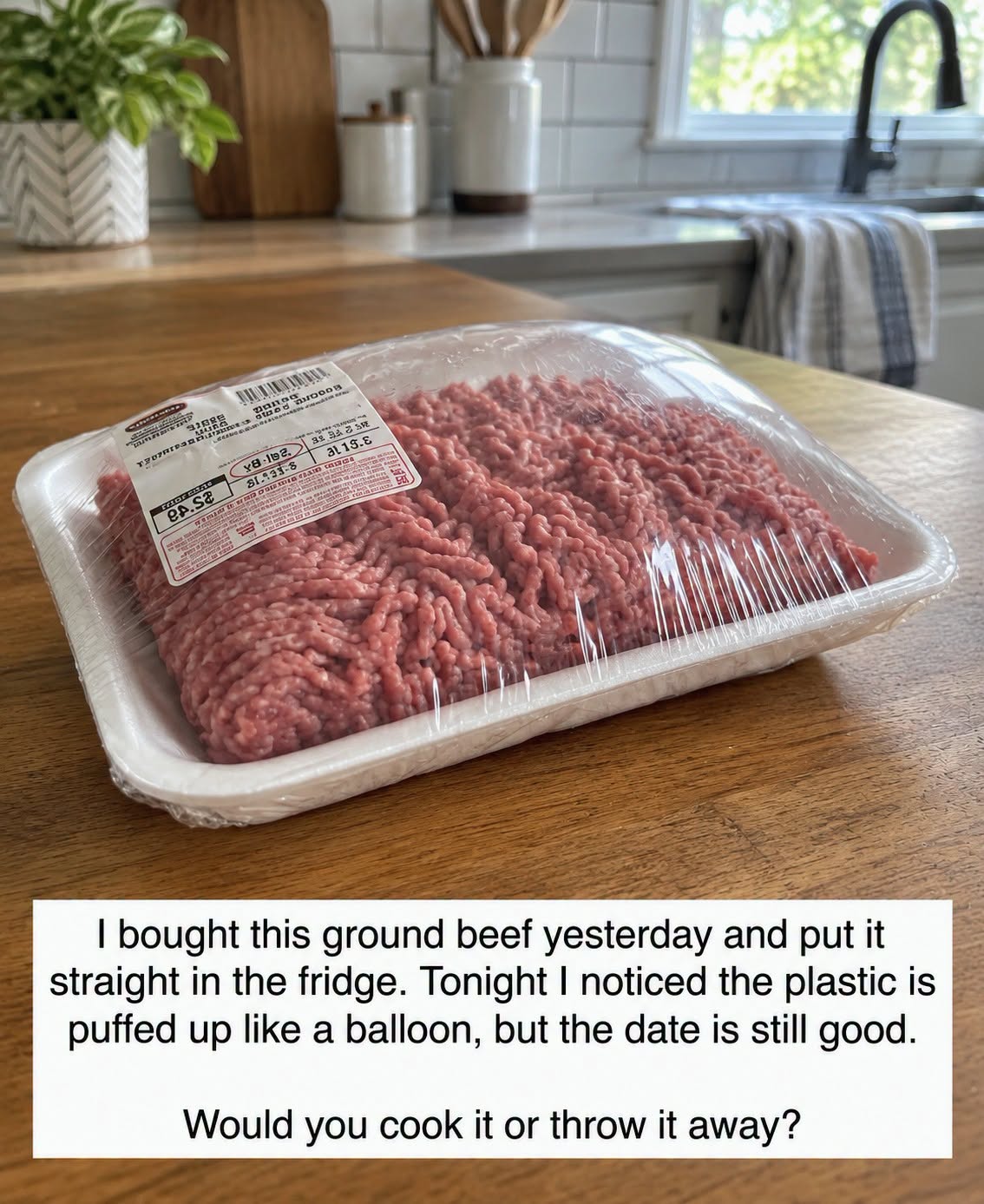
Bloated packages don’t just look suspicious—they can tell a story.
Sometimes the swelling is completely intentional.
Sometimes it is a sign that something has gone wrong.
And sometimes, it is a warning you notice only when it may already be too late.
That chip bag ballooning in your hand? It may be perfectly normal.
That package of sausages suddenly swelling inside your refrigerator? That deserves a very different reaction.
The difference can be difficult to spot at first, but understanding why food packages swell can help you make safer choices before something questionable ends up on your plate.
That airy chip bag is not necessarily a scam or a sign that you’re being shortchanged.
It is often engineering.
The “extra air” inside many bags of chips is actually nitrogen, a gas used to protect fragile food during transportation and storage. Chips are extremely easy to crush, especially when packages are stacked, transported, or handled repeatedly.
The nitrogen-filled space creates a cushion around the chips, helping reduce the amount of damage they experience before reaching you.
That is why a bag of chips can feel surprisingly full even when it contains a relatively small amount of food.
The puffiness is intentional.
It is part of the packaging design.
And under normal circumstances, it is harmless.
But the situation changes when you are dealing with perishable foods.
Packages containing foods such as sausages, cheese, dairy products, prepared meals, and other refrigerated items can sometimes swell because microorganisms are growing inside the package and producing gases.
In that situation, the swelling is not there to protect the food.
It can be a sign that something is happening inside.
Some microorganisms simply cause food to spoil. They can produce unpleasant odors, changes in texture, discoloration, or other signs that the food is no longer fresh.
But other microorganisms can cause foodborne illness.
That is why an unexpectedly swollen package should not be treated as a harmless curiosity, especially when the product is perishable or requires refrigeration.
The important word is unexpectedly.
A manufacturer may intentionally package a product in a way that allows some air or gas to remain inside. A normal chip bag, for example, is designed to contain nitrogen. But if a refrigerated food package that normally lies flat suddenly becomes tight, stretched, or unusually inflated, that can be a warning sign.
The same principle applies to cans.
A can that is bulging, leaking, badly damaged, or otherwise abnormal should not simply be opened to see whether the contents are still good. Certain forms of food contamination can produce gas inside sealed containers, creating pressure and causing the can to swell.
That is not something to gamble on.
When it comes to questionable packaging, the safest approach is not to taste the food to determine whether it is safe.
You cannot reliably identify dangerous contamination by smell or appearance alone.
Some spoiled foods may smell obviously bad.
Others may not.
A product can look relatively normal and still be unsafe, which is why packaging condition, storage requirements, and expiration or use-by information all matter.
At the grocery store, pay attention before putting the product in your cart.
Check refrigerated foods for unusual swelling or leakage.
Look at cans from multiple angles and avoid containers that are bulging, leaking, severely dented, or otherwise damaged.
Pay attention to products that appear to have been stored improperly or that are noticeably different from the other packages beside them.
And remember that a swollen package is not automatically dangerous simply because it contains air.
Context matters.
A bag of chips is expected to contain protective gas.
A freshly purchased refrigerated sausage package that suddenly looks inflated is a different situation.
Once you bring perishable food home, proper storage becomes just as important as what the package looked like at the store.
Keep refrigerated foods properly chilled.
Do not leave perishable foods sitting at room temperature longer than recommended.
Store canned goods in a cool, dry location and check the containers before opening them.
When you’re ready to eat something, look at the package again.
Has it changed?
Is it leaking?
Does it look unusually swollen?
Is there an unexpected odor?
Has the texture or appearance changed?
These details can provide important warning signs, although they cannot guarantee that food is safe.
And if something seems wrong, you don’t need to prove exactly what went wrong before deciding not to eat it.
Food is replaceable.
Your health is not.
Throwing away a questionable package may feel wasteful, especially if you just purchased it or if the food inside looks fine. But saving a few dollars is not worth taking an unnecessary risk with potentially contaminated food.
The safest rule is simple: know the difference between intentional puffiness and unexpected swelling.
A puffy chip bag may be doing exactly what it was designed to do.
An unexpectedly swollen refrigerated or canned product may be telling you something very different.
So the next time you pick up a package that looks strangely inflated, pause before opening it.
Ask yourself whether the swelling is part of the product’s normal packaging—or whether it appeared unexpectedly.
If it is the latter, don’t give it the benefit of the doubt.
Don’t taste it to find out.
Don’t assume cooking will automatically make a questionable product safe.
And don’t ignore a package that looks dramatically different from what you normally see.
When food packaging sends an unusual warning, the safest response is often the simplest one:
Put it down.
Walk away.
And choose something else.