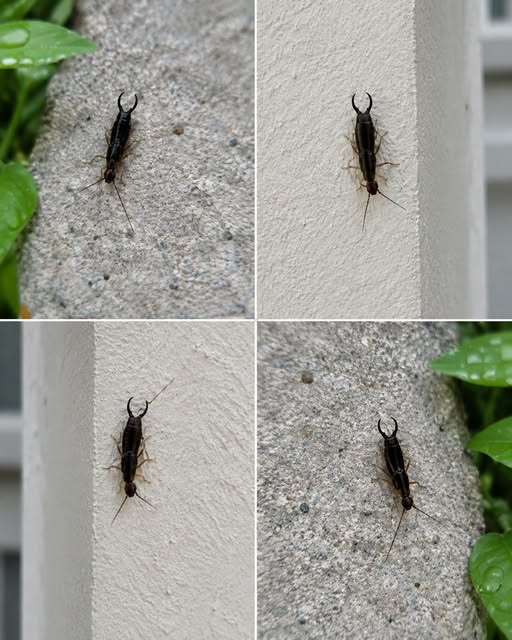
That first crawling shape on the wall is not just a bug. It can feel like a warning. Your pulse spikes, your attention locks onto the tiny movement, and suddenly your home doesn’t feel entirely as familiar or secure as it did a moment before. Is this just a lone wanderer that somehow found its way inside—or is it the first visible sign of something larger, a hidden colony feeding, breeding, and spreading in places you can’t see? The answer may not be obvious at first, but one calm, deliberate look can reveal far more than panic ever could.
The instinct is usually to recoil, grab something, and eliminate the insect as quickly as possible. But the moment you choose to look closely instead of reacting immediately, everything changes. Instead of vague, creeping dread, you’re gathering information. You begin noticing how the insect moves, what it looks like, how large it is, and where exactly you found it. Was it near a window? Close to a drain? Along a wall? Near food, moisture, plants, or a dark corner that rarely gets disturbed?
That tiny body can become a clue.
A single insect doesn’t automatically mean your home is infested. Sometimes insects simply wander indoors through open doors, windows, cracks, vents, or other small openings. Weather, temperature, moisture, and seasonal changes can also influence when certain insects become more active. But repeated sightings, especially in the same areas, can tell you that something about the environment is attracting them.
Suddenly, the problem becomes less mysterious. You begin looking at your home as a system rather than a place that has somehow been invaded. Moisture becomes a possible factor. Crumbs and food residue become relevant. Clutter provides hiding places. Small cracks and gaps become potential entry points. A dripping pipe or damp corner may explain why insects keep appearing in one particular area.
The fear starts to turn into observation.
And observation gives you something panic cannot: control.
From there, your actions can become precise instead of desperate. You dry out damp corners rather than simply spraying everything in sight. You clean areas where food particles or residue may accumulate. You inspect window frames, doors, baseboards, pipes, and other possible entry points. You seal gaps where appropriate and reduce clutter that could provide insects with shelter.
You also begin learning an important distinction: not every insect you see represents a serious problem. Some are harmless drifters that accidentally enter a home and disappear just as quickly. Others can indicate moisture problems, food sources, nesting activity, or a larger infestation. Understanding what you’re seeing is therefore more useful than treating every tiny creature as evidence of disaster.
The location matters, too. Finding one insect near an exterior door is very different from repeatedly finding the same type of insect in a dark, damp area of the house. Seeing one occasionally may simply be part of living in a home connected to the outdoor environment. Seeing increasing numbers, especially in predictable locations, may justify a closer inspection.
This is where many people make the mistake of waiting too long. They see one bug, remove it, and assume the issue is over. Then they see another. And another. By the time the pattern becomes impossible to ignore, the underlying problem may have had more time to develop.
If sightings begin multiplying, don’t let embarrassment or fear keep you from getting help. A qualified pest-control professional can identify the insect, inspect likely sources, and determine whether there is evidence of a larger problem. Getting an accurate identification can save you from using unnecessary chemicals or spending money trying random solutions that don’t address the actual cause.
The goal isn’t to make your home completely untouched by nature. That’s rarely realistic. Homes have doors, windows, plumbing, vents, foundations, and countless tiny connections to the world outside. The goal is to understand what is entering, why it may be entering, and whether the presence is harmless or something that requires action.
So the next time you see that first crawling shape on the wall, take a breath before you panic. Look closely. Observe it. Notice where it is and what is around it. Ask what the environment might be telling you.
The bug itself may not be the enemy.
It may simply be the message.
And once you learn how to read that message, you stop seeing your home as something under mysterious attack and start seeing it as a system you can understand, maintain, and protect.
Sometimes taking your home back begins with nothing more dramatic than turning fear into information—and paying attention to the smallest warning signs.