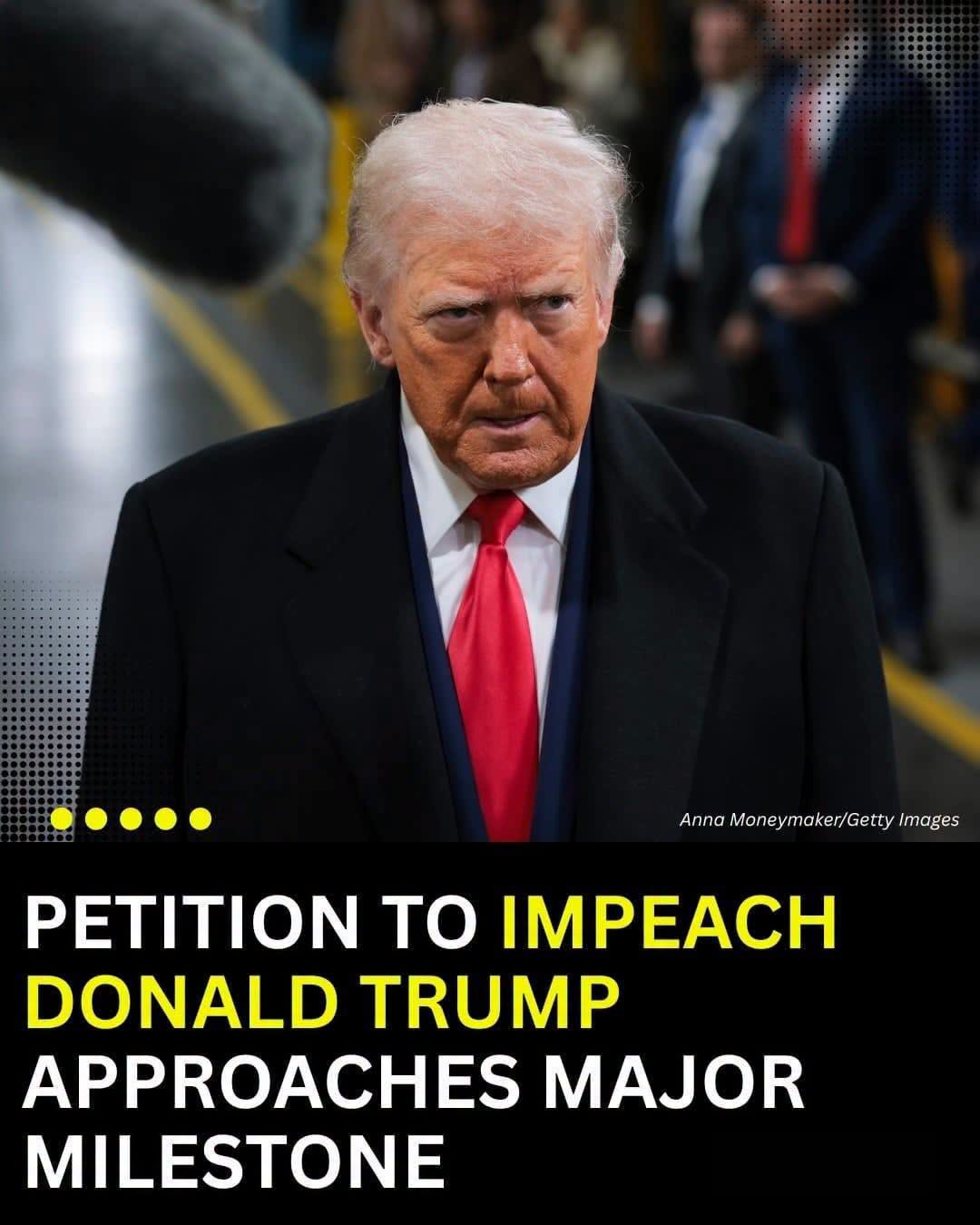
Political tensions have once again intensified as a growing petition calling for Donald Trump’s impeachment rapidly gains support, approaching the symbolic milestone of 100,000 signatures. The campaign has reignited passionate debate across the United States, drawing both enthusiastic supporters and outspoken critics into another chapter of the country’s long-running political divide. For many Americans, the petition represents far more than a collection of signatures—it reflects an ongoing struggle over accountability, leadership, and how recent political history should ultimately be remembered.
For those choosing to sign the petition, the effort carries significant symbolic meaning, regardless of its legal consequences. Many believe it serves as a public statement that the controversies, investigations, and impeachment proceedings associated with Trump’s presidency should not simply fade into the background with time. Each additional signature becomes, in their view, an expression of civic engagement and a reminder that unresolved political questions continue to matter. Supporters see the campaign as an opportunity to keep those debates alive rather than allowing history to move forward without continued public scrutiny.
Opponents, however, view the petition very differently. They argue that it has little practical effect and cannot alter constitutional procedures or reverse the outcome of past elections. From their perspective, initiatives like this contribute to an ongoing cycle of political retaliation that prevents the country from moving beyond years of partisan conflict. Critics believe the focus should instead shift toward addressing current national challenges rather than revisiting battles they consider settled.
Regardless of whether the petition ultimately reaches its numerical goal, its rapid growth highlights a broader reality about American politics. Donald Trump continues to remain one of the most influential and polarizing figures in the country’s public life, capable of generating intense reactions from both supporters and opponents long after leaving office. The continuing debate surrounding his legacy demonstrates that questions of political accountability, leadership, and national direction remain deeply contested. As long as those divisions persist, discussions surrounding Trump’s role in American history are likely to continue shaping political conversations for years to come.