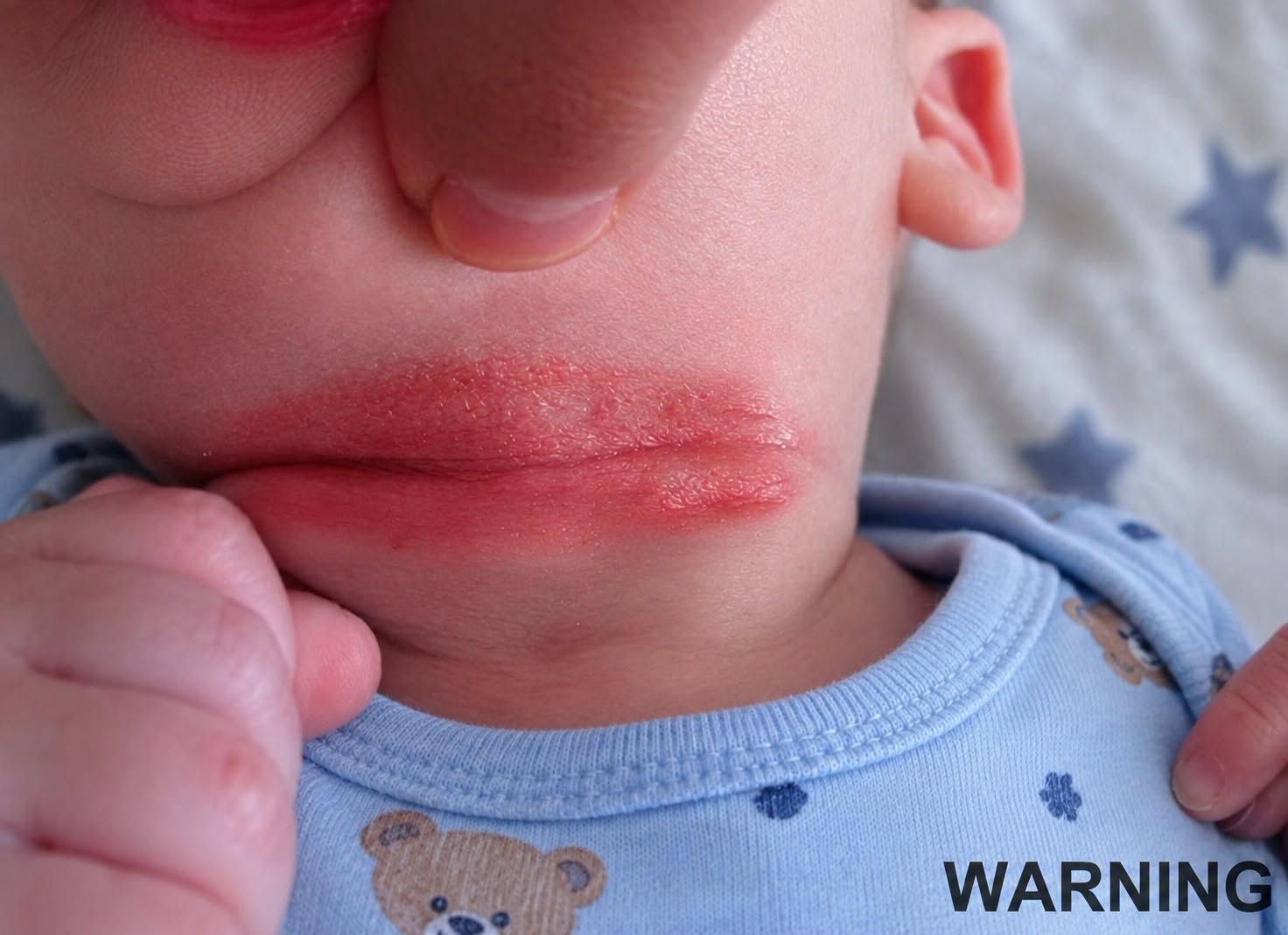
That angry red skin on your baby’s neck may look like a simple irritation, but it can sometimes be your baby’s way of telling you that something is wrong. Babies cannot explain whether their skin is burning, itching, or hurting, so redness can be one of the first visible signs that they need extra attention.
A rash on the neck can have many possible causes. It may come from an allergy, friction caused by clothing, drool collecting in the skin folds, excessive heat, or the early stages of eczema. Sometimes the cause is something as simple as moisture staying trapped against the skin for too long.
The neck can be especially vulnerable because babies often have soft, deep skin folds where sweat, milk, and saliva can collect. Those warm and moist areas can become irritated surprisingly quickly. What begins as mild redness can become more uncomfortable if the skin continues to rub against itself or remains damp.
That is why parents should pay attention to changes rather than simply assuming that every rash will disappear on its own.
In some cases, irritation can damage the skin barrier and create tiny cracks. Once the skin is broken, bacteria or other organisms can potentially enter, increasing the risk of infection. The area may become more painful, develop oozing or crusting, or begin to look noticeably different from an ordinary heat or irritation rash.
Sometimes infection can develop without being immediately obvious.
The redness may gradually spread.
The skin may become swollen or unusually warm.
There may be fluid, an unpleasant smell, or areas that look raw.
Your baby may also become increasingly uncomfortable, especially when the affected skin is touched or cleaned.
Fever can be another warning sign that should not be ignored.
The important thing for parents to remember is that you do not have to diagnose the rash yourself. A baby’s neck rash can have several different causes, and similar-looking rashes may require completely different treatments.
Your job is not to guess the diagnosis.
Your job is to notice the changes, keep the area clean and comfortable, and recognize when professional medical advice is needed.
If the skin is mildly irritated and your baby otherwise seems well, start with gentle care.
Carefully rinse the area with lukewarm water. Avoid vigorous rubbing because irritated skin can become even more inflamed when it is scrubbed. After cleaning, gently pat the area dry rather than rubbing it with a towel.
Whenever possible, allow the skin to breathe.
Check the clothing around your baby’s neck. Rough tags, tight collars, or fabrics that trap heat can make irritation worse. Soft, breathable clothing may help reduce friction and moisture.
Laundry products can matter too.
If you recently changed detergents, fabric softeners, or other products that come into contact with your baby’s clothing, consider returning to a fragrance-free, baby-safe option. Fragrances and other ingredients can sometimes irritate sensitive skin.
Be careful with creams and lotions as well.
It can be tempting to reach for a new product immediately when you see redness, but adding several products at once can make it harder to know what is helping and what might be making the irritation worse. Unless your child’s healthcare professional has recommended a particular treatment, keep the routine simple and gentle.
Most importantly, watch what happens next.
Is the redness becoming smaller or larger?
Does the skin look calmer after being cleaned and dried?
Is your baby comfortable, or does touching the area cause obvious distress?
Are there cracks, blisters, drainage, crusting, swelling, or a change in smell?
These details can help a healthcare professional understand what may be happening.
If the redness continues to spread, becomes increasingly painful, begins to ooze, develops an unusual odor, or the skin becomes cracked and raw, seek medical advice promptly.
You should also seek medical care if your baby cries significantly when the area is touched or cleaned, especially if the discomfort seems to be increasing rather than improving.
And if your baby develops a fever along with a concerning rash, do not simply wait and see without seeking medical guidance.
Young babies can sometimes become unwell quickly, and fever in an infant can require prompt assessment depending on the child’s age and circumstances.
It is also worth remembering that your baby’s overall behavior matters.
A child who is feeding normally, behaving normally, and otherwise seems comfortable may be very different from a baby who is unusually sleepy, difficult to wake, refusing feeds, persistently crying, or appearing generally unwell.
If something about your baby’s condition worries you, trust that concern enough to contact a healthcare professional.
You do not need to prove that something is seriously wrong before asking for help.
A parent does not have to wait until a rash looks dramatic.
Sometimes early attention is exactly what prevents a small skin problem from becoming a much bigger one.
The goal is not to panic every time you see redness.
It is to stay calm, observe carefully, keep the skin clean and dry, reduce obvious sources of irritation, and know the warning signs that deserve medical attention.
Your baby’s skin is delicate, and the folds around the neck can trap moisture more easily than many parents realize. A little extra attention can make a significant difference.
So if you notice that angry red patch, take a breath and look closely.
Clean gently.
Dry carefully.
Remove possible sources of friction and irritation.
Avoid experimenting with multiple new products.
Then keep watching.
And if the redness spreads, the skin starts to weep or smell unusual, your baby seems to be in pain, or there is any fever, contact a healthcare professional without delay.
You are not expected to know exactly what every rash means.
You are simply the person who knows your baby best.
If something does not look right or your instincts tell you that your child needs to be checked, it is worth taking that concern seriously.