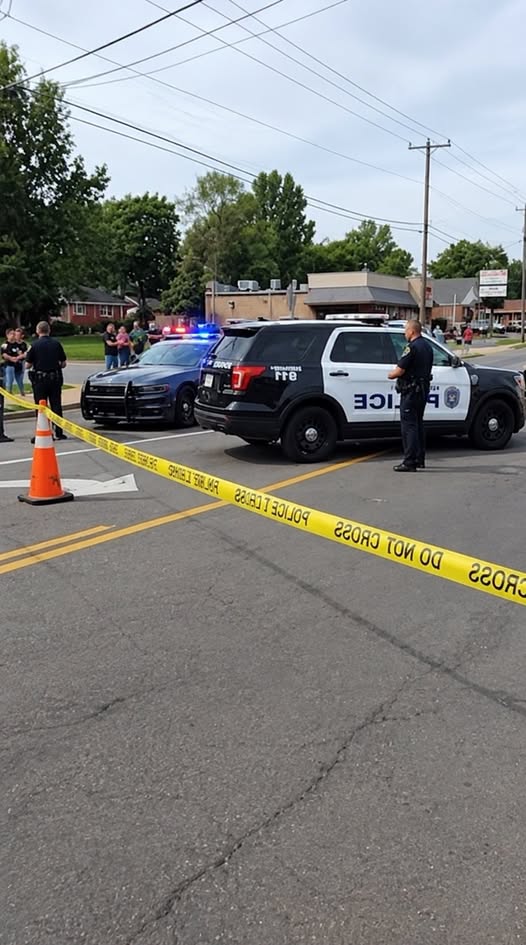
A quiet hospital morning exploded into chaos.
One employee lay bleeding in a parking garage while another was led away in handcuffs. Staff members hid behind locked doors. Patients and families, already vulnerable and anxious, suddenly heard sirens echoing through a place where they were supposed to hear monitors, footsteps, and the ordinary sounds of medical care. The normal rhythm of the hospital was replaced by lockdown procedures, confusion, and fear. In the aftermath, a single question seemed to haunt every hallway: if even hospitals aren’t safe, where are people supposed to feel protected?
The shooting at Corewell Health Beaumont Troy Hospital shattered the fragile illusion that hospitals are somehow insulated from the violence outside their walls. Hospitals are places people enter expecting protection, treatment, and help. Doctors and nurses spend their days caring for people at some of the most vulnerable moments of their lives. Yet on this morning, the people providing that care suddenly found themselves confronting a threat they never expected to encounter inside their workplace.
A 25-year-old employee had arrived to begin what should have been a routine shift. Instead, he was ambushed in a parking garage by a coworker and struck twice in the arm. Within moments, an ordinary workday had become a medical emergency of a completely different kind. Colleagues rushed to help him, ultimately bringing him into the same emergency department where he had once helped care for others.
Inside the hospital, the atmosphere changed almost instantly. Police moved to secure the area while staff members were instructed to remain in protected spaces. Doors were closed. Movement became restricted. People waited for information while trying to understand what had happened and whether the danger was truly over.
For patients, the experience was especially unsettling. Many had no idea what was happening outside their rooms. Some heard sirens without knowing why they were there. Others watched medical staff suddenly shift from their normal routines into emergency security procedures. A place that usually represents calm in the middle of a crisis had suddenly become the center of one.
The suspect was taken into custody, and the immediate threat eventually passed. But the psychological impact did not disappear when the lockdown ended. Hospitals depend on a sense of routine. Staff members need to move freely through corridors, parking areas, treatment rooms, and common spaces. Patients need to trust that the people caring for them are able to focus on their health.
When that sense of security is disrupted, even familiar places can begin to feel different.
In the days that followed, news of the victim’s expected recovery offered an important measure of relief. Knowing that he was expected to survive gave coworkers, friends, and others affected by the shooting something positive to hold onto. But relief is not the same as comfort. The physical wounds may heal, yet the emotional memory of what happened can remain long after the police tape disappears.
Nurses, doctors, technicians, administrators, and support staff may now walk through the same corridors with a different kind of awareness. The parking garage that once represented nothing more than the beginning and end of a shift may now carry a completely different emotional weight. A familiar face may prompt questions that were never considered before. People may wonder whether there were warning signs they didn’t recognize or whether anything could have been done differently.
Those questions are difficult because hindsight can make almost anything appear obvious. After violence occurs, people naturally search for explanations. They replay conversations, interactions, and moments, looking for clues that might have predicted what happened. But not every act of violence can be anticipated, and placing the burden of prevention on coworkers who had no reason to expect an attack can create another layer of pain.
Hospital leaders have promised security reviews and tighter protocols, as institutions often do after incidents that expose vulnerabilities. Those measures can be important, particularly in environments where thousands of employees, patients, and visitors may pass through every day. Security procedures, access controls, emergency communication systems, and response plans all become part of the effort to reduce future risk.
But the deeper wound is psychological.
A hospital is built around the idea of healing. It is where people go when something has gone wrong with their bodies, where strangers work together to protect life, and where frightened families expect to find help. When violence enters that environment, it challenges something deeper than physical security. It challenges the feeling that the people who spend their lives caring for others can themselves feel protected while doing their jobs.
The hospital will eventually return to its routines. Patients will continue arriving. Nurses will continue making rounds. Doctors will continue treating illnesses. Employees will return to their shifts. The corridors will fill again with the familiar sounds of everyday medical care.
But something may remain beneath that normality.
For those who were there, safety may no longer feel automatic. It may become something consciously rebuilt—through stronger protocols, greater awareness, support for employees, and time. Because recovering from violence is not only about treating the visible injury. It is also about helping an entire community regain the confidence to walk through the same doors without expecting the worst.
A hospital is supposed to be a place where people go when they need help.
After an event like this, the challenge is making sure the people who provide that help can believe in that safety again.