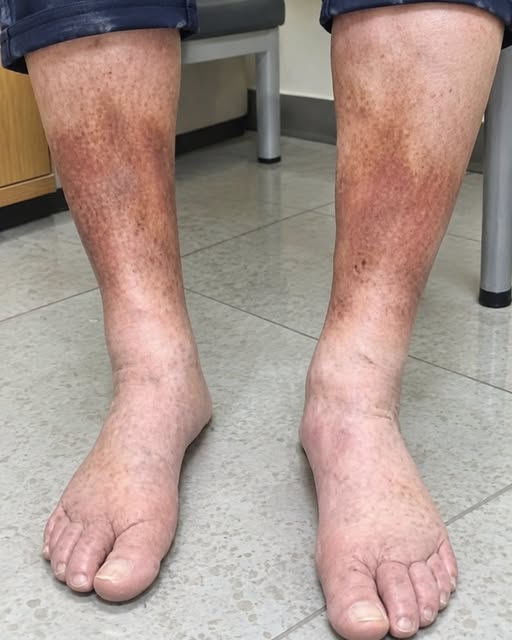
Your feet may be trying to warn you.
What looks like “just a bit of swelling” after a long day could, in some cases, be a sign that something deeper is happening inside your body. Swollen ankles and feet are extremely common, and most of the time there is an ordinary explanation: spending hours on your feet, sitting in one position, hot weather, eating a particularly salty meal, or simply holding more fluid than usual. But when swelling keeps returning, becomes persistent, affects only one leg, or appears alongside other unusual symptoms, it deserves more attention.
Many people shrug it off because the swelling itself may not hurt. A pair of shoes feels tighter. Socks leave deeper marks around the ankles. The feet look slightly puffier than they did that morning. You go to bed expecting everything to look normal the next day. Sometimes it does. But sometimes the swelling keeps coming back, gradually becoming part of the daily routine until it is easy to forget that it may be worth discussing with a healthcare professional.
Swollen feet often begin as a quiet inconvenience. After a long shift at work, a day spent traveling, or hours sitting at a desk, fluid can naturally collect in the lower legs because of gravity. Remaining in one position for a long time can also reduce the normal movement that helps blood and fluid circulate through the legs. Hot temperatures can make swelling more noticeable as well. In situations like these, changing position, walking around, elevating the legs, and allowing the body time to recover may help the swelling improve.
A salty meal can also contribute to temporary fluid retention. Sodium affects how the body handles water, and consuming a large amount can leave some people feeling puffy or swollen. This can happen after restaurant meals, processed foods, or particularly salty snacks. The swelling may disappear as the body restores its normal fluid balance. When that happens occasionally and there are no other concerning symptoms, it may simply be a temporary response.
But there is an important difference between occasional swelling with an obvious explanation and swelling that repeatedly appears without one.
When swelling becomes frequent or persistent, it can sometimes be associated with an underlying medical condition. Problems involving the heart, kidneys, liver, veins, or lymphatic system can affect the way fluid moves through the body. Certain medications can also cause swelling. That means swollen feet are not a diagnosis by themselves; they are a symptom with many possible explanations, ranging from relatively harmless to potentially serious.
The heart, for example, plays a central role in maintaining circulation throughout the body. When the heart is not pumping effectively, fluid can accumulate in tissues, particularly in the lower legs and feet. Swelling associated with heart problems may occur alongside other symptoms, such as unusual shortness of breath, reduced ability to exercise, fatigue, or difficulty breathing when lying down. These symptoms should not be ignored.
The kidneys are also closely connected to fluid balance. Healthy kidneys help remove excess fluid and waste from the bloodstream. When kidney function is impaired, the body may have difficulty maintaining the right balance of water and electrolytes. In some situations, this can contribute to swelling around the legs, ankles, feet, hands, or other parts of the body. Persistent swelling combined with changes in urination or other unusual symptoms deserves medical attention.
The liver can also play a role in fluid regulation. Certain liver conditions can contribute to fluid accumulation in the abdomen or legs. Again, swelling alone cannot tell you what is happening, but unexplained or persistent swelling can be one piece of a larger medical picture. That is why doctors generally consider the person’s other symptoms, medical history, medications, and physical examination rather than trying to identify the cause from swelling alone.
There is another situation that deserves particular attention: swelling that develops suddenly in one leg.
A blood clot in a deep vein, known as deep vein thrombosis, can cause swelling, often affecting one leg more than the other. The affected area may also become painful, warm, or red. A suspected blood clot requires prompt medical evaluation because a clot can sometimes travel to the lungs and cause a potentially life-threatening pulmonary embolism.
That is why swelling accompanied by sudden shortness of breath, chest pain, difficulty breathing, coughing up blood, fainting, or a rapid heartbeat should be treated as an emergency. These symptoms can have several causes, but they can also occur with a serious blood clot that has traveled to the lungs. Waiting at home to see whether the symptoms disappear can be dangerous.
Not every swollen foot is an emergency. That distinction matters. A person who develops mild swelling after standing for ten hours is not automatically experiencing heart failure, kidney disease, or a blood clot. Making that assumption can create unnecessary fear. The important lesson is not to panic whenever your feet swell, but to pay attention to patterns and accompanying symptoms.
Ask yourself what has changed. Did the swelling appear after an unusually long day on your feet? Did both feet become swollen at roughly the same time? Does it improve after resting or elevating your legs? Has it started happening more frequently? Is one leg significantly more swollen than the other? Is there pain, warmth, redness, or tenderness? Are you also experiencing shortness of breath, chest discomfort, unusual fatigue, or other changes that are difficult to explain?
Those details can help a healthcare professional understand what may be happening.
Even swelling that is not painful can be worth discussing if it continues. People sometimes assume that serious problems must cause dramatic pain, but that is not always the case. Some medical conditions can develop gradually, producing subtle changes long before a person realizes something is wrong. A small change in the way your shoes fit may not seem important. Neither may a sock leaving a deeper indentation around the ankle. But if those changes become persistent, they are worth mentioning.
Medication can also be an overlooked factor. Certain medicines can cause or contribute to swelling in the legs and feet. Blood-pressure medications, some pain relievers, hormones, steroids, and other drugs can have fluid-retention effects in some people. That is another reason not to assume that swelling automatically means a problem with one particular organ. A healthcare professional can review medications and determine whether one could be contributing.
Your daily habits can matter too. Prolonged sitting, prolonged standing, limited movement, high-sodium foods, and certain lifestyle factors can all influence swelling. Simple measures such as regular movement and avoiding long periods in the same position may help some forms of temporary swelling. But these measures should not be used as a substitute for medical evaluation when swelling is persistent, severe, unexplained, or accompanied by concerning symptoms.
The most important warning signs are often not the swelling itself, but what comes with it.
If one leg suddenly becomes swollen, especially when accompanied by pain, warmth, redness, or tenderness, seek prompt medical advice. If swelling occurs together with breathing difficulty or chest pain, seek emergency medical care. If swelling is persistent or repeatedly returns without an obvious explanation, make an appointment with a healthcare professional so the underlying cause can be assessed.
The body rarely gives us a convenient notification explaining exactly what is wrong. Instead, it gives us clues. Sometimes those clues are dramatic. Sometimes they are so subtle that we barely notice them. Swollen feet can be one of those subtle signals, and the meaning depends heavily on the circumstances surrounding it.
That is why the goal should not be to diagnose