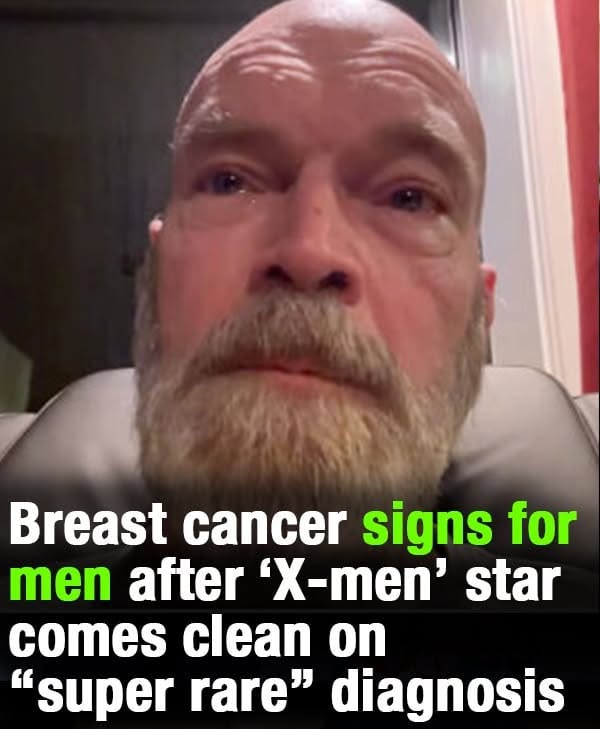
At first, Tyler Mane convinced himself it was nothing.
A small lump.
Nothing more.
Certainly nothing worth worrying about.
Like many people, he assumed there had to be a simple explanation. Maybe it was inflammation. Maybe a harmless growth. Maybe something that would disappear on its own. The possibility that it could be cancer barely crossed his mind.
And even if it did, breast cancer was the last thing he would have suspected.
After all, breast cancer was something most people associated with women.
Not men.
Not someone like him.
Not someone who had spent years appearing strong, confident, and physically imposing.
So Tyler did what countless others do when faced with something frightening.
He pushed the concern aside.
He ignored the nagging fear in the back of his mind and tried to continue living normally.
Unfortunately, the lump didn’t disappear.
The questions remained.
And eventually, the uncertainty became impossible to ignore.
When he sought medical advice, the initial responses failed to provide the urgency he expected. Some concerns were minimized. Some explanations seemed reassuring. For a while, it appeared that nobody was particularly alarmed.
Part of him wanted to believe those reassurances.
It would have been easier.
Much easier.
But his wife wasn’t satisfied.
Something about the situation continued to bother her.
She refused to accept simple dismissals and encouraged further investigation. While others seemed comfortable waiting, she insisted on getting answers.
That determination may have changed everything.
Eventually, the lump was removed and sent for proper testing.
Then came the phone call.
The diagnosis.
The word nobody wants to hear.
Cancer.
Not just cancer.
Breast cancer.
The diagnosis stunned him.
Even saying the words aloud felt unreal.
“I have breast cancer.”
The sentence sounded foreign every time he repeated it.
There was fear.
Confusion.
Disbelief.
And beneath all of it, a profound sense of loneliness.
Breast cancer in men is uncommon compared to women, which often means many men know very little about it. Some don’t realize it can happen at all. Because of that, receiving such a diagnosis can feel isolating in a way that few people understand.
Tyler later admitted that one of his first reactions was embarrassment.
Not because he had done anything wrong.
Not because he was ashamed of being sick.
But because society has spent decades treating breast cancer as something that only affects women.
That misconception creates silence.
And silence can be dangerous.
For a time, he struggled with the idea of sharing his diagnosis publicly.
Part of him wanted to keep it private.
Part of him feared how people might react.
Yet as the reality of his condition settled in, he began to realize something important.
If he felt uncomfortable talking about it, countless other men probably felt the same way.
And that silence might prevent people from recognizing warning signs in their own bodies.
Today, his battle continues.
Chemotherapy treatments have become part of daily life.
Medication designed to block estrogen now plays a crucial role in his treatment plan.
The physical challenges are significant.
The emotional challenges can be even greater.
Every appointment serves as a reminder that cancer does not care about age, gender, profession, or public image.
It arrives without invitation.
It disrupts lives without warning.
And it demands attention.
Yet despite the fear, Tyler has chosen to use his experience to educate others.
Instead of hiding, he has begun speaking openly about what happened.
His message is direct and urgent.
Pay attention to your body.
Do not ignore unusual changes.
Do not assume something cannot happen simply because it is rare.
And perhaps most importantly, do not allow yourself to be dismissed when you know something feels wrong.
Too many men delay seeking help because they believe breast cancer is impossible for them.
Others hesitate because they fear embarrassment or judgment.
Some convince themselves that symptoms will eventually disappear.
Those delays can cost precious time.
Tyler wants people to understand that early action matters.
Questions matter.
Second opinions matter.
Persistence matters.
His story is not simply about a diagnosis.
It is about advocacy.
It is about refusing to remain silent.
It is about challenging assumptions that prevent people from receiving potentially life-saving care.
As he continues treatment, he remains deeply grateful for the support he has received from family, friends, and fans around the world. Their encouragement has helped carry him through some of the most difficult moments of his journey.
Still, the message he shares today comes not from strength alone, but from experience.
His voice often shakes with emotion when discussing the reality of cancer.
The fear is real.
The uncertainty is real.
The struggle is real.
But so is the importance of speaking up.
If there is one lesson he hopes others take from his experience, it is simple:
Listen to your body.
Trust your instincts.
Ask questions.
Fight for answers.
And never allow a casual dismissal to become the reason a serious condition goes untreated.
Because sometimes the smallest warning signs can reveal the biggest dangers.
And sometimes speaking up can save a life.