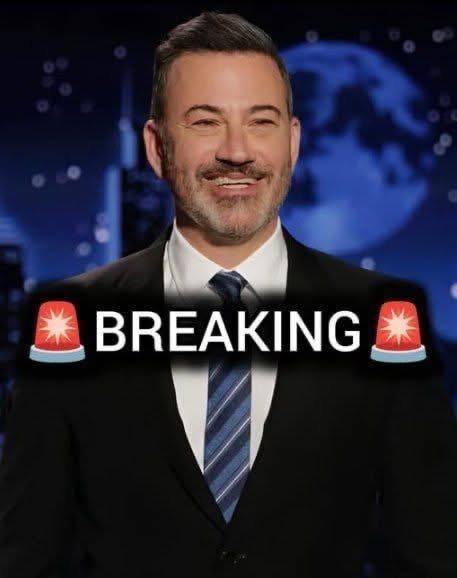
The jokes died in his throat before they ever reached the audience. Under the glare of hot studio lights, Jimmy Kimmel looked into the camera with an expression viewers rarely see from late-night comedians: not confidence, not sarcasm, not carefully rehearsed outrage, but something far more fragile. For a moment, the entire machinery of television seemed to stall. The applause faded. The rhythm disappeared. And in the silence between his words, millions of Americans heard emotions they recognized in themselves — fear, exhaustion, anger, grief, and the sinking realization that politics had stopped feeling distant a long time ago.
When he described it as “a terrible night,” it didn’t sound like a line crafted for ratings or headlines. It sounded personal. The pauses in his voice carried more weight than any punchline could. Normally, a late-night monologue moves fast, bouncing between satire and applause with practiced precision. But this time, the pauses lingered awkwardly. The emotion broke through the performance. And that vulnerability transformed the segment into something larger than entertainment.
Kimmel’s monologue quickly became a cultural Rorschach test for an already fractured country. To some viewers, he was speaking uncomfortable truths aloud at a moment when many public figures stayed carefully detached. To others, he represented everything they disliked about celebrity political commentary — privileged, emotional, and convinced of moral authority. The same tears that moved one audience deeply irritated another.
But the intensity of the reaction revealed something deeper than disagreement over one comedian’s politics. It exposed how impossible it has become to separate public life from political anxiety. Late-night television once existed largely as escape: celebrity interviews, harmless jokes, and satirical commentary designed to release tension at the end of the day. Now, even those spaces feel pulled into the gravitational force of national conflict. Audiences no longer expect entertainers to remain neutral, yet they also punish them when they speak too honestly.
As Kimmel named groups he feared would suffer — women, immigrants, working families, seniors, international allies — he wasn’t simply listing political concerns. He was mapping out a future he believed might become harsher, more divided, and less compassionate. What made the moment striking was not only the content of his words, but the visible struggle behind them. He looked like a man caught between two roles: the entertainer expected to make pain digestible through humor, and the citizen unable to laugh his way past genuine fear.
That tension resonated because many viewers recognized it in themselves. Across workplaces, homes, and social circles, people increasingly feel pressure to perform emotional control while carrying deep uncertainty underneath. Kimmel’s visible discomfort disrupted the polished expectation that television personalities should always remain composed, detached, or ironic. Instead of hiding behind sarcasm, he allowed viewers to see him shaken.
The backlash came immediately and predictably. Critics accused him of melodrama, elitism, or weaponizing emotion for political effect. Supporters praised him for refusing to pretend everything was normal when he clearly believed it was not. Social media fractured into familiar camps within hours, each side interpreting the exact same clip through entirely different emotional lenses.
Yet the reason the moment endured online wasn’t simply because people agreed or disagreed with him. It endured because it captured the strange emotional climate of modern public life. We now live in an era where politics follows people everywhere — into comedy shows, sports broadcasts, award ceremonies, family dinners, and private conversations. There are fewer and fewer truly neutral spaces left. Even laughter feels politically charged at times.
And perhaps that is why Kimmel’s tears unsettled people so deeply. Comedy traditionally offers emotional distance. It gives audiences permission to laugh at chaos instead of drowning in it. But in that moment, the shield of humor cracked. The host who usually helped people escape the tension instead reflected it directly back at them.
Whether viewers saw courage, self-indulgence, sincerity, or manipulation often depended on their own beliefs long before he spoke. But beneath the arguments lies a harder question his monologue forced into the open: what do we really expect from the people who entertain us when the world outside no longer feels entertaining? Are they supposed to stay detached for our comfort, or are they allowed to break character when the weight becomes too human to hide?
For a few uncomfortable minutes under studio lights, Jimmy Kimmel stopped being just a comedian delivering jokes. He became something messier and more vulnerable — a public figure struggling, in real time, to reconcile performance with conscience while millions watched him try not to fall apart.