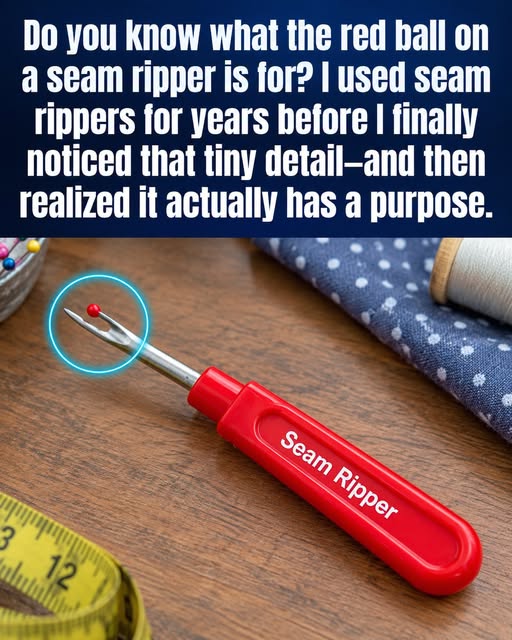
One careless pull can ruin hours of sewing. That tiny red ball on your seam ripper may look unimportant, but overlooking its purpose can turn a simple correction into a heartbreaking snag. Before you attack another stubborn seam, discover how this overlooked detail helps protect your fabric and why the way you hold it could save your next project. What appears to be a simple plastic bead is actually part of the tool’s design, helping separate the fabric from the cutting edge while you work through individual stitches.
The red bead on a seam ripper isn’t decoration: it covers the shorter prong, helping it glide against fabric while the curved blade between the prongs cuts thread. For short seams or delicate materials, slip the pointed tip beneath individual stitches and cut them gently, removing loose threads as you work. On sturdier fabric, carefully open the seam enough to guide the rounded prong underneath the stitches, keeping the bead against the cloth as you advance. Using the tool at the correct angle can make the process much more controlled and reduce the chance of accidentally catching the fabric itself.
That small guard reduces snagging, but it doesn’t make the tool damage-proof. Support the fabric, work in good light, and stop if you feel resistance rather than forcing the blade forward. Replace a dull seam ripper and cap it before storage. Beyond correcting seams, it can remove basting stitches and carefully detach sewn-in labels. Used patiently, this humble sewing-box staple helps turn a frustrating mistake into a manageable repair—and gives your hard work another chance.
The key is patience rather than speed. When several stitches need to be removed, it can be tempting to run the seam ripper quickly along the entire seam, but working in small sections gives you much more control. Cut a few threads, pull away the loosened pieces, and inspect the fabric before continuing. This approach is especially helpful when working with lightweight or tightly woven materials, where one accidental cut can leave a permanent mark. A simple tool becomes much more useful when its small design details are understood and used properly.