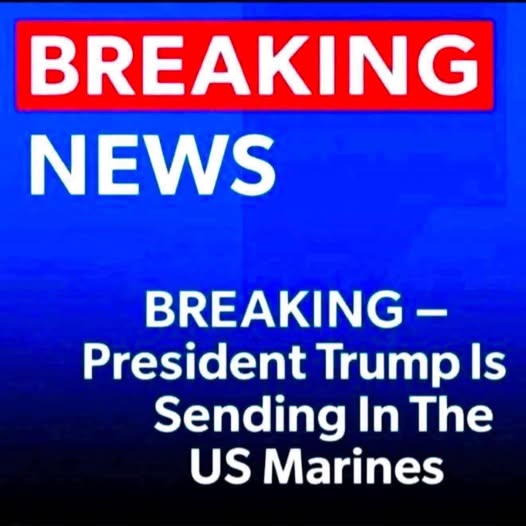
Two hundred U.S. Marines are heading to Florida, and they are not being deployed to a foreign battlefield. Their mission, according to Pentagon officials, is administrative: managing paperwork, moving supplies, and handling logistics inside ICE detention centers. No guns will be drawn. No raids are planned. On paper, it sounds routine, almost mundane. Yet the very sight of Marines in full combat uniforms inside the confines of immigration detention facilities is already ripping through communities, fraying trust, and forcing Americans to confront a complex, uncomfortable truth: what happens when the line between military authority and civilian life begins to blur?
The presence of Marines in ICE facilities signals a profound shift in how domestic immigration enforcement is perceived and executed. While officials emphasize that the troops are not tasked with arrests or border patrol duties, for families who are already terrified of deportation, the intimidation is real. Uniforms carry authority; they carry history; they carry the weight of force. Civil rights advocates warn that even logistical support by the military in civilian spaces risks normalizing a permanent state of heightened control, where people feel constantly surveilled and second-class. It challenges the assumption that the military is only for foreign conflicts and raises serious questions about the militarization of domestic policy.
Inside the fences, the Marines will move boxes and organize records, not weapons. Yet the symbolism is undeniable: immigration enforcement is increasingly framed as a security threat rather than a human or humanitarian challenge. In states like Louisiana, Texas, and Florida, pastors, teachers, and community organizers are scrambling to reassure undocumented residents, while simultaneously preparing for protests, media scrutiny, and political backlash. Every photograph of a Marine walking a detention hallway reinforces anxiety, transforming spaces once associated with administration into symbols of intimidation.
Even if this deployment is temporary, the precedent it sets is likely to resonate for years. Children in detention facilities may remember the imposing presence of military uniforms, families may hesitate to seek assistance for fear of being surveilled, and communities may continue to debate the appropriateness of using armed forces in civilian contexts. Beyond the immediate logistics, the images alone—uniforms, rigid formations, and disciplined soldiers—carry a psychological weight far beyond the paperwork they are sent to manage.
For policymakers, the decision reflects a growing tendency to merge military discipline with domestic enforcement priorities. For advocates, it is a chilling reminder of how easily the tools of war can be adapted to control populations at home. And for Americans watching from the outside, it raises uncomfortable questions about civil liberties, trust in government institutions, and the future of immigration policy in a nation where the boundaries between national security and human rights are increasingly porous.
In the end, the Marines’ mission may be strictly logistical, but its impact—on perception, community trust, and national conversation—is profound. The deployment may not involve combat, yet it confronts the country with a deeper, more enduring battle: how to balance authority, security, and humanity in the treatment of those who come seeking refuge or simply a chance to live without fear.