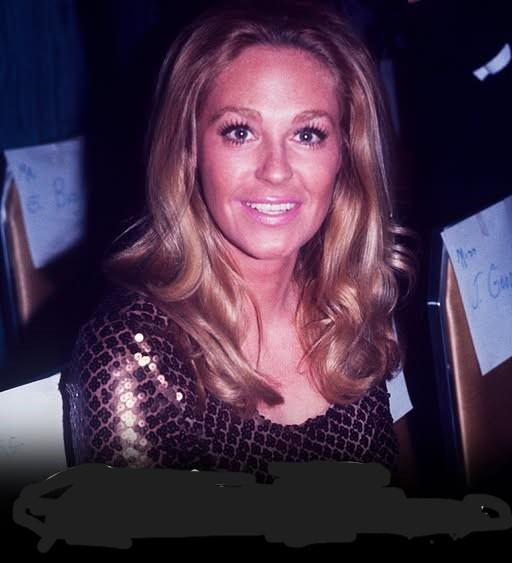
She carried the weight of a dynasty on her shoulders—and never let it break her. In a world dominated by cameras that never blinked, whispers that never ceased, and a relentless judgment that could crush even the strongest, Joan Bennett Kennedy became something far rarer than fame: she became quietly heroic. Her smile, often radiant in public photographs, concealed entire storms. Her music, each note carefully chosen, masked the pain that no one watching could ever hear. Her grace, effortlessly poised on campaign stages and state occasions, defied every scandal, every loss, every bruising headline that tried to define her life before she could. She moved through the world like a secret lighthouse in a stormy night, offering steadiness and warmth while bearing a weight that could have easily shattered anyone less resolute.
Joan Bennett Kennedy’s story is not simply one of proximity to power, but of the quiet, relentless strength required to survive within it. Long before history reduced her to a last name, a ceremonial role, or a series of public narratives, she was a young woman in love, stepping into a family whose power both embraced and consumed her. The world saw the gowns, the motorcades, the constant scrutiny on campaign trails. They witnessed the polished public appearances, the friendly waves to cheering crowds, the carefully curated moments for photographs. What they never saw were the lonely hotel rooms where she wondered if she would ever have a life of her own, the impossible expectations that whispered in every conversation, or the private cost of standing beside a man whose life belonged not to her, but to a nation constantly watching and judging. Every day required a performance of perfection; every private hour demanded an endurance of heartbreak, fear, and compromise that the public could not imagine.
Yet Joan endured. She endured the betrayals that no one could shield her from—the intimate betrayals, the public betrayals, the betrayals that came as rumors and whispers designed to wound her before anyone else could even speak. She endured every headline that tried to reduce her to a caricature, every loss that the media used to define her worth. And through it all, she clung to the few things that were truly hers: her children, the music that she loved and created, and a stubborn, unyielding belief that dignity did not require perfection. Her children, the tender anchors in her life, were her sanctuary and her rebellion against a world that sought to claim her identity for its own narratives. Her music became a language through which she could articulate joy, grief, and hope, a private space where the world’s demands could not intrude. And her dignity, carefully maintained in the face of endless scrutiny, proved that a woman could possess grace, agency, and humanity even when the spotlight sought to reduce her to a symbol.
In every moment of trial, from public scrutiny to private heartbreak, Joan demonstrated an extraordinary emotional fortitude. Behind every well-timed smile at an event, there was preparation for the storms she knew were waiting at home, or the pangs of grief that came from watching a family navigate tragedy under the unforgiving glare of the public eye. She learned, with painful clarity, that survival was not about being seen as strong; it was about finding a quiet power in what was unseen. And it is in that invisible labor—the phone calls to calm frightened children, the early mornings spent composing music that would soothe herself and others, the resilience in the face of media narratives—that her true heroism resides.
Her legacy, therefore, cannot be measured in scandals survived, headlines deflected, or the moments of ceremonial recognition she endured with grace. Her legacy is the quiet, unwavering courage with which she bore a life that was never fully her own, and the tender humanity she refused to let the spotlight erase. She showed that heroism does not always roar; sometimes, it hums quietly in hotel rooms, in lullabies sung to children, in private moments of defiance and self-possession. Through decades of public fascination, private heartbreak, and the inexorable march of history, Joan Bennett Kennedy stands not merely as a figure defined by proximity to power, but as a testament to the quiet, enduring strength it takes to claim dignity, love, and identity on one’s own terms—even when the world is determined to write your story for you.
In the end, she teaches something invaluable: that the measure of a life well-lived is not the applause, the accolades, or the avoidance of pain, but the persistence of grace under pressure, the devotion to what is truly yours, and the courage to endure and love fiercely, even when history tries to reduce your existence to a headline. Joan Bennett Kennedy’s story is a portrait of human resilience, a living proof that amidst scandal, tragedy, and unrelenting scrutiny, it is possible to remain not only unbroken, but quietly heroic, and profoundly human.