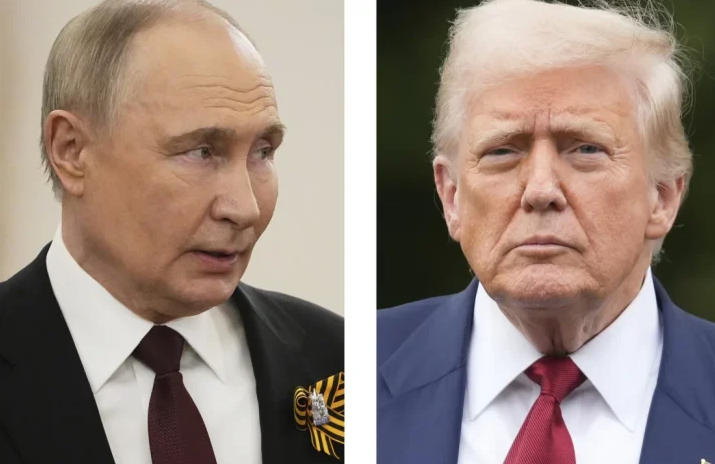
Greenland has increasingly emerged as a strategic and symbolic focal point where environmental transformation, military considerations, and global political dynamics intersect in ways that few other regions experience. Renewed discussion by former President Donald Trump about the potential expansion of U.S. influence on the island has collided with Denmark’s firm and long-standing stance on sovereignty, while NATO emphasizes the need to maintain unity within the alliance. From Moscow’s perspective, even the mere possibility of an expanded U.S. missile defense presence in the Arctic is not perceived as routine policy discussion but as a direct challenge to Russia’s nuclear deterrence posture—an essential pillar of its national security doctrine that underpins both regional and global strategic calculations.
Beneath the surface of diplomatic statements and widespread media coverage lies a highly complex operational environment. Military patrols from several nations overlap across the Arctic, while new bases, radar installations, and surveillance systems are continually being constructed and upgraded. In such a tense and tightly monitored environment, the margin for error or misunderstanding is extremely narrow. What might appear as a routine military maneuver or standard surveillance activity could be misinterpreted, potentially triggering escalation or prompting a response viewed as defensive or even hostile.
The so-called “Golden Dome” concept, though still vague in its technical and operational details, has already come to symbolize these broader geopolitical tensions. For Russian military strategists, the concept suggests the potential for strategic encirclement through an expanded network of missile defense systems, a scenario that could undermine Moscow’s confidence in its ability to project power or protect its nuclear deterrent. Conversely, the United States and its allies frame such developments as defensive and precautionary measures, aimed at addressing emerging security challenges in a rapidly transforming Arctic theater—a region increasingly critical to early-warning capabilities and global missile trajectory monitoring.
Analysts emphasize that Greenland’s importance stems not only from its strategic symbolism but also from its geographic positioning. Situated between North America, Europe, and Russia, the island occupies a pivotal location for overseeing missile flight paths, controlling early-warning radar networks, and monitoring Arctic airspace. As military infrastructure expands and operational activity intensifies, even seemingly minor incidents—miscommunications, accidental flights, or misread signals—could carry disproportionately large strategic implications, potentially escalating tension far beyond the immediate Arctic region.
The evolving situation also highlights a growing interconnection between environmental changes and military planning. As Arctic ice continues to retreat at unprecedented rates, new shipping lanes are becoming accessible, previously untapped resource opportunities are emerging, and operational access points are opening for both civilian and military activity. These changes are forcing governments to reconsider long-standing security assumptions, heightening sensitivity to any military movement, and raising the stakes for how strategic planning is executed in one of the world’s most challenging operational theaters.
Whether Greenland ultimately becomes a flashpoint for confrontation or remains an area of managed tension will depend heavily on political leadership, diplomatic engagement, and careful signaling by all involved parties. Experts argue that open but discreet communication, patient negotiations, and deliberate restraint will be essential to prevent symbolic disputes from escalating into tangible conflict. Each action taken, each public statement made, carries weight, as missteps in this high-stakes environment could reverberate far beyond the immediate Arctic region.
In a region where strategic military interests, environmental transformation, and complex political dynamics converge, the stakes are exceptionally high. Decisions made today regarding Greenland and the wider Arctic will not only shape regional security and stability but will also influence the broader global balance of power in the decades ahead. How nations navigate these challenges—through dialogue, planning, and measured action—may define not just the Arctic’s future, but the strategic architecture of the Northern Hemisphere for generations to come.