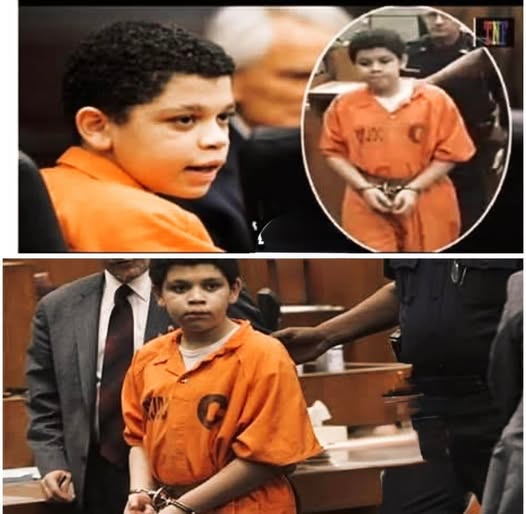
In the United States, a deeply controversial and troubling reality persists: at least seventy-nine minors under the age of fourteen are currently serving life sentences without the possibility of parole. These children — some barely in middle school — are sentenced to spend the rest of their lives behind bars, with no chance of ever being released. This severe punishment has sparked widespread outrage, both within the nation and internationally.
Organizations such as Human Rights Watch, The Equal Justice Initiative, and Amnesty International have long condemned these sentences, arguing that they violate fundamental human rights and justice principles. They assert that such punishments ignore the very nature of childhood — a time of learning, growth, and potential for redemption. Many of these children, advocates emphasize, grew up in unstable homes or unsafe neighborhoods, facing poverty, abuse, neglect, and systemic inequality. By the time they entered a courtroom, society had already failed them in multiple ways.
One tragic and well-known example is the case of Lionel Tate. At just twelve years old, Lionel became the youngest person in modern U.S. history to be sentenced to life without parole. His case involved the death of a six-year-old girl during what he claimed was an accident while playing. Despite his age, the court tried him as an adult, and in 2001, he was sentenced to life in prison. The case sparked intense public debate, with many questioning how a child could be held to adult legal and moral standards. Though Lionel’s sentence was eventually reduced after years of appeals, his case became a symbol of what critics view as the moral failings of the U.S. justice system regarding minors.
Psychologists, legal experts, and ethicists have repeatedly pointed out that children are not adults in miniature. Studies have shown that parts of the brain responsible for impulse control and decision-making, particularly the prefrontal cortex, do not fully develop until the mid-20s. As a result, minors — especially those under fourteen — lack the capacity for reasoned judgment and a full understanding of the consequences of their actions. Holding them accountable with the same level of punishment as adults undermines both science and ethics.
The U.S. Supreme Court has taken steps to address this injustice. In 2012, the Court ruled in Miller v. Alabama that mandatory life sentences without parole for juveniles are unconstitutional, stating that such punishment fails to account for the potential for rehabilitation. In 2016, Montgomery v. Louisiana made this decision retroactive, allowing thousands of juvenile offenders to have their cases reviewed. However, despite these rulings, many states have been slow to revisit past cases, leaving hundreds of prisoners sentenced as children still behind bars with little hope for review.
In some states, the justice system continues to impose harsh sentences on minors, arguing that certain crimes are so severe that age should not mitigate punishment. Advocates, however, counter that this approach ignores the fundamental truth about youth: their capacity for change. They believe that children, even those who have committed serious crimes, deserve an opportunity for reform, healing, and eventual reintegration into society.
Instead of focusing on retribution, advocates call for alternatives based on rehabilitation and restorative justice. These approaches emphasize accountability, personal growth, and reconciliation, rather than permanent exclusion. Restorative justice programs bring victims, families, and offenders together to confront harm, foster understanding, and encourage transformation. Research shows that such methods not only reduce recidivism but also help heal communities fractured by crime and trauma.
This issue forces America to grapple with a larger question: What does justice mean when it comes to children? Is justice about punishing minors as though they were fully grown adults, or is it about guiding them toward redemption and reform? The answer to this question shapes not only the fate of those seventy-nine minors but the moral direction of the nation itself.
Across the country, families of incarcerated youth continue to advocate for change. They write letters, attend hearings, and collaborate with advocacy groups to bring attention to what they call “the invisible children of America’s prisons.” Many hold on to the hope — fragile but unbroken — that one day the laws will reflect compassion rather than vengeance, and that every child, regardless of their past mistakes, will be seen as capable of transformation.
Ultimately, this struggle is not just about sentencing laws or court decisions. It is about human dignity — about acknowledging that children, even those who have made grave errors, are still growing, learning, and capable of change. As long as even one child remains condemned to die in prison, the question will remain: Can a society that calls itself just truly turn its back on its own children?