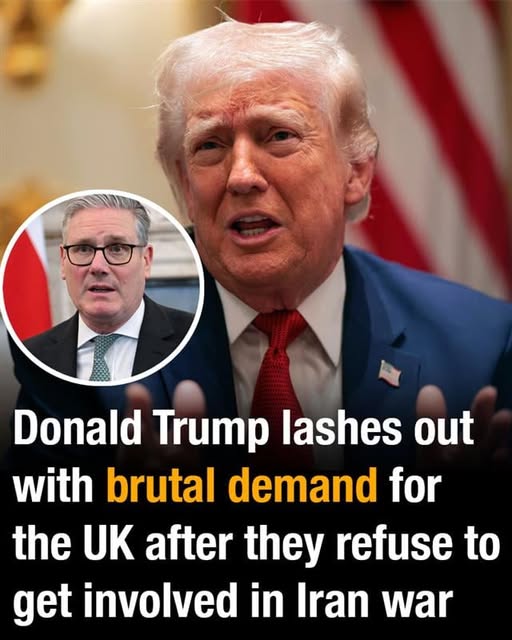
The message was harsh, direct, and impossible to ignore. In a fiery online outburst, Donald Trump warned the United Kingdom that the United States “won’t be there to help you anymore” as tensions with Iran intensified around the strategically critical Strait of Hormuz. The tone was confrontational, almost explosive. Yet, within that same fast-moving news cycle, he shifted dramatically—offering a warm welcome to King Charles III for what he described as a “beautiful” White House banquet. Two sharply different tones, two contrasting messages—all coming from the same figure, in the same moment.
Trump’s pointed criticism of the UK over its refusal to take part in military action against Iran marked a clear and uncomfortable shift in the long-standing transatlantic relationship. Posting on Truth Social, he openly questioned Britain’s resolve, accusing it of lacking “courage,” and bluntly telling the country to “go get your own oil.” His remarks carried a deeper warning for allies more broadly: that they should no longer assume American support in times of conflict. By declaring that the U.S. “won’t be there” next time, he signaled a more conditional, less predictable approach to international partnerships. The impact of those words was immediate, especially as the UK navigates energy concerns and seeks to avoid deeper involvement in another Middle Eastern conflict.
But almost as quickly as that hardline stance appeared, it was followed by a strikingly different tone. In announcing the upcoming state visit of King Charles and Queen Camilla, Trump adopted language that was warm, ceremonial, and full of admiration. He described the visit as a “momentous occasion,” spoke of a “beautiful Banquet Dinner,” and emphasized his “great respect” for the King. The contrast was difficult to ignore: sharp criticism of the British government on one hand, and enthusiastic praise for the monarchy on the other.
This dual messaging has left many observers questioning what it ultimately means for the so-called “special relationship” between the United States and the United Kingdom. On one level, it reflects a distinction between political alliances and cultural or historical ties. On another, it raises uncertainty about consistency and direction. Can strong diplomatic partnerships endure when signals shift so quickly? And which message carries more weight—the warning of reduced support, or the display of continued respect and connection?
In the span of a single week, Trump managed to challenge Britain’s strategic decisions while simultaneously celebrating its royal leadership. The result is a complex and somewhat ambiguous picture—one where diplomacy, politics, and symbolism collide, leaving allies and observers alike trying to interpret what the future of that relationship might truly look like.