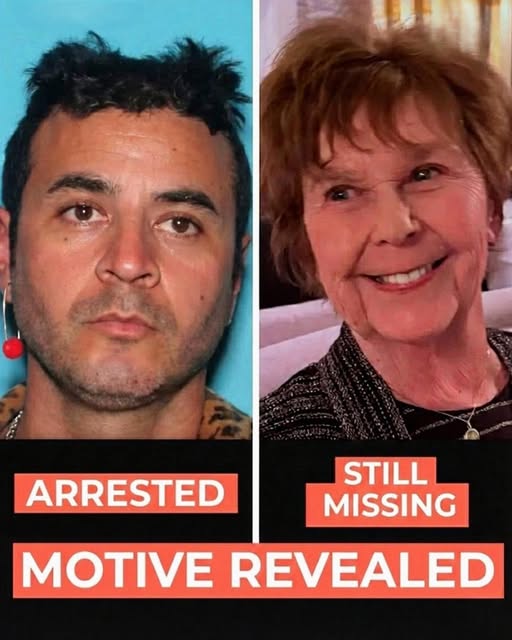
The message didn’t just arrive—it exploded into their lives with a force no one was prepared for. One moment, the Guthrie family was clinging to hope, reaching out to strangers, asking for compassion, for information, for anything that might lead them closer to Nancy. Their world had already been turned upside down, every second stretching into something unbearable. Then, without warning, everything shifted. A cold, calculated text appeared, demanding bitcoin, speaking in vague but threatening tones, and hinting at Nancy’s fate in a way that felt deliberate and cruel. It didn’t offer answers—it weaponized uncertainty. It turned their fear into leverage, their desperation into something someone else could manipulate.
The message was precise enough to feel real, but distant enough to avoid clarity. It suggested knowledge without proving it, feeding just enough detail to keep hope alive while deepening the terror. For the family, it was a moment of emotional whiplash—fear colliding with the fragile possibility that someone, somewhere, knew something. Authorities moved quickly, tracing the signal, hoping it would lead them closer to Nancy. But what they uncovered was something far more disturbing than silence or dead ends.
It wasn’t a kidnapper. It wasn’t someone connected to Nancy’s disappearance.
It was a stranger.
A man watching from a distance. A viewer of coverage. Someone who had followed the story not with concern, but with curiosity. Someone who saw not a family in pain, but an opportunity. An observer who crossed a line—from passive attention to active interference.
In the days that followed, the weight of that realization settled heavily over everything. For the Guthries, the pain wasn’t just about what had happened to Nancy—it was about what had been done to them in the process. Their private nightmare had become public, and in that exposure, it had attracted people who didn’t care about the outcome, only the reaction.
Investigators later revealed that Derrick Callella had admitted to being drawn in by the media coverage. He watched, followed updates, absorbed the details—and then made a decision. Instead of turning away, he leaned in. He searched for the family’s contact information, tracked down their phone numbers, and carefully constructed a message designed to provoke fear. Not to help. Not to reveal anything meaningful. But to see what would happen.
To see how far he could push it.
The text wasn’t random. It was intentional. Every word chosen to create tension, to blur the line between possibility and threat. It was, in a way, an experiment—one carried out at the expense of a grieving family already stretched beyond their limits.
And that’s what made it worse.
Because it wasn’t about Nancy.
It never was.
It was about control, about reaction, about inserting himself into a story that didn’t belong to him. About pulling a thread and watching the consequences unfold from a safe distance.
Now, investigators are left dealing with more than just the original case. They are navigating a landscape filled with noise—false leads, hoaxes, and malicious interference. Each fake message complicates the process, pulling attention away from real evidence. Each false hope forces the family to relive the same emotional cycle: fear, anticipation, and then crushing disappointment.
Time is lost. Focus is scattered. And the truth becomes harder to reach.
For the Guthrie family, the arrest brings a small measure of accountability—but not relief. It confirms what they feared: that their pain had been exploited. That someone had seen their worst moment and chosen to make it worse.
There is no comfort in that.
No closure.
Because even as one piece of the puzzle is exposed, the larger question remains untouched. The noise fades, the distractions are cleared away, and what’s left is the same, haunting uncertainty that has been there from the beginning.
Where is Nancy?
That question still lingers, heavier than ever. And until it is answered, no arrest, no explanation, no moment of justice can truly quiet what this family is living through.