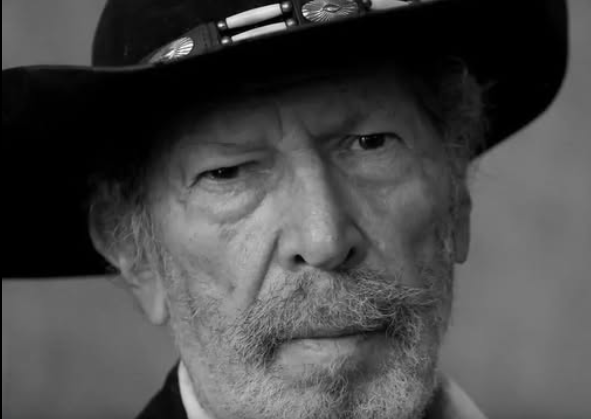
The news hit like a punch to the gut, sudden and impossible to soften. Texas didn’t just lose a man—it lost an entire force of personality, a storm made up of music, mischief, defiance, and unapologetic truth-telling. Kinky Friedman is gone at 79, and the silence that follows feels heavier than words can capture. He wasn’t the kind of figure you could quietly replace or neatly summarize. He joked when others stayed serious, provoked when others played it safe, and stepped into arenas—music, literature, politics—where he was never expected to fit. He ran for office not to blend in, but to challenge the very idea of what leadership could look like. He broke rules not carelessly, but deliberately, as if daring the world to question why they existed in the first place.
Richard “Kinky” Friedman’s death closes a chapter that never followed a conventional script and never tried to. His life unfolded like a series of headlines that felt too strange, too sharp, or too bold to be fiction—yet they were all real. As the frontman of Kinky Friedman and The Texas Jewboys, he carved out a space in country music that few would have dared to enter, using humor and satire to challenge traditions that many held untouchable. As a novelist, he brought that same voice to the page—wry, irreverent, and always cutting just close enough to the truth to make readers uncomfortable. And as a political candidate, he blurred the line between performance and sincerity, turning campaigns into something that felt part protest, part theater, and part genuine attempt to connect. He could be crude, brilliant, frustrating, and insightful—sometimes all within the same sentence. But above all, he was unmistakably human, never smoothing out his edges just to be more acceptable.
In a place like Texas, where larger-than-life personalities are almost a cultural expectation, Kinky Friedman still managed to stand out as something even bigger—something harder to define. He represented a voice that didn’t quite belong to the mainstream, yet couldn’t be ignored by it either. He spoke, in his own way, for the outsiders—the skeptics, the questioners, the ones who laughed at the system while still hoping, in some corner of themselves, that it could be better. His humor wasn’t just for entertainment; it was a tool, sometimes a weapon, used to expose hypocrisy and force reflection. His songs didn’t always comfort—they challenged. His jokes didn’t always land gently—they cut.
What he leaves behind isn’t a clean or easily packaged legacy, and that’s exactly what makes it powerful. It lives in the uneasy laughter his music inspired, in the sharp edges of his writing, and in the memory of a man who refused to dilute himself for approval. It survives in every moment where someone chooses honesty over politeness, boldness over safety, authenticity over expectation. Kinky Friedman’s life stands as a stubborn reminder that being fully, loudly, and unapologetically yourself—no matter how complicated or controversial that self might be—is not just an act of defiance, but a kind of public service in its own right.