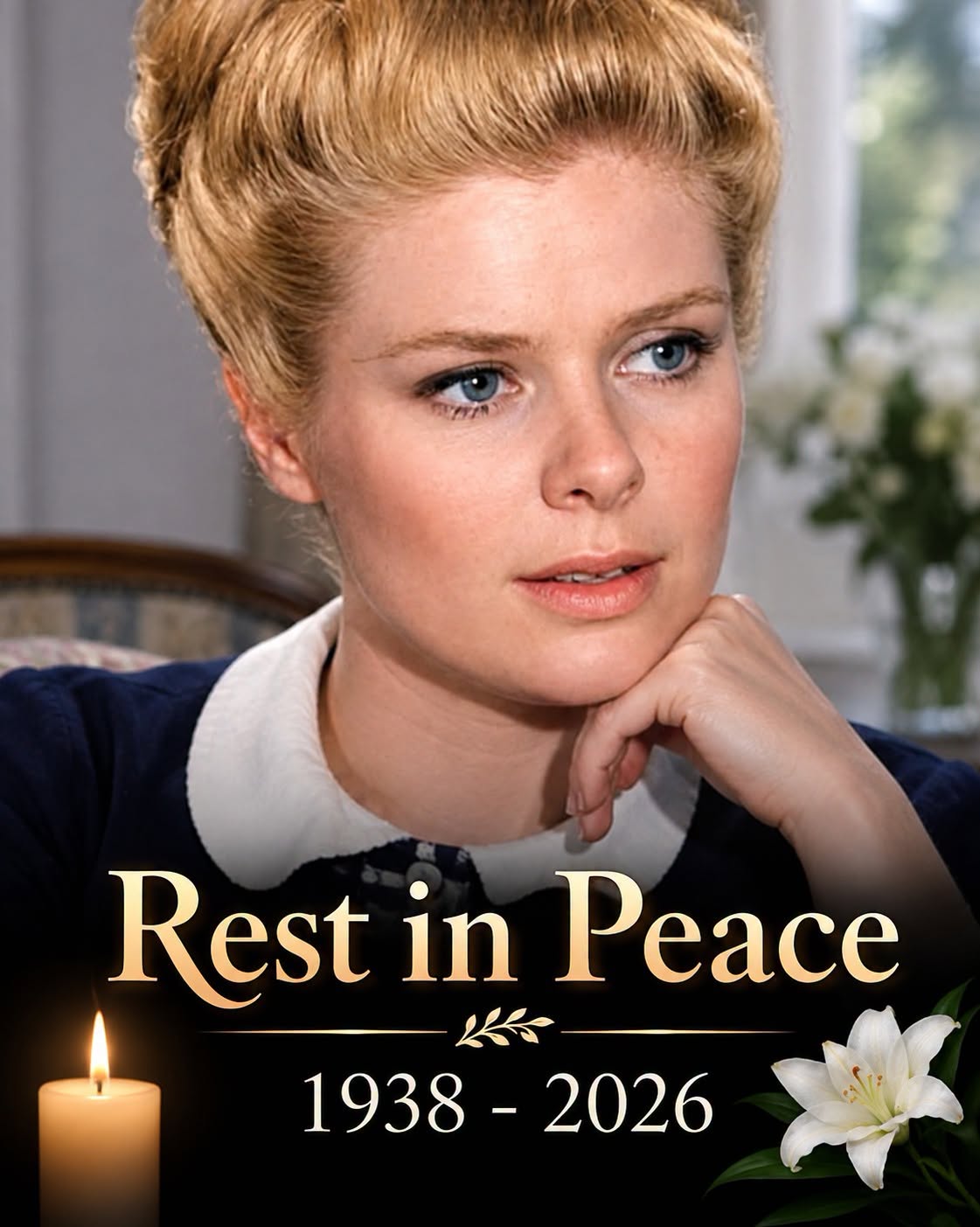
Nina Shipman slipped into our living rooms long before most of us knew her name.
She was the pretty blonde in the background, the familiar face standing beside bigger stars and more recognizable names. She appeared in films and television shows that became part of the fabric of American entertainment, often without receiving the kind of attention reserved for leading stars. Alfred Hitchcock’s Vertigo, films with Bing Crosby and Fred MacMurray, and classic television series all became chapters in a career that stretched across decades.
A
AFI Catalog
+2
Yet behind those brief appearances was a woman whose life was considerably richer than the number of lines she was given on screen.
Nina Shipman was born in Los Angeles in 1938 into a family that already had deep connections to show business. Her father, Barry Shipman, was a screenwriter, while her mother, Gwynne Shipman, was a dancer and actress. Her grandfather, Ernest Shipman, had connections to one of the early Shakespearean touring companies in the United States, and her grandmother, Nell Shipman, was a silent-film actress. Hollywood was therefore not simply a career Shipman discovered later in life; it was part of the world surrounding her from childhood.
W
Wikipedia
+1
But acting was not necessarily the dream that came first.
Music held a special place in her life, and she eventually studied music at California State University, Los Angeles. She also trained in acting at the Pasadena Playhouse and through additional workshops, including study with acting coach Sanford Meisner. Her path into entertainment therefore became a combination of family influence, formal education, performance training, and opportunities that gradually turned an early detour into a lasting career.
W
Wikipedia
By the late 1950s, Shipman was working as an actress and had become associated with 20th Century Fox. Her film career included appearances in Vertigo, The Hunters, In Love and War, Say One for Me, Blue Denim, The Oregon Trail, and High Time. She worked alongside some of the era’s most recognizable performers, including Bing Crosby and Fred MacMurray, but her roles were often supporting or uncredited.
A
AFI Catalog
+2
That may help explain why her face could feel familiar even when her name did not.
She became one of those performers whose presence could register with audiences without becoming the center of attention. She was part of the visual language of an era when Hollywood films and television programs filled American homes with recurring faces, familiar settings, and performers who could move from one production to another.
Her television work eventually became just as important as her film appearances. She appeared in series including Bonanza, The Munsters, The Andy Griffith Show, Perry Mason, Rawhide, Adam-12, The Guns of Will Sonnett, and many other programs. In The Andy Griffith Show, she appeared as county nurse Irene Fairchild, while on The Munsters she played the beautiful woman in the episode “Lily Munster, Girl Model.”
W
Wikipedia
+1
For viewers who grew up watching those shows, her face could become familiar without ever becoming famous in the traditional sense.
But her life beyond the camera was perhaps even more interesting.
Shipman did not remain confined to acting. She wrote How to Become an Actor in Television Commercials, a guide aimed at people trying to find their way into the profession. The book reflected another side of her career: not simply being a performer, but helping other people understand the realities of working in front of a camera.
W
Wikipedia
She also became involved in educational television. In 1981, she hosted Contemporary Health Issues, a 30-part series designed for use by college students for academic credit. The program covered subjects ranging from death and sexuality to drugs, cardiovascular disease, alcoholism, and cancer. It was a very different role from appearing as a supporting actress in a television drama, but it demonstrated how widely her interests extended beyond entertainment.
W
Wikipedia
Her later life also took her beyond Hollywood.
Shipman became involved in education in Hawaii and was associated with the University of Hawaii at Hilo. Biographical sources describe her as a performing-arts educator, adding another dimension to a career that had already moved from acting to writing and educational television.
P
Prabook
Music remained part of her identity as well. She played piano and continued to develop interests outside the conventional Hollywood career path. Her life was not defined solely by cameras, studio lots, auditions, or the search for bigger roles.
That is perhaps what makes her story so distinctive.
Hollywood often tells stories about people who became stars. Nina Shipman’s story is different. She became part of the landscape without becoming consumed by the need to remain at its center.
Her personal life was also full. She married three times and had two daughters. Her marriages included relationships with Richard Harrington, actor and stuntman C. Ransom Walrod, and Donald Merrill Bremer, whom she married in 1975 and remained with until his death in 2015.
W
Wikipedia
+1
Through the years, she continued building a life that existed well beyond the screen credits attached to her name.
That may be the most meaningful way to understand Nina Shipman’s legacy.
She was never simply the woman standing in the background.
She was a performer, musician, writer, educator, mother, and mentor whose career connected several different worlds. She experienced Hollywood during one of its most recognizable eras, appeared alongside major stars, became part of beloved television programs, and then continued developing interests and relationships that had little to do with fame.
For generations of viewers, however, her screen appearances remain the doorway through which they remember her.
A scene from Vertigo.
A moment in Bonanza.
An appearance on The Munsters.
A familiar face on The Andy Griffith Show.
A supporting role in a film starring someone whose name everyone remembers.
These small appearances may have seemed ordinary at the time. Decades later, they became pieces of a much larger cultural memory.
Nina Shipman’s career reminds us that the history of Hollywood was never made only by its biggest stars. It was also built by thousands of actors whose faces appeared for a few minutes, an episode, or a handful of scenes—people who helped make fictional worlds feel populated and real.
They were the familiar faces audiences saw without always knowing their names.
Shipman was one of those faces.
But behind that face was a life filled with far more than the screen suggested: music, education, writing, family, teaching, and a willingness to keep reinventing herself as the years changed.
That is why remembering her feels less like looking back at a single career and more like reopening a door.
Behind it is an era when television was becoming a central part of American life, when Hollywood’s studio system was still powerful, and when actors could move between films, Westerns, sitcoms, dramas, and educational programs with remarkable frequency.
Nina Shipman was there through much of it.
She may not have been the name printed in the largest letters on the poster, but she was part of the world those posters represented.
And sometimes, that kind of presence lasts longer than fame.
For those who grew up seeing her on their screens, remembering Nina Shipman is a reminder that television’s golden age was populated by more than stars. It was populated by people whose faces became familiar, whose work quietly supported unforgettable productions, and whose lives continued long after the cameras stopped rolling.
Her legacy is therefore not simply one of stardom.
It is one of presence.
A life lived across acting, music, education, writing, family, and service to other performers—and a face that, even when audiences didn’t know her name, had already found a permanent place in American television memory.