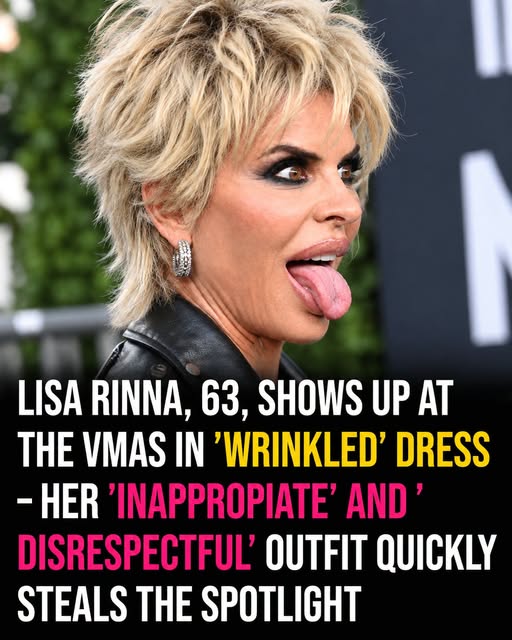
Rage exploded online the second Lisa Rinna stepped onto the VMAs carpet. At 63, she arrived in a deliberately provocative, wrinkled white “naked” gown featuring faux nipples, paired with sharply styled platinum hair that made the entire look impossible to ignore. Within moments, social media was divided. Some people called the outfit disrespectful and inappropriate, while others immediately praised it as fearless, theatrical, and completely unforgettable. But behind the shock of the dress was a message that went deeper than simply trying to attract attention—and the person she was really wearing it for made the appearance even more meaningful.
Lisa Rinna didn’t simply stumble into controversy that night. She walked directly toward it with intention. Every element of the look appeared designed to provoke a reaction, challenge expectations, and make people talk. Her bleached crop, sculpted white gown, and unapologetically provocative breastplate created an image that was impossible to overlook on a carpet where celebrities are constantly competing for attention.
But according to Rinna, the inspiration was not complicated. It was Madonna.
She made it clear that she was there for “one reason and one reason only: Madonna,” turning her VMAs appearance into something closer to a creative tribute than a conventional red-carpet fashion moment. Madonna had long been associated with challenging expectations surrounding women, sexuality, performance, and aging, so Rinna’s choice of clothing was more than an attempt to create a headline. It was a deliberate acknowledgment of the influence Madonna had on generations of women who refused to accept narrow definitions of how they were supposed to look or behave.
The internet, predictably, turned her body into a battleground almost immediately. People criticized the dress, mocked the visible wrinkles, commented on the construction of the outfit, and questioned whether someone her age should appear in such a revealing design. At the same time, other viewers celebrated exactly the qualities critics attacked. They praised Rinna for refusing to disappear, for embracing an unconventional look, and for showing up without apologizing for her age or appearance.
The contradiction was impossible to miss. The same image could inspire ridicule from one person and admiration from another. One side saw a woman going too far. Another saw a woman refusing to let age dictate what she was allowed to wear, how she could present herself, or how visible she could remain.
And that tension has been central to the conversation surrounding Rinna for years. She has repeatedly spoken about aging and the pressure placed on women to become less visible as they get older. Society can celebrate youth while treating older women as though their sexuality, confidence, ambition, and desire to experiment should gradually disappear. Rinna’s appearance challenged that expectation in the most public way possible.
At 63, she was not trying to blend into the background.
She was making herself impossible to ignore.
The dress itself became part of the argument. Its deliberately imperfect, wrinkled appearance and exaggerated details made it feel less like traditional