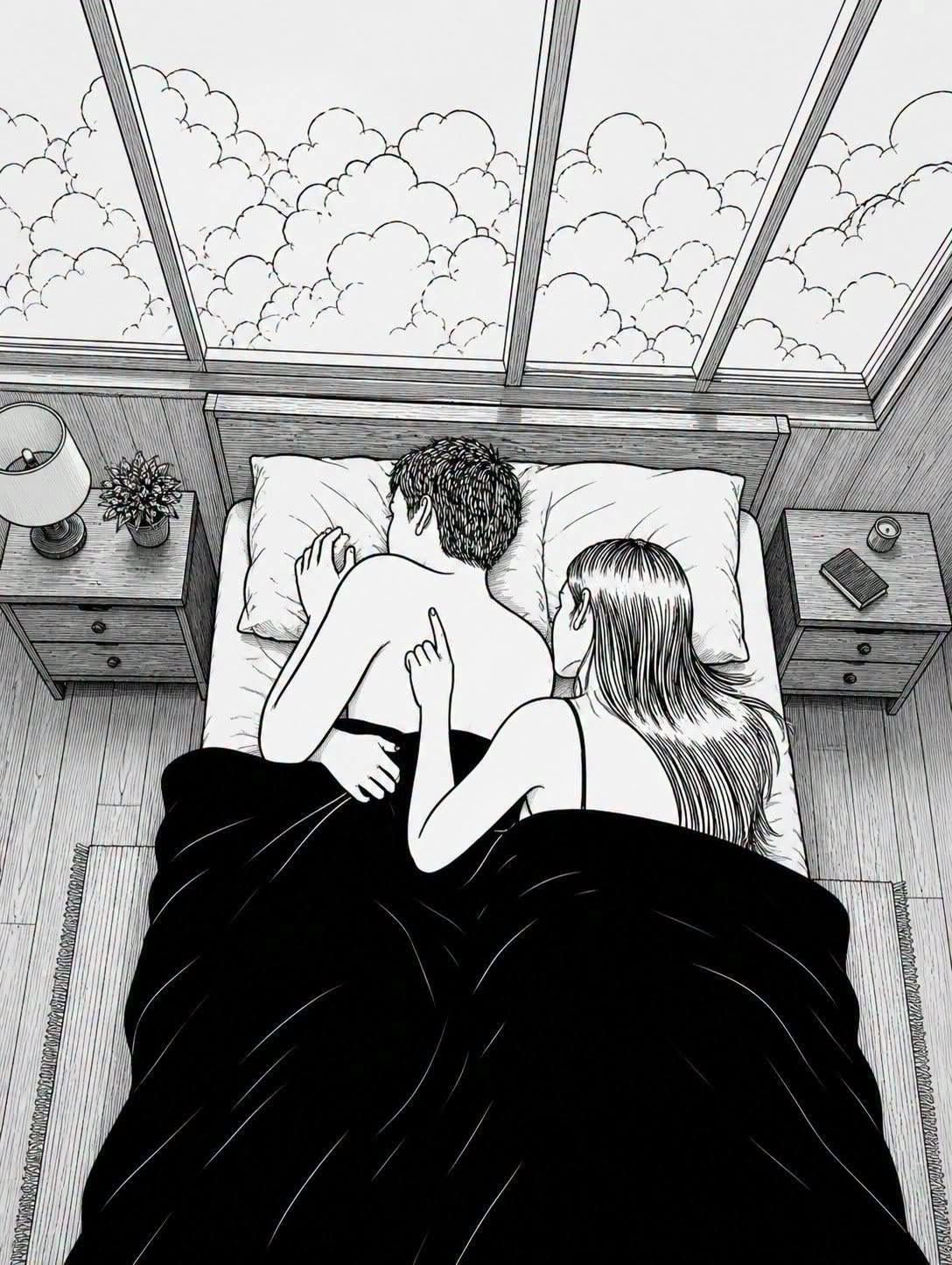
Sharing a bed with someone often feels like one of the closest forms of connection, but small nighttime habits can sometimes leave people wondering what they really mean. If your partner regularly turns away while sleeping, it’s easy for your imagination to jump to unsettling conclusions. Does it signal emotional distance, or is it simply the most comfortable way to rest? While sleep positions have attracted considerable interest from psychologists and relationship experts, they cannot, by themselves, reveal the true state of a relationship. Understanding the context behind these habits is far more important than assuming the worst.
Researchers who study sleep and relationships note that the way couples sleep together is influenced by many different factors, including comfort, body temperature, mattress size, physical health, and long-established personal habits. Some people naturally prefer sleeping on one side or facing away because it helps reduce pressure on the neck, shoulders, or back. Others simply sleep better when they have more personal space or improved airflow during the night. In these situations, facing away is usually a matter of physical comfort rather than emotional withdrawal.
At the same time, changes in sleeping behavior can occasionally reflect what’s happening during waking hours. If a partner suddenly begins avoiding physical closeness at night after previously enjoying it, and that change is accompanied by reduced communication, unresolved conflict, or growing emotional distance during the day, it may be one of several signs that something in the relationship deserves attention. However, sleep position alone cannot determine whether a relationship is healthy or struggling, and it should never be viewed as a reliable psychological test.
Relationship counselors often encourage couples to look at the overall pattern of their interactions instead of focusing on a single behavior. Kindness, trust, communication, shared affection, and the ability to resolve disagreements generally provide a much clearer picture of relationship health than the direction someone happens to face while sleeping. A couple may sleep back-to-back every night while enjoying a deeply supportive and loving relationship, just as another couple may sleep face-to-face while still experiencing unresolved difficulties.
Because sleep is largely unconscious, many nighttime behaviors occur without deliberate thought or intention. Body position frequently changes several times throughout the night, and most people have little awareness of those movements until they wake up. For that reason, interpreting a sleeping posture as evidence of hidden motives or emotional intentions can easily lead to unnecessary worry and misunderstandings.
Ultimately, if a partner’s sleeping habits suddenly change and coincide with noticeable changes in communication or emotional closeness, the healthiest response is usually an open, honest conversation rather than assuming the cause. In many cases, the explanation is as simple as comfort, stress, or a new sleep preference. By combining curiosity with communication instead of fear or speculation, couples are far more likely to understand one another and strengthen their relationship than by relying on the position someone happens to sleep in each night.